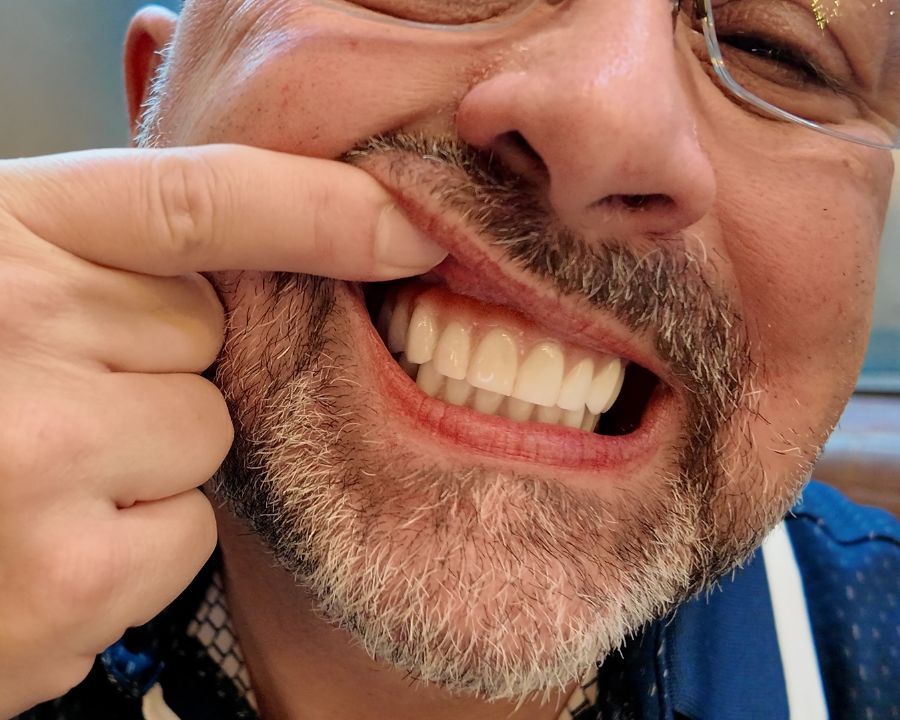
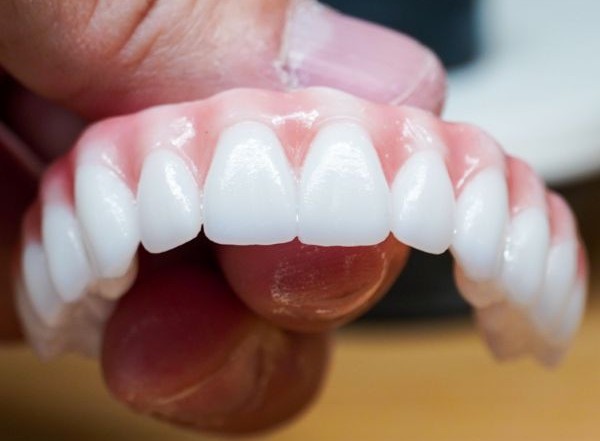
Patients do often ask me, how do we do permanent teeth in twenty four hours? Is this really safe? Like, come on. Is it safe? How do my implants heal? The soft tissue, the gap. What about the gap, doc? I get that all the time. Today, I'm here with doctor Park, a prosthodontist at NUVIA who's placed over two thousand dental implants and helped countless patients get a brand new smile in just twenty four hours. And we've pulled the most common questions about the process from our YouTube page and our Facebook smile maker page. And I'm here to set the record straight. Doctor Park, let's dive in. Let's get it. Doctor Park, let's start by breaking down how this procedure works because I think many people wanna understand more about NUVIA's permanent teeth in twenty four hours and how that's different from other processes out there. X falcon five thousand on YouTube asks, what is Nubia's procedure? And l p a one zero one from YouTube asks, how long does one go without teeth while waiting for the implants? So tell us a little bit about Nuvia's procedure and what makes it so different. Okay. Well, that's a big question. Once you come in and you're qualified for surgery, we'll place the implants. You're going to go home and relax. Within twenty four hours, you'll come back into the office, and you're gonna get your permanent teeth in twenty four hours. This is what we do. Very slim design, very strong, permanent teeth in twenty four hours. Other places will do what's called a conversion denture, and this is temporary. It's plastic. It bends. And, honestly, I don't think this should be done anymore, actually. Why do you think that a conversion denture or, like, a plastic temporary set of teeth is not safe? Well, there's many, reasons why I feel like it's unsafe. One, what I just touched on, it's made from hard plastic. And hard plastic, no matter how hard it is, it's gonna flex. It's it's gonna bend. And so when things bend and it's attached to these implants, you're getting micro movement. So you're getting actually a lot more, higher implant failure with a hard plastic conversion denture. I've been doing this the old school way. I was taught this way in residency. So I've done these type of prosthetics, different types of materials. With this, this is not a strong material. And like I said before, it's a liquid powder mixture that you have to do, and you inject it into these areas to attach to the cylinders, it's it's flammable. It's a flammable material. And that's why I feel with this prosthetic, you get a lot of shrinkage of the soft tissue underneath. This is interesting because you have experience placing the temps Yes. Which you mentioned you did in residency, and you basically got into your career doing. Are you finding that a lot of patients are very happy with this timeline, this procedure, not having to go back for appointment after appointment of getting temporaries? Yeah. So the temporaries, because they are pretty much a denture that's been repaired, and you've got three different materials mixed in here. So most offices, they'll have you wear this temporary for four to six months. And in those four to six months, I almost guarantee every single patient will break it at some point and have to get it repaired. It's it's very, inconvenient for the patients because that means the implants are also getting some type of forces on it. Oh, you're right. If the implant if the prosthetic itself is breaking, that movement, as you mentioned, coupled with any other big movements is gonna put pressure on the actual implants, which are still osseointegrating, which means, you know, integrating into your bone. Right? And then you make a sudden jarring movement because you bite something or that plastic temporary breaks, you're setting yourself up for a whole slew of problems down the road, aren't you? Yeah. Oh, it's for sure. Like, honestly, in terms of fail implant failure rate, in my experience, I've had more implant fails, with this converted style, not just for me, but during residency and other providers that, you know, are within my network. It's a higher implant failure rate just because the material flexes, and the the material will break. It it's almost guaranteed. Okay. Our next question is a good one because we all know that not every patient is coming to you with the same dental situation. Some may have teeth. Some may have lost their teeth. Maybe they're wearing a denture. So Peace Pocket from YouTube asks, does the twenty four hour timeline apply to people who have no teeth? What if you still have teeth in your mouth? What would that timeline be? Mhmm. Well, that's a good question. Teeth, no teeth, the whole timeline, the whole procedure, after surgery, all the same. So if I come to you and I have maybe a few teeth still, they need to be pulled before I get my implants in, and then my permanent teeth the next day, it's still gonna happen most likely in that twenty four hour window? Yeah. You know, the surgery might be a little bit longer just because you have a couple teeth to pull, any infection to clean up and stuff like that. But with regards to getting your teeth, exactly the same. You're gonna get your teeth, permanent teeth in twenty four hours. Okay. I've gotta ask this question because now I know inquiring minds wanna know. How is NUVIA able to offer the permanent teeth just twenty four hours after surgery, whereas other other places don't even offer that? What's the secret behind being able to do that? I think one of the key parts that makes us different from other centers is we have our in house lab. And the second even before surgery starts, lab is already working on the teeth. And so to have that advantage, being able to work around the clock, we can get these, permanent teeth in twenty four hours, for our patients. So it's been amazing to have the in house lab. It is mind blowing. I'm not surprised that there are providers and patients that are surprised that this can happen, but, NUVIA has pulled it off. So But there's even doctors out there who try to question NUVIA's process and whether it is safe, whether NUVIA's maybe rushing things a bit. What would you say to other doctors who question the process? I mean, it's healthy to be skeptical, but, I mean, NUVIA has a network of hundreds of surgeons, prosthodontists, restorative doctors, general practitioners that once they've understand the procedure, they know we're not rushing anything while still respecting the the body. Another big question that people have is about sedation. And I know that not every place will do it the same way. So let's clear this up a bit. Shirley Hansford eighty nine zero three from YouTube asks, are you totally sedated? And Francesca Marquise forty three ninety eight from YouTube asks, what is the time period where the dentist keeps you under? No. These are great questions. First off, I'd like to answer or correct one of the questions. For anesthesia, It's actually not a dentist that's doing the anesthesia. So let me clear the air how NUVIA does it. We all have oral maxillofacial surgeons in every center. Not only that, we have CRNAs, which are nurse anesthetists, so they specialize in anesthesia. And then, obviously, we have the restorative doctors there and dental assistants there to also help monitor. So the huge advantage at NUVIA is we have another certified medical professional in the nurse anesthetist monitor the health, and the sedation of the patient. So now the oral surgeon, all they have to worry about is the surgery. They don't have to keep their eyes on the monitors and and all that stuff. We have a second medically trained provider in the room, in addition to the restorative doctors and the dental assistants. In private practice, you have providers that are doing the anesthesia, monitoring your vitals, but also pulling your teeth, placing the implants, and doing the prosthetic. That to me, that's a lot of work, and that's a lot of stress because, you know, you keep your your eyes and hands down, and you're focused on the surgery. And there's no way you're gonna be able to safely monitor, your vitals, because in a blink of of of an eye, something bad may happen, and you need to react quickly. You know what this sounds like to me, and this is an analogy that is close to home. It sounds like the fire department. My dad was a ladder truck driver in the fire department. He specialized in driving the ladder truck, which there's two drivers on the ladder truck, the one in the front and the one in the back. Right? And then you obviously have your team of firefighters who someone's gonna be hooking up the hose to the hydrant. Others are gonna be carrying the hose into the fire. You have a whole team of people on the fire department, and each person knows how to do their job so well. Right? Backwards, forwards, inside out, eyes closed. And because you have that amazing team of people, they're successful in, obviously, going out and helping put out fires, saving people's lives because you don't have the fire truck driver trying to drive the front and the back and trying to park the truck while also hooking up the hose. If you had that going on, I just could imagine so much chaos Yeah. And lack of efficiency and lack of safety too. Right? Yeah. I think you hit the nail on the head. Safety first. Whatever we do everything that we do at NUVIA, it's patient focused. We wanna make sure they're safe. And then, obviously, everything that we do, we want it to be efficient because like I said, we're trying to deliver these teeth in twenty four hours. Well, speaking of safety, I know you mentioned that every Nubia Center has an oral surgeon. And where I live, a dentist actually used to live here, and I actually got this in the mail. And it is a brochure that says oral surgery in paradise, doctor Park. And it's actually a three day course teaching dentists how to perform oral surgery. But the fact that a dentist used to live where I live and this came in the mail kind of showed me that in the world of dental procedures, dentists, surgery, there are different levels of doctors. And in your case, you have oral surgeons at every Nuvia Center that have gone through extra schooling. I think, like, four more years of school or something like that in order to become an oral surgeon. They're not just a dentist who took some classes on how to perform dental implant surgery. And and I feel like that's a big difference between what you do at Nuvia and the team that happens at NUVIA versus private practice. Can you just touch on that for a minute? I don't think it's safe to learn how to do this procedure in three days and then try it out in private practice. So that's why we have oral surgeons that have gone in for oral surgery. You need to do a four to six year additional to dental school. And a lot of that time is spent actually in the hospital, and it's a lot more, like, trauma based. So they're seeing the hardest, the craziest trauma cases. They're suturing. They're having to do significant surgeries. And so that training allows them, you know, that additional education and and years of experience, allows them to do this procedure and make sure it's completely safe for the patient. Okay. So speaking of safety, once the implants are in, the body obviously has to adjust, and some people seem worried about how fast NUVIA gives patients their permanent teeth. So mister o g six r x from YouTube asks, would your gums or mouth be too swollen to get the right fit on twenty four hour teeth? He says it seems like the molds made for permanent teeth would be off since there's swelling, and then that swelling would be gone over time. So what can you share with us about that initial swelling and the fit that you're gonna get with your permanent teeth? That's that's a really good question. Because when we do the permanent teeth in twenty four hours, a lot of people think this is the step that we are rushing, which is not true. Yes. The tissue is gonna be swollen. The the prosthetic is designed with that in mind. So the next day, typically, the swelling actually peaks around day two, day three. And so the day twenty four hours after surgery, you're gonna get a little bit of swelling. Putting the prosthetic on, we do not have to numb. Patients maybe feel a tiny bit of pressure, but we don't have to numb you again. By the way, at any point during this video, if you wanna find out if, you might be a candidate for this procedure, just click the link in the description, take the sixty second quiz. Another question I have about that twenty four hour process is from Miza ninety five ninety five from YouTube saying, my question is regarding the swelling. I would think the gums are swollen when you place the permanent implant, so wouldn't that create a gap once the swelling goes down? So she's asking about the gap, and Steve travels sixty one sixty from YouTube asks, how could your extraction sites heal under the appliance? Yeah. No. This is my favorite question, about the gap because, people think the permanent teeth in twenty four hours is rushing this process. And what about the soft tissue? The soft tissue, it's sitting on nonreactive materials, areas where you'll get a little bit of a gap. That's normal. That's part of the healing process. But we still see the patient four months after surgery, but it's same day you're gonna get those gaps filled, if there are gaps. And patients are happy. It's more snug. And so we're still respecting the soft tissue. It's the same thing as if, you know, if you go to an other center. It's just that you're not wearing a temporary. You're wearing your permanent teeth. Now what about the surgical sites and how they heal? Are they able to heal underneath the prosthetic when it's put on? Yeah. Of course. The healing process for the bone, regardless, let's say, the surgeon decides he grafts it with bone or without bone. It's all underneath the tissue. And the zirconia, they're very nonreactive to the tissue. They allow the tissue to heal and allow the bone underneath to heal properly. Conversion denture, just to remind you again, it's a liquid powder that they're using to attach it to these temp cylinders, and there's typically still some liquid residual in the prosthetic. And so that in itself sitting on the tissue, a flammable material sitting on the tissue, does create a lot more, toxic, environment for the tissue. Let's say, you know, you don't have to come to Nuvia and get this procedure, but if you go somewhere else and just ask the dentist, how do you how do you do this procedure? Are you using, like, a liquid powder and then injecting it? You know, just ask them and see if the dentist says yes. If so, then honestly, I I mean, I wouldn't recommend any family members going to a place that does it that way. Wow. It means a lot that you said if you had a family member getting this procedure, you would not want them to go and get it that way. Doctor Park, let's talk about something a lot of people fear, and that's pain. Okay? We've already learned that patients will be asleep during the procedure, but Christopher from Facebook asks, I'm really scared about how much it will hurt when I come to. I get that I'll be knocked out for the procedure, but I know that won't last forever. Is the pain too much? Well, I can say the key to the pain is actually not the implants itself. Oftentimes, it's the swelling. If you can get ahead of the swelling, then you're gonna be really good in a good place, and you'll only need to take over the counter pain medications. Oftentimes, even, you know, hard cases will only prescribe over the counter medications just to start off. And most patients, I'd say ninety percent of the patients can do it with the Advil, the ibuprofen, and the Tylenol. And so you get ahead of the swelling with ice, compression, and ibuprofen, which will help with the swelling, and, that will, in ninety percent of the cases, that's all we prescribe. And so and oftentimes, pain can be individual as well. Some patients, they're actually in chronic pain because of their teeth, and they don't really know it. And so after surgery, actually, a lot of them, even twenty four hours after surgery, they're like, you know what? I feel amazing because and I'm like, yeah. Because we took away all the teeth that were infected and causing you chronic pain. We've cleared out all the infection, and now we've, you know, sutured everything up and everything is clean. Lack of that infection has alleviated a lot of their pain, and so ibuprofen and ice is all they need. That's that's really incredible. So that and that's something I think a lot of patients don't think about. Like, think about the pain that you're in now. What are you dealing with day to day, and what would life be like if that pain was taken away? Because you're right. Infection is a huge source of pain. Yeah. For sure. I mean, anytime, let's say because a lot of our patients, they have infection, they have decay, they have periodontal disease. A lot of those are chronic, and so your body just gets used to you get used to managing that pain. And so your your, you know, your pain level is already here. But once we remove all that infection decay, all that perio, we place those implants. Now this is where actually your baseline is, where you're supposed to be at with no pain. So a lot of patients, they do not only that, not only a a relief of pain, but, I mentioned this before, but when you have infection in your mouth, you have perio, you have decay, you are swallowing hundreds, thousands of times during the day. You are swallowing a lot of bacteria. It's going into your gut, and there's a link to having, you know, decay, infection, perio in your mouth to other health issues. Health heart disease, is a big one. And and, you know, oftentimes, we have patients, their complexion gets better, their energy level gets better. It's your it's a whole body. So your mouth is the gateway, and it's it can affect your whole body. People take for granted their teeth, their ab ability to smile with confidence and not be self conscious. But, you know, we have grown to create distractions if we have bad teeth. We have patients that have huge beards, huge mustaches. We have women that, have huge eyelashes, which are pretty. I have nothing against them. But it can be a distractor because sometimes, they want to lure people's eyes away from their teeth. And so often times, you see patients that come in with huge beards or a lot of makeup, and you see them not even twenty four hours, but we see them at the two week mark for the healing check, or we see them a couple months after surgery, and you don't see the thick makeup. You don't see the beard. You don't see the mustache. They wanna show, their smile. And not only that, they become they evolve back to their old personality because they've become a wallflower because they don't wanna draw attention to themselves from a, like, a social standpoint. But now they're able to smile, and now they're more outgoing. You see their personality. They're more talkative. They wanna talk and tell you about, you know, all the people that are complimenting them, hitting on them, and stuff like that, just just from being able to smile with confidence. Hey. They always say the first thing people notice is your smile. And what you just shared is a testimony that when you are able to take care of your smile and take it to the next level, fix what might be broken, it can impact your entire life. Okay. Doctor Park, this is a great time to talk teeth because I think many people wonder if NUVIA's teeth are a one size fits all situation, or is there some customization that goes into the process? Aileen from Facebook says that she's curious about whether or not the teeth are customized for each person to fit their mouth. She says, I don't want large teeth. She wants teeth that resemble the size and shape of the teeth she currently has, and she wants to know if that's a possibility with NUVIA. So, yes, the short answer is yes. It is customizable. It's not one size fits all. From the first appointment that you come in, we're using facial scans. We're using photos. We're making everything into a digital file. And that way, the restorative doctor, the lab as well, and obviously patient input, we're able to customize size, length, width, shape with the patient. But obviously, all the customizable features, you know, it's gonna be overwhelming. So most patients, when they come into consult, we're gonna give them three kind of like basic designs because those are the critical designs that patients actually want to see. And then the rest is in the hands of the restorative doctor in the lab and using the photos to making sure you don't have a gummy smile, you don't have huge horse teeth. Alright, doctor Park. Let's talk about the strength of these teeth. A topic many people bring up is eating, and the Chris fifteen hundred on YouTube asks, how long is it from surgery day until I can take a a bite out of a burger, a steak, anything of that sorts? And another YouTuber asks, any foods that you can't eat after surgery? Alright. Well, let's quickly just remind everybody. This is what you're getting, and you're wearing this for four to six months at other places, and this is what you're getting at NUVIA, the zirconia. So it is very durable. NUVIA has done over twelve thousand of these cases, and I believe, there's about twenty or so that have broken and have had to be redone. So that's, like, a point two percent, breakage. Obviously, we have the Nuvia warranty that'll cover, the prosthetic in itself. But in terms of durability, after surgery, my recommendation is don't eat, a steak or don't bite into an apple until I see you at the four month mark. But, again, throughout the procedure, after surgery, we're seeing you at the two week. We're often seeing you at the two month mark just to double check healing. As long as you're showing that you're complying with oral hygiene, keeping things clean, the tissue looks healthy, you're wearing the night guard, then we can start incorporating, you know, small bites of steak maybe or a burger with a fork and knife. And so it it varies between patients. One thing I've heard that many patients share is that they do a soft food diet for the first four months, and they say they eat anything that can be cut with, like, a plastic fork. Can you just explain what that's all about and and why they do that? So this is out of abundance of of caution and to make sure that, we're respecting the implants and the tissue, making sure that, we're allowing the implants to heal undisturbed. So we do recommend a soft no chew diet for at least the first two months. Take a fork, mash it up, don't have to chew, and you just swallow. There's a lot of solid foods that you can eat, fish, refried beans, eggs, bananas. You have a ton of food that you can eat. The patients don't realize it, that they can just mash with their fork and, and just swallow it. And like I said, it's abundance of caution. You've spent this money and time to get your smile back, and you want to be safe. You want to, do anything you can to make sure that the health of the implants are good in the short and, obviously, in the long run. Well, speaking of money and an investment, I would say anytime someone's making a big decision, especially a medical one, they wanna know the risks. So we get a lot of questions from people asking about implant failure and the chance that the implants themselves might not work out. Our next question comes from Noel Fole on YouTube who says, I'm about to make my consultation with Nuvia, but I wanna understand the failure rate of dental implants as a whole. So what is the failure rate and, you know, how successful are dental implants? So dental implants in general so all of dental implants success rate for implants can be around ninety seven, ninety eight percent. So you're looking at a two to three implant two to three percent, failure rate. So NUVIA's success rate is ninety nine point one three percent. Wow. So that is actually a lot higher than the national average Yes. Of dental implant success. It is. Well, I mean, proof in the pudding. You've already shared with us that you're giving patients a very strong durable set of permanent teeth made of this zirconia material, and you've already shared the reasoning behind why you're able to do this in twenty four hours and why it isn't rushing and it is safe, and how you prioritize the patient's safety during surgery, how you are able to take care of any sort of small gap that happens. Then as you shared, breakage can disturb the healing process, which ultimately could result in implant failure. Right? Yeah. That's correct. I mean, you very concisely summarized, you know, the Nuvia Advantage. You know, we are utilizing dental technology to the max, and we keep adding new technology to the procedure. And, again, the focus is always patient care. We are definitely not rushing it. We are respecting biology, soft tissue. We are adding to making sure there are no gaps. If we were doing something unsafe, we would not be able to hire anybody. But there are many doctors, many oral surgeons, many prosthodontists, many general practitioners that are applying to our job postings. If, you know, if we weren't doing this safely, no doctor would want to come work with us. I don't think you'd wanna work for Nubia if you weren't confident in the process. No. I definitely wouldn't. I don't think anybody would wanna work anywhere that's unsafe for the patient. Well, finally, one of our biggest worries that we've seen in the comment section on our YouTube, on our Facebook is whether someone's even a candidate for this procedure, especially if they've been told maybe they have bone loss or underlying conditions. So Tamara Stoflet eighty seven on YouTube asks, how can you have implants if you have bone loss? And another YouTube comment asks, can a person with high blood pressure have this done? What have you seen over the last four years that you've been at NUVIA? Yeah. No. That's a good question. A lot of patients, they'll come in. It's not uncommon that, you'll have issues like diabetes, high blood pressure, previous bone loss, periodontal disease. You know, you've had a heart attack in the past or even a drug history. So these are all big topics, and it's not uncommon to have patients that have these issues. My only recommendation is just come in. Be honest with your medical history. We will get the notes from your previous doctors, and we'll do our due diligence and make sure you're optimized for surgery, for your safety. If, let's say, we cannot optimize you or you're not a candidate for this procedure, let's say your teeth are too healthy or whatnot, we're not gonna just punch you out of the office. We'll give you some recommendations. We'll give you an honest opinion, if there are other options for you. So to find out if you may be a candidate for permanent teeth in twenty four hours with Nuvia, you can click the link in the description for Nuvia's easy sixty second quiz. Well, doctor Park, thank you so much for taking time out of your very busy schedule to sit with me and answer real questions from our viewers. If you're watching this video and this video helped you feel more informed or even less scared, please leave us a note in the comment section. And until next time, keep smiling.



.jpeg)




.jpg)