This website uses cookies to ensure the best experience on our website.
We may share your information with our advertising and analytics partners as outlined in our
Privacy Policy.
Dental options for missing teeth range from temporary over-the-counter solutions to permanent implant-supported restorations — and the right answer depends on how many teeth you've lost and your bone health.
For a single missing tooth, a dental implant is typically the most conservative option. It doesn't usually require trimming the teeth on either side.
Full arch patients who stay in dentures too long risk losing so much bone that implant placement eventually becomes difficult or impossible.
The Nuvia approach delivers permanent zirconia teeth within 24 hours of surgery — not an acrylic temporary that you wear for four to six months while you wait.
I get asked all the time — what are my options for missing teeth? The honest answer is: it depends on how many teeth you're missing, the health of your bone, and what you're looking for long-term.
So I want to walk through all of it, starting with a single missing tooth and going all the way to full arch replacement. Every patient's situation is a little different, but this gives you an idea for what to expect.
Hi. I'm doctor Park. Hello. I'm doctor Giggu. And today, we're gonna go over tooth replacements from a single tooth all the way so multiple teeth to all teeth. So it depends. Every patient's a little bit different. So we're gonna go through these options for you. Okay? Alright. So first, we're gonna talk about when you're missing a single tooth and you're looking for some kind of temporary solution. This product is called Temp Tooth, and what you do is you you warm it up and you're able to kinda mold it with your fingers and make some kind of temporary tooth in the meantime. And so let's say you have this temporary solution in your mouth, and now you're making your way into the dental office. What are some options? What is your first thing that you're thinking for a single tooth? Sure. So if you lose a single tooth, basically you have three options. One is to do nothing. If you do nothing, what's going to happen over time is the adjacent teeth to this space, they're going to shift towards each other because teeth they like to touch each other. And also the opposing teeth from the opposing arch going to drift downwards. Obviously this is not an ideal situation and what's going to happen over time is you're going to lose the bone in this area as well. The other classic option is to have a dental bridge. So dental bridge is basically you are shaving down the adjacent teeth and then you connect them with a fake tooth, also called the pontic in between. As you can see in order to achieve that, you have to shave down the teeth in these areas. Sometimes those teeth, they are healthy teeth and obviously that's not an ideal situation. So docs apart from your experience, what are some pros and cons to the having the bridge? Okay. So in terms of having a bridge, let's get into kind of the cons immediately. You kind of touched on it already. If you do have two healthy teeth here, and you're trying to replace a single tooth, unfortunately, you're going to have to trim these teeth. So these are gonna be called your abutment teeth, and then it's gonna replace a single tooth here, which is called your pontic, and you'll have it there. Okay? Another con is because you don't have a tooth there, over time, as you had mentioned, the bone and the soft tissue in this area will kind of start to resorb and the gap, you'll develop a gap underneath this pontic, and so that becomes a problem in itself because now you have a food trap that can possibly cause some decay or some periodontal issues with these abutment teeth here. So over time it's very difficult to maintain the hygiene for these and these pontic teeth become very vulnerable to hygiene issues and decay and perio and stuff like that. And obviously the pro is you know you're getting that fixed, you're getting that area corrected with you know the pontic and you're maintaining the spacing and your occlusion and the aesthetics of it. Okay. So the other option is dental implant. Here you can see a dental implant. Basically a dental implant is a screw made out of titanium that we place inside the jawbone with certain width and certain length. So here is the actual size of a dental implant, and here is a model that we can use so you can see that you place this dental implant inside that jawbone. So the benefit of that is you treat this space as a single tooth and then when you have the crown on top of the implant you can floss between the teeth and do the hygiene of every single tooth independently. In order to be able to place the dental implant, need to have solid bone. And sometimes if you don't do it immediately after you lose the tooth, you may lose the bone stock necessary for placement of a dental implant. In that case, you have to go to your surgeon and they may do some additional steps, such as bone grafting, in order to prepare that area so you can have the dental implant in that space. And just to add to that, when you're looking at two options, you're looking at the bridge option versus the single implant, the single implant is considered more conservative treatment because these two teeth are not being trimmed and you can maintain the spaces between the teeth, so you're gonna be treating these as individual teeth, brushing, flossing, and being able to maintain all three sites. That's right. So let's talk about the cost for these treatments. Let's start with single tooth implant. Yeah, for a single tooth implant, considering the implant placement and restoration, depending on different parts of the country it can range between four to six thousand dollars. Yep. Alright and then if we look at a three unit bridge, because each individual site is considered a crown, this itself would also be considered approximately four to six thousand dollars, which is kind of surprising. Obviously, you're not going through any surgery, but as discussed, you are including the adjacent teeth part of your treatment, and that's what causes the material cost to go up. Let's say you're missing more than one tooth. So we've got these little bad boys. This one comes with multiple names. This is a partial denture. It could be called the transitional. It could be called the flipper. The reason why it's called that is because there is only acrylic and then there's some little metal clasps here. So this is a really temporary solution before you move on to something like this. This is a cast metal partial. So these are considered more of a final restoration versus something like this where this is more of a temporary solution. I would say this, in terms of cost, will run you a couple hundred dollars because like I said, this should only be worn maybe six months, hopefully less until you can get into something more permanent. If you want something removable, this is more permanent. This would cost maybe around two thousand dollars but again, it is removable, it's not the prettiest, and you know, then we can talk about more fixed solutions for multiple. Absolutely. So as Doctor. Park mentioned, these are somewhat less ideal options when you're missing multiple teeth. One of the options that you have for some fixed prosthesis is that let's say you're missing three different teeth that are next to each other, you can, if you have enough stock of bone, can place separate implants in these areas and then cover them with separate crowns. The other option would be to have a bridge supported by dental implants. Meaning that you place an implant in this location and in this location and you connect them with a bridge. Similar to the bridge that is supported by a natural tooth, but in this case the bridge is supported by dental implants. And the cost for this option depends on the location that you are in the country and also the number of implants placed and the number of teeth that are restored by those implants. All right, so we've just discussed missing multiple teeth with partials, some fixed options. And we've got this as that, doctor Parr? As seen on TV, instant smile comfort fit flex. So in my professional opinion, obviously this is not a great solution. It's not a permanent solution, but if you're in a tight bind, obviously everybody's dental needs are different and if you're in a tight bind and you need something just to get by, you know, you can get, you can use this product. It's kind of where you put in hot water and you stick it on the front so it's kind of like a removable veneer. And if this option is something that you may need to consider in the temporary, we do have Doctor. Anodi with Nuvia. They actually tried to do this product to see how it turned out so check out that video if you want. But like again, like I said, this is very temporary, you can use it just before you can get to the dental office but So doctor Park, what happens when you lose all of your teeth? Yeah. In that case we can start with this product. This product is, you can buy online, it's called Easy Denture. It's very similar to a couple of products we talked about today where you put in hot water, and obviously the patient has no teeth, they put in hot water, they put it in their mouth, it forms to their ridge, and you have a temporary solution replacing all of your teeth. I see. So initially when I first saw this product it looked it's good border molding, so it's nice and molded here, but it's hard because this is it seems like it's a one size fits all solution, so this may not work for you. It's gonna be very difficult to kind of go online, purchase something like this, and have it actually fit correctly. And so that's why we kind of move towards going to the dental office, and we have a complete denture here made by a dental office. Custom made? Custom made so you can see there's a lot more anatomy of this patient's roof of the mouth, nice borders, and then obviously the teeth are custom length to make sure everything looks great. So what are some downsides of having custom made dentures? Yeah, I mean, there's so many I can go through, but the biggest one that I hear when working at Nuvia is, hey, I moved to a denture and now I'm not tasting my food as That's right. Because, you know, yeah, ninety percent of your taste buds are on your tongue, but you're missing the roof of your mouth and you're still being able to taste through the roof of the mouth. It's very difficult when this full palate is there. This is there because you need that suction. Otherwise, this thing flops around. Helps with the stability of the denture. Yeah. But as you get older, unfortunately, things shrink. Your bone shrinks, your soft tissue shrinks. Over time, a denture definitely needs to be replaced every, I would say every two to five years. Every patient's a little different, but these things, these are approximately two thousand dollars to five thousand dollars for a single denture. A big downside for dentures is bone loss. That's true. If you want to go into a little more detail on Yeah, sure. Let me show you a quick diagram here. Think about this as your lower jaw and think about it, that's like a half of your lower jaw, think about the denture sits over this area. So what happens because there is no tooth in that area, what happens is over time you start losing bone. So your bone level from this level comes down to this level. Also there is a nerve that runs under your jaw that gives sensation to your lower lip and your lower jaw and it comes down from a hole inside your jawbone. So what happens over time you start losing bone more and more And what's going to happen is the denture is going to start rubbing against this nerve and that can cause also pain and some discomfort and as you lose the bone, the amount of bone gives stability to that denture. So with less amount of bone, the denture over time is going to become less stable. If you're wearing a denture and you wait a long period of time, as you can see you're going to lose significant amount of bone and that's going to limit the possibility of placement of dental implants inside your jaw bone. So if you have problems with your dentures, when your dentures are not stable enough and they are rocking, so one of the options is to place some dental implants inside your jawbone, that way the denture is more stable. So that's going to segue to the next option that we can talk about is the prosthesis that are supported by dental implants and they are removable. So the idea in this scenario would be that you place two to four, sometimes more implants inside the jawbone, and the denture going to snap in into those areas. As you can see in our models, this is a top jaw. Four implants are placed inside the jawbone, and they have these parts, male and female, that the denture snaps into place in those areas. So that gives stability of the denture and then also it limits the bone loss associated with loss of teeth in those areas. Alright. So kind of doing a summary over the implant overdenture. It's removable. It's technically a little bit more cleansable because you could take it out at night. You should be taking it out at night, keeping it clean. Yep. The abutments here, this one, this model doesn't show it, you have little nylon buttons that are there that help clip the prosthetic into place. Those do have to be replaced. Wear and tear. Yeah, wear and tear which is normal because you're taking them on and off, on and off and so those buttons wear out. Typically with those cases you're replacing it every six to twelve months depending on wear and tear. And this is still kind of the full palate. This option has the full palate. It still has the full extensions that go into like the the vestibule, so it's still pretty bulky. The cost, if you're wondering about cost for this, this could be around ten to fifteen thousand per arch. And so that's the removable option, implant removable, and now we're going to get into the the fixed And at any time during this video you have questions about the costs for any of these options, go down to the description below and you'll see the cost guide. So if patients are asking about some of the fixed options, meaning that they're not happy with the fact that in this case the denture, it is supported by implants, but it can be removed. And to be honest, there are some benefits in this scenario for some patients. For example, if the patient does not have the best dexterity, that can be a very good option because the fixed option needs a lot of cleaning and hygiene, and this option is much easier. Or for some other medical conditions, there are some very good indications to use this option. But if the patient is more interested in a fixed option and everything else is okay from the dexterity point of view, is we can place certain number of implants in jaw, top jaw or lower jaw, and attach the fixed prosthesis to those implants. So the historical name for this procedure is called Allon X, meaning that all the teeth are supported by X number of implants. And that X can be between four to six or more. So historically, the idea would be that you place four implants. Let's say this is your top jaw, these are your maxillary sinus, that they are big holes inside your face, and you place four implants in this fashion and the prosthesis will be attached to those four implants. Obviously this is going to be your nose, this is going to be your maxillary sinus, and the prosthesis is going to get attached to this area. So this, as you can see, is going to be a fixed option, meaning that the prosthesis, we're going to talk about it, is going to get attached to this area And the cleaning parts will be on top of it and also on the bottom of it. Okay? Doctor Park, could you please elaborate a little bit about the prosthesis part of the implant supported fixed prosthesis. I know. It's a mouthful. Mouthful. I know. So here we have the traditional Alon X prosthetic as I was kind of trained on. Done multiple prosthetics like this. I'm sure you've done it Yeah, I actually start off with this. In surgery, after you've placed those four implants, you put the denture in the patient's mouth. Right after surgery, you drill out these holes in the denture and attach these metal cylinders to the implants. Then it's a lot of lab work. You go on the back, you're trimming the extensions, the palette off, and polishing it up, trying to make it look pretty obviously. Not the prettiest prosthetic you've seen, but this is what is called teeth in a day and this is a technique that was developed in the late nineties. Yep. So over twenty years, even today still some practices are probably doing it this way. But, you know, we can go into the pros and cons of these, but we can also we'll go into talking about the Nuvia Way. Yes. As you can see, this is the Nuvia Way and you can compare it to the traditional way. So the first thing that comes to mind is the quality of the material. The reason is this material is basically plastic. It's liquid and powder that have been mixed together and with that material there is some flexibility in that prosthesis. Meaning that when you attach it to the denture as the patient starts chewing and function, there is some flexure in that material. And the problem is that flexing will get translated to the implants. And the worst thing for implant healing and stability, especially in that four to six month critical healing time, is if this implant starts moving, there is a chance that that implant is going to fail. Whereas in this scenario, the Nuvia way, the material is way, way more robust, it's zirconia based and there is way less flexure associated with this material compared to that material. So the important point about this in both cases you're going to end up with a final material that is similar to this. In the traditional way, you're to be in the temporary material for four to six months before you get it to the final material. In the way that Nuvia does it, the final material is delivered to you immediately in twenty four hours and that separates the two different systems. Let's say our moms come in and want to get this treatment You need something as strong and rigid and so obviously we would go with the stronger material. You know, we are respecting the healing process. That's why we're trying to push, you know, these stronger permanent materials twenty four hours after surgery. So I think we just covered everything on the table here. We did. Not bad? Very good. If you have more questions, financial questions about the cost of any of these products or any additional dental treatments Nuvia does have a cost guide. We'll have it available in the description below.
Dental Replacement Options for a Single Missing Tooth
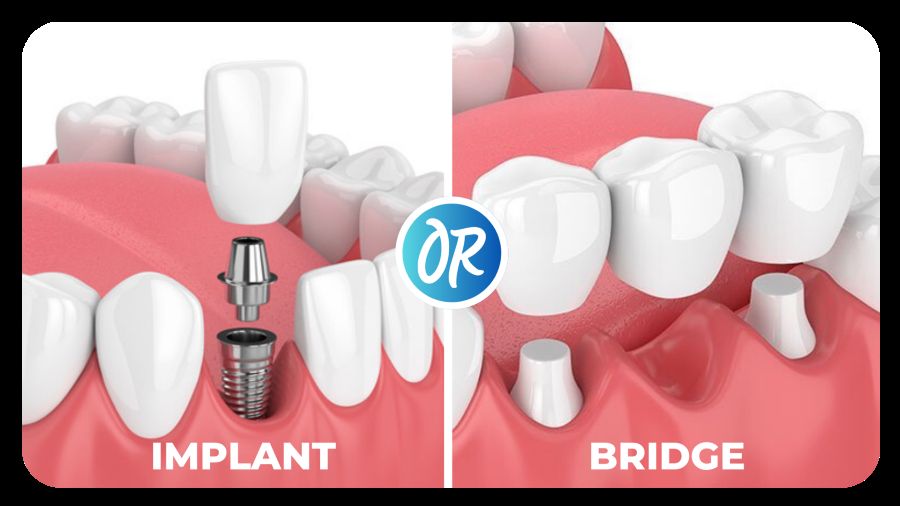
When you lose a single tooth, you basically have three options.
Option 1: Do nothing.
I'll be direct — this is not a good long-term plan. When there's a gap in your arch, the adjacent teeth don't just sit there. They start shifting toward each other because teeth like to be in contact. The tooth on the opposing arch will also start to drift downward into that space. Over time, you're also going to lose bone in that area. What starts as a single missing tooth can create a much bigger problem if you leave it alone.
Option 2: A dental bridge.
A bridge has been around for a long time and it works — but it comes with a real tradeoff. To place a bridge, we have to shave down the teeth on either side of the gap.
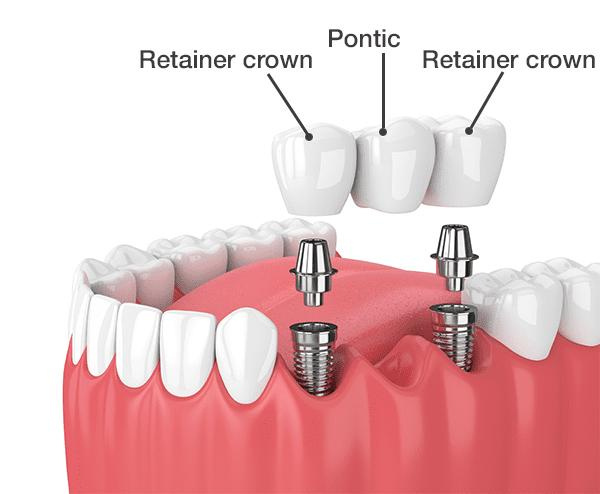
Those become what’s called your abutment teeth. Then a fake tooth, called a pontic, gets connected in between them. The problem is that if those adjacent teeth are healthy, you're now grinding them down as part of the process. That's not ideal.
And over time, because there's no actual tooth root in that space, you're going to lose bone underneath the pontic. You'll develop a gap between the bridge and the gum tissue — which becomes a food trap and creates ongoing hygiene challenges. Keeping a bridge clean over the long run is genuinely difficult.
The cost for a three-unit bridge is typically in the range of $4,000 to $6,000 — which, as Dr. Park pointed out when we discussed this, is roughly the same as a single implant.
Option 3: A dental implant.
For most patients, this is what I'd recommend. An implant is a titanium screw that we place directly into the jawbone. It preserves the bone in that area, and once it has a crown on top, you treat that tooth completely independently — you can floss on either side of it just like a natural tooth. We're not touching the adjacent teeth at all. That's why implants are considered the more gold standard option even though it's a surgical procedure.
One thing to keep in mind: to place an implant, you need adequate bone. If you wait too long after losing a tooth, you may lose the bone stock needed for placement, which means additional steps like bone grafting to prepare the site first.
If you're missing more than one tooth, the conversation shifts a bit.
On the removable side, there are partial dentures — sometimes called flippers or transitional partials. These are made of acrylic with metal clasps and are really meant as a short-term solution, ideally no more than six months before moving into something more permanent.
They run a couple hundred dollars. There's also the cast metal partial, which is more of a final removable restoration at around $2,000 — but it's still removable, still has some limitations cosmetically, and still isn't the same as a fixed solution.
For fixed options when you're missing multiple teeth, the approach depends on what's available. If the missing teeth are adjacent and you have good bone, we can place individual implants and restore each one with a crown.
Or we can place two implants and connect them with an implant-supported bridge — similar concept to a traditional bridge, but supported by implants instead of natural teeth. No healthy teeth get trimmed. The cost for these options varies based on how many implants are placed and the number of teeth being restored.
What Are Your Options for Missing All of Your Teeth?
This is where things get more involved, and where the decision you make really matters long-term.
Complete dentures
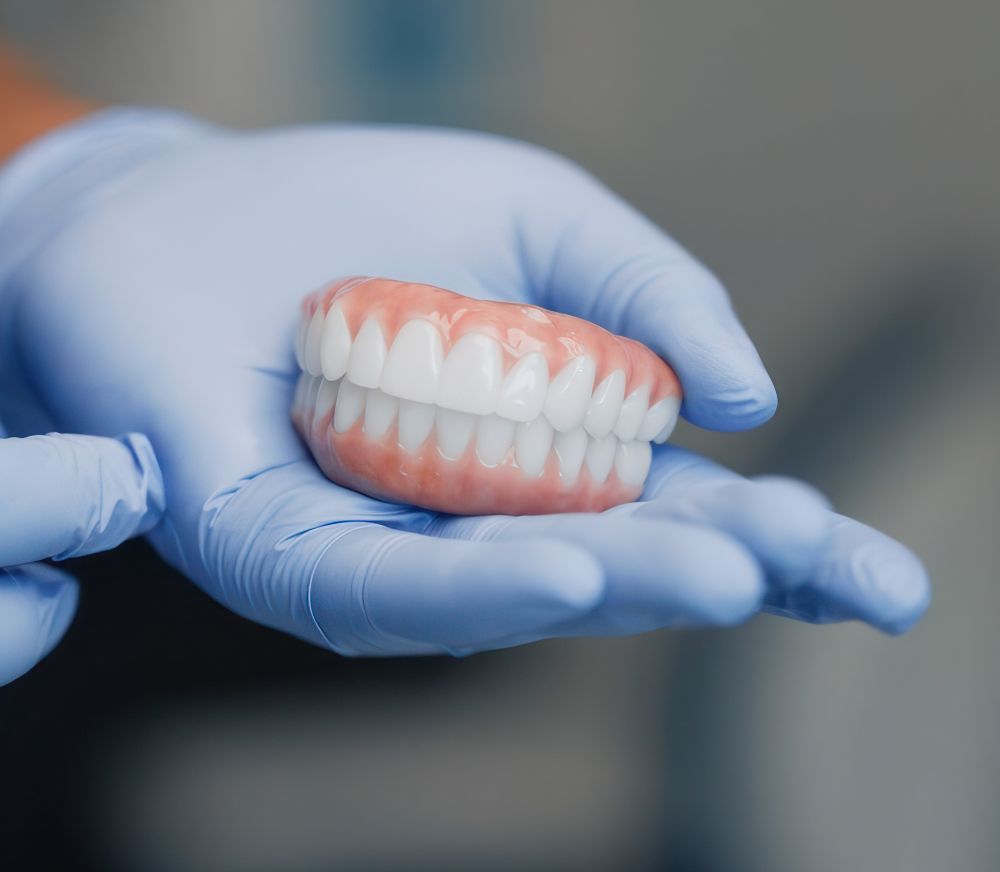
These are the traditional starting point. A custom-made full denture from a dental office will run approximately $2,000 to $5,000 per arch.
They're custom-fit, which is important — but they still come with significant downsides. The palate coverage affects taste. The denture needs suction to stay in place, and as your bone shrinks over time, that suction becomes harder to maintain. You'll need replacement every two to five years.
And then there's the bone loss issue, which I think is the most underappreciated problem with dentures. Without tooth roots stimulating the bone, the jaw slowly resorbs. The bone level drops.
There's a nerve that runs through the lower jaw that gives sensation to your lip and chin — and as bone loss progresses, the denture starts rubbing against that nerve. That causes pain. It also means that if you wait long enough, you may not have enough bone left for implants when you're finally ready.
To find out if you have enough bone for a chance to get dental implants, start by taking the 60-second quiz to see if you may be eligible for permanent teeth in 24 hours. From there, you’ll be able to schedule a consultation and have a scan to assess your bone levels.
Implant-supported overdentures
These are a step up from a traditional denture. We place two to four implants, and the denture snaps into place on those implants using a male-female attachment system. It's more stable than a conventional denture, it limits bone loss in the implant sites, and it's easier to clean because you remove it at night. The nylon attachment buttons do wear out and need to be replaced every six to twelve months. It still has full palate coverage. Cost runs around $10,000 to $15,000 per arch.
All-on-X fixed implants®
These are the permanent fixed option. Historically called All-on-4®, the concept is that four to six implants placed in the jaw support a full arch of teeth that are screwed in place — not removable by the patient.
Here's where I want to be specific about the difference between the traditional approach and what Nuvia does.
In the traditional All-on-X method, after placing the implants, patients leave with a temporary prosthetic made from acrylic — a plastic material that has some flexibility to it. That flex gets transmitted to the implants during chewing. In that critical four to six month healing window, movement is the worst thing for an implant — it can cause it to fail. Patients wear that temporary for months before receiving their final teeth.
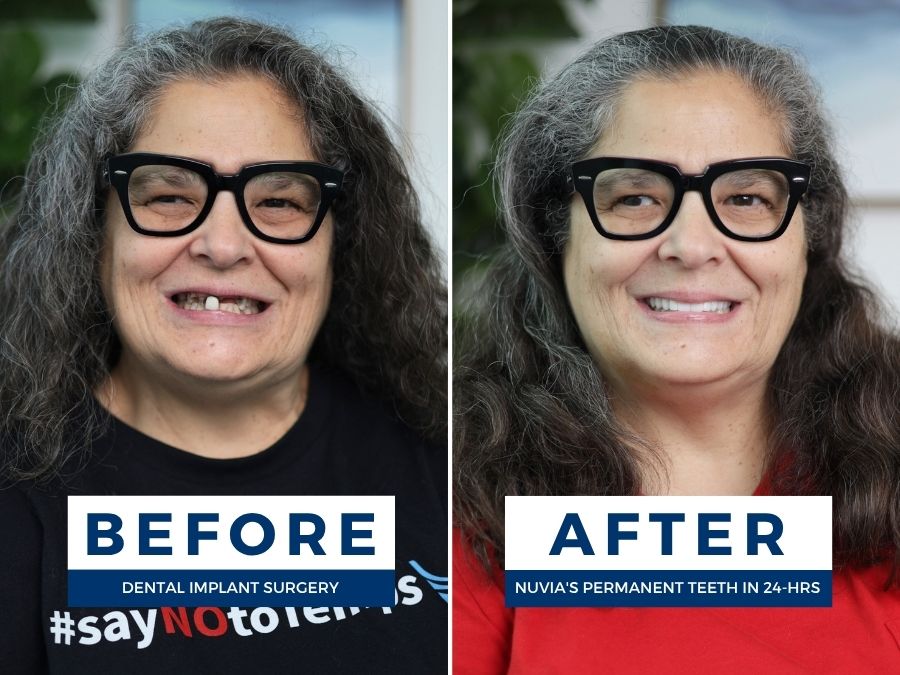
At Nuvia, your new teeth are delivered within 24 hours of surgery and are zirconia-based. they’re rigid. There's significantly less flex compared to the acrylic temporary, and that matters for healing.
More importantly, you're not waiting months for your final teeth. The lab works overnight and you come back the next day. That's what separates the two approaches.
If you're weighing your dental replacement options and want to understand the cost side of any of these treatments in detail, Nuvia's free Cost Guide walks through pricing for full arch restoration. It's in the link below.
Take the 60-second quiz to see if you may be eligible for permanent teeth in 24 hours →
Find Out If You May Be Eligible For Permanent Teeth in 24 Hrs.
Fill Out The 60-Second Quiz Below
By proceeding you agree to our Terms and Conditions and confirm you have read and understand our Privacy Policy, and you consent to receive emails, texts and calls from Nuvia regarding your inquiry (even if you are on a Do Not Call Registry). Message and data rates may apply. You may opt out at any time by replying STOP.
Dr. Albert C. Park is from Vancouver, BC Canada. He attended the University of British Columbia where he received his Bachelor of Human Kinetics. After several years in sales and marketing, he decided to further his education at Howard University where he received his Doctor of Dental Surgery degree and was inducted into the Omicron Kappa Upsilon Honors Society.
Dr. Park's desire to treat complex cases and provide highly esthetic restorative care led him to specialize at the University of Illinois at Chicago (UIC) Advanced Prosthodontics program in Chicago where he focused on dental implants and implant prosthetics. In his free time, he enjoys playing a variety of recreational sports and is an avid ice hockey fan.








.jpg)
.jpg)