This website uses cookies to ensure the best experience on our website. We may share your information with our advertising and analytics partners as outlined in our Privacy Policy.
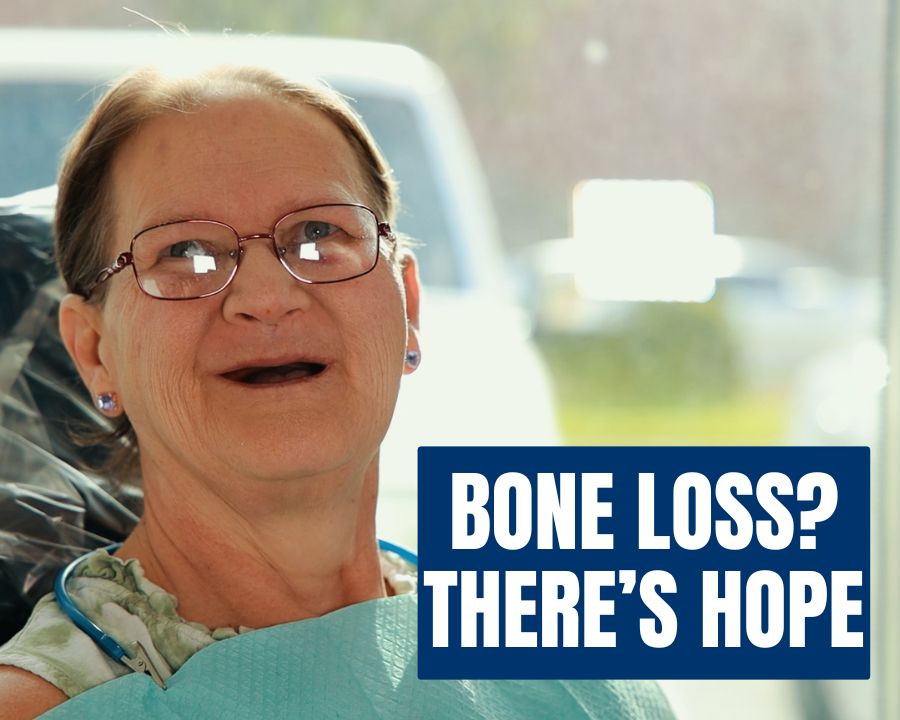
These videos feature real patients who, despite bone loss, were still able to get a full set of permanent teeth.
Hey. I'm doctor Nielsen. I'm with Nuvia Dental Implant Centers, and today's life changing implant story is about Frances. This is one you're not gonna wanna miss. I can't believe the difference. So Frances came out into us not having enough bone available for for implants on the upper. As as you can see, this is just a normal, x-ray where it's all put together. You can't really tell on this, but on this one you can see See this big white areas? This is all added bone. So she had an extra procedure that was done. When someone on the upper doesn't have enough bone to have your standard way of doing implants, if they don't have enough bone, there's two routes they need to go. They either needed to get, zygomatic implants, which are longer implants that take advantage of the cheekbones, or they get sinus lifts. Francis decided to go the route of getting sinus lifts done. The downside of that is that things just take a little bit longer. What need to be done is she had this procedure done where I actually cut a hole in the bone right here and right here and packed up but more bone right there. So all this is added bone that happened, that was just all empty space. It was just big black empty space, but this was added bone. And then we had to wait about nine months for that to heal. That takes a long time to heal. So the downside of doing the, the window is called a lateral window where the sinus lifts. The downside of that is that it just takes a lot of time. If she were to have to have had, the zygomatic implants placed, she could have could have caught her teeth sooner, but then, there is some, you know, it is just a different way of doing it. Fees are a little bit different for that because it's more technique sensitive, procedure. But this is a route that she wanted to go. She'd been wearing a denture for a long time and said she was comfortable wearing it for nine more months. So she came into us, we did this initial procedure. As you can see, we got a lot of bone packed in on either side, very dense. The wider something is on an x-ray, the more dense it is. So you can see that that's all really good. I'm gonna show you the next X-ray and that's gonna be, after nine months later when we were actually, able to place implants. Alright. This is Frances's, post op X-ray after we did the sinus lifts and then nine months later, she's able to come back. We're able to place the implants. We did a standard, four implants on the lower. That was nothing really different than we do on anyone else. Hers, because we added these big extra sinus lifts, we were able to get implants further back and angled some front ones. So you have some large implants on the front as well. And as you can see, this slice goes right through those back implants. So you can see it's a nice solid bone up here and she had a great result and she was one of my favorite before and afters just because she had gone so long just wearing dentures and they were uncomfortable. She didn't wear them. She'll tell you more in her video. She just it was was so unhappy, so embarrassed, didn't like leaving the house. And she's, almost a completely different person afterwards. And immediately after started speaking better than I'd ever heard her speak, and and she just looked so good. And now her problem is she can't stop smiling. She smiles so much because she just loves her new teeth. I'll just leave it on till I get my teeth in. They have been bugging me ever since I got my first set of dentures. I'm on my third pair now and haven't been able to wear any of them. My oral health was my teeth started falling out. My sugar was always out of control, and they just they just started coming out. And you just I couldn't eat with them. So, you know, I was feeling bad, and then I got a set of dentures from somewhere, and I couldn't wear them. I haven't been able to wear dentures at all. It was a recent development when, when I got my teeth pulled. They started falling out, cracking and falling out in pieces. And you're used to having your teeth in, and all of a sudden you're covering your mouth because you don't have any. And you can't wear your dentures, and you just you just feel kind of bad all around. You really notice teeth when people talk to you and they kind of look at you strange if you don't have any and it's been it's been it's been something it's awful but I can't eat but just soft foods I can't eat any hard foods at all meat's hard to chew and I eat a lot of tuna and ritz crackers have my teeth in and just be able to open my mouth and see them all bright and white and they'll be straight and all be just wonderful to be able to eat what I want. You wanna show everybody here is kinda dying to see. Oh, it looks so good. Now you're gonna see what you smile looks like? Oh, wow. Look. Why did it change? Yeah. These are self drinkable too. I'm gonna be clear when they're all over again. God. I could I couldn't believe he got them in there. I said, how in the world does he do that? It was a shock to me. I happen to take them out and in and putting that paste on the back of them so they'll stick and oh, shrimp. Got shrimp and crab. Yeah. I feel more confident. A lot more. I'm not afraid to get in front of a camera now like I was. I didn't want to because I didn't have no teeth. Okay. My daughter loved them. So did my husband. And his mom said they look really good because she's not had nothing but problems with her dentures. I'd like to be able to start getting out more. So people won't be looking at me strange like, why ain't she got no teeth? Yeah. Because they give you that look. I would have done this a lot sooner. I can't believe the difference. I really can't. I've been without teeth so long. They just feel strange having them in there. Well, I thank them very much for helping me out, and I appreciate all they did.
The fact that I was told by a few dentists, not just the one who did the initial surgery, there was very little hope I was even able to get upper implants done. So my journey in twenty nineteen began when I went into the procedure to have my lowers and uppers done implant wise, all on four. Unfortunately, the uppers could not be completed because there was a lot of bone loss found and infection. I was disheartened, sad, just trying to find myself on what I was left to deal with, with that upper denture. I kind of accepted it and went through many years and I suffered greatly from that. So it led me to just be content with the denture for a while. I was told that there was very little hope without, you know, drastic procedures that I was even able to get, upper implants done. In a lot of ways, it's brought me to this moment where I'm leaning it on Nuvia with their expertise and their staff to get this completed. I'm really, really hoping with all my heart that this works out. Mike had two questions when he came in here. His first question was, Is he a candidate? And his second question was, How much will this cost? And that's the question that I get from most patients. So we put together a free cost guide. It discusses all the factors that influence cost for you. You can go ahead and review that so that you have a better idea of what you're looking at. Hey, how are you? Okay. You too. Very good. Thanks, Omar. Yeah. Excited. Thank you. Three, two, one. Live. Smile. Beautiful. And when you're not swollen, you'll see more of that beautiful smile. Amazing. You know? My life's back. It's good. Alright. So you heal up, and we'll see you again in two weeks. Okay? Sounds wonderful. Thank you. Okay. Yes. Of course. Hey. How are you? Good to be back. It's amazing. I can't believe I'm back, and it's it's it's finally done. Just when I thought, you know, all hope was diminished, know, like I said again, Nuvia renewed that and here I am. I can't tell you how I feel. I mean, it's a slow bump in the road after surgery, the swelling and, and you know not so much pain just the swelling and the bruising but that went away a quick two weeks. Doctor. Laor and the surgical team were just I have no word but short of amazing. The entire staff here at Nuvia, thank you guys. From the bottom of my heart, you know, you made it happen. When everybody told me there wasn't a chance to get this done, I didn't have enough bone, they made it happen. They found a way. There is hope out there. And for anyone having, you know, doubts, I would suggest giving Nuvia a shot. At least come in and and let them look over. And you may be told you're a candidate. Happened for me. It could happen for you.
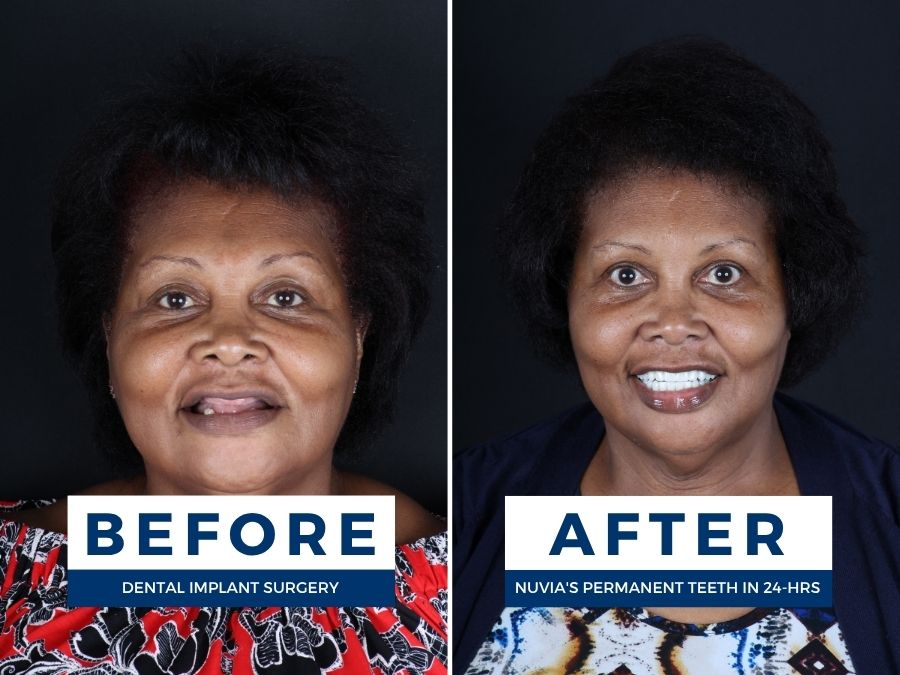
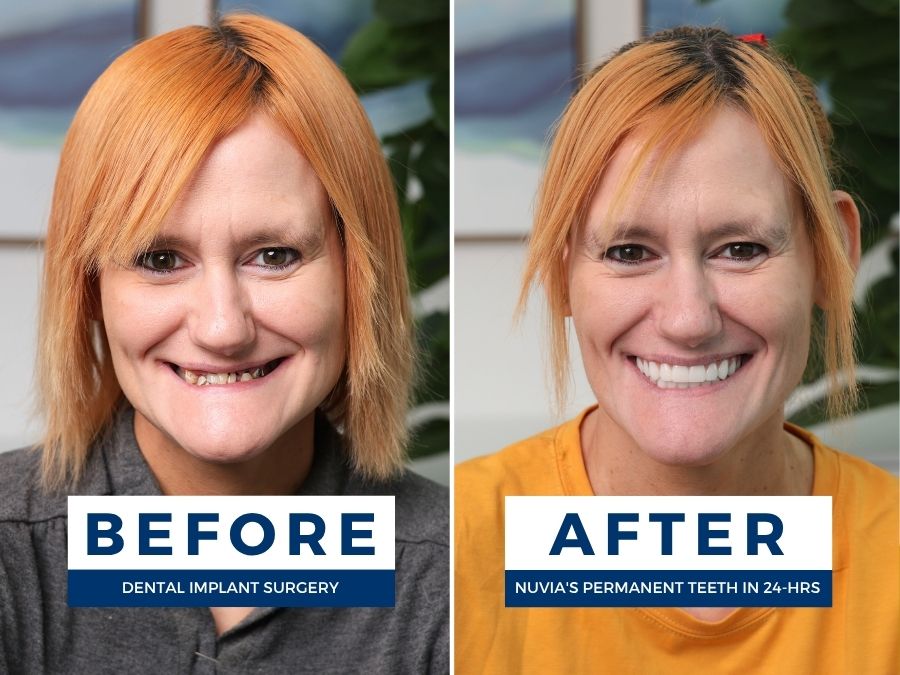
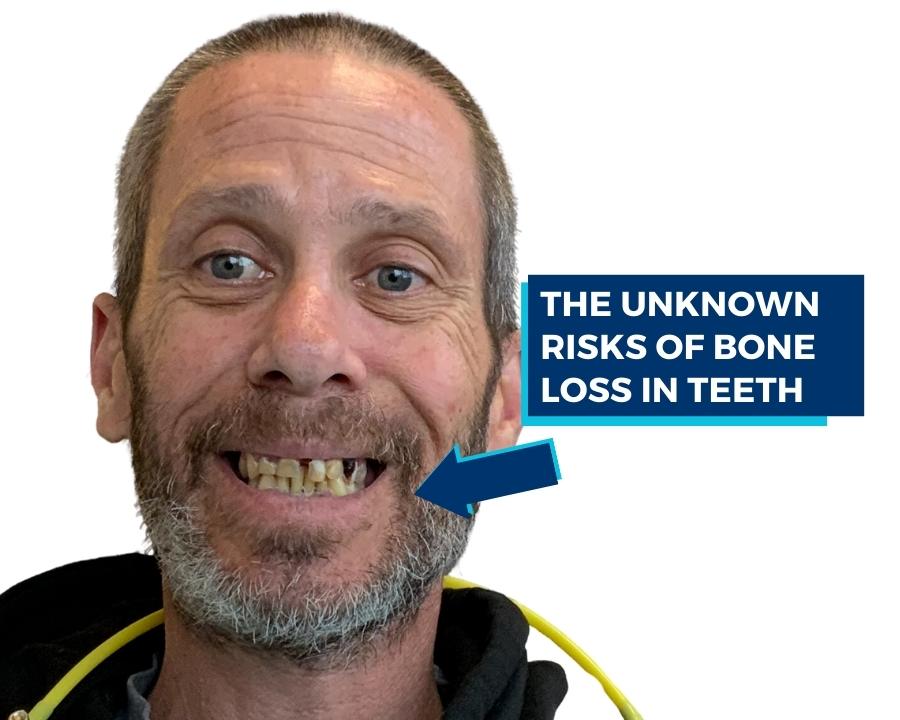
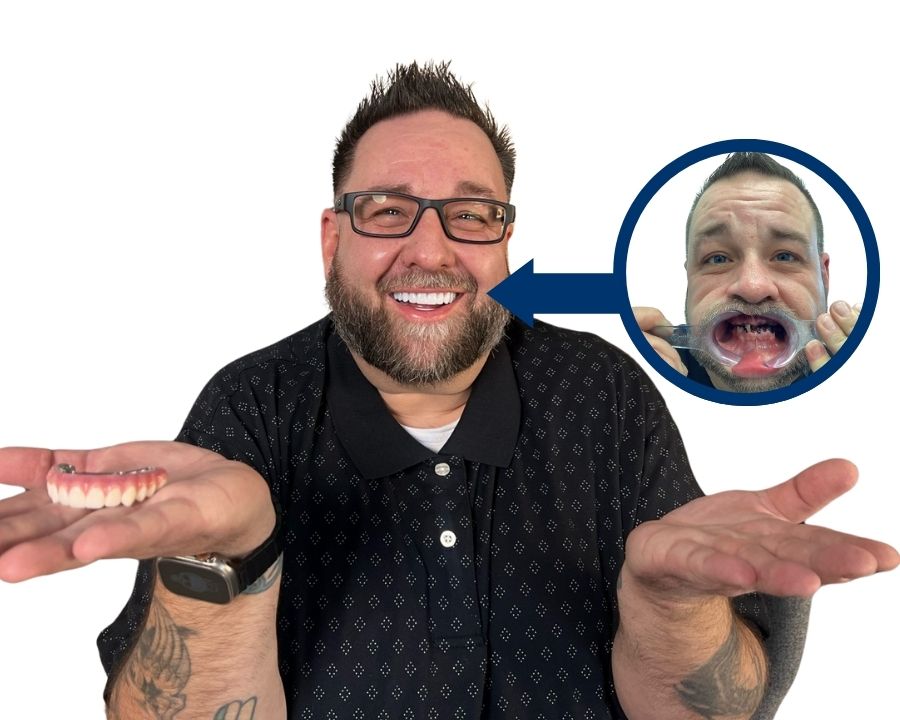
What your starting point looks like doesn’t always determine your outcome. Despite some levels of bone loss, these patients were still able to get new, permanent smiles.


.jpg)
Worries about qualifying are common, especially for patients with significant bone loss. Whether it’s from years of wearing dentures, gum disease, or genetics, these stories show what happens when patients take the next step to find out what’s actually possible.
Hi, I'm Doctor. Paola Anoni, and I am here with my very own patient, Scott Campion. He is about a year out from his Nubia treatment, and we are doing something that hasn't really been done before. We're going to tackle some frequently asked questions as a doctor and patient who have gone through this journey together. This is in twenty four hours if you forgot that. You come, you get your teeth pulled, you go back to the hotel, and then the next day, the very next day, you come and you get new teeth put in forever. I had a double bone infection, which I read on the Spinal Makers Club like, I have bone damage. I don't know if I'm a candidate, this, that, and the other. It's a huge question, you know, and I try to keep up on all that stuff, but yeah, it can be done. So, you're right. Your case was one that honestly demanded this procedure pretty urgently because you did have so much infection. And that is something that we do tend to see. You know, patients by the time they get to us, the amount of infection that they may or may not have going on in their mouth has pushed them to be here. And the beauty of the procedure is, you know, it does physically remove all of the infection, right? So what's left behind is nice solid bone that we can place the implants into. Now, it's good that you came in when you did because when infection is really let out of hand for a long period of time, it does eat away at the bone. You know, I would say most people that walk through are candidates. We can figure out a way to get implants in. But, of course, there's some people who just don't have bone, and it is a it is a disability. That's not to say that, you know, there haven't been patients who have come to see us who have been told no by many people, like, don't have enough, and then we're able to do it. Yeah. But, it is more so like, hey. Make sure that you at least evaluate your options, like, at the kind of first sign of things going wrong so that that way, you know what lies ahead. You know, do you have a ticking time bomb in your mouth? Do you have, like, a very urgent matter where infection can sometimes go into your sinuses? It can go spread to your brain. It can go to your heart, of course. That's right. Yeah. I knew it. It's all very important to get addressed for sure. So when people say on the fence, on the fence, I procrastinated almost a year, I'm not gonna lie to you. So a little bit longer, it would have been no go. And then I would have Potentially. Yeah. Yeah. I mean, you don't know what you don't know. Right? And so if you don't even have baseline information, it's a guessing game. And you don't know how much time you really do have where we still are in that sweet spot of bone so that we can very predictably perform the surgery. I know several people, some are overweight, some are, some is genetics, a lot of is genetics. They do want the procedure done now that they've seen it, but they have other health issues. One has sugar diabetes, one is really high blood pressure. Are they just written off? They're not able to do it? What do you do in a circumstance like that? That is such a good question. So we see that often. You know, we have a very detailed medical clearance process, which I'm sure you're very familiar Yeah, yeah. And that's, you know, when we decide that you are a candidate via what the bone looks like, we now have to look at the whole picture because you are going to sleep under general anesthesia, and you are getting a surgical procedure done. And so, yeah, we've had patients come in, you know, who are diabetic and perhaps don't have their A1C under control, or, you know, have their blood pressure out of whack, or maybe they're a smoker. There's a lot of different ways that we can work with the patient and with their providers in order to get them to a place where it's safe to perform this procedure. We can predictably perform it knowing that it'll be, you know, knowing ninety nine point nine percent sure that it'll be successful, you know, in the future as well, which is so important. Because like the last thing you wanna do is invest this kind of money and time and energy into a procedure without knowing like, Hey, is this a fiftyfifty that it's going work? Right, right, right. We want to set you up for And I've also learned, I have so many comments I've read, turned away by all in four specialists, this doctor, that's not Turned away by this, clumpy. Turned away by this company. Nuvia, no problem. We'll do the procedure. You're I mean, do you explain that doc? The beautiful thing is Nuvia has a very large network of really highly skilled surgeons in particular, obviously restorative doctors as well. But I mentioned surgeons because I would say almost all of our surgeons have received training in what we call complex implant placement. So whether that's utilizing the cheekbone or the pterygoid bone, which is the bone that's, you know, behind the molars, or even just placement and strategy, they really, really do handle laying down the foundation for some very complicated cases. Ones that someone who does, you know, one or two cases of these a month might not feel so comfortable with. Meanwhile, you know, I would say several of our surgeons have done literally thousands plural of arches, placed tens of thousands of implants under their belt. And so that does come with a level of kind of, you know, expert, if you will Absolutely. That that I I think provides a lot of comfort for our patients knowing that that's kind of who's in charge. Also, Nuvia has an a plus rating with the Better Business Bureau, and we've been awarded dental implant restorations company of the year by Healthcare Business Review three years in a row. And I feel like it's it's pretty standard across the board. So whether you're visiting us, in California or Salt Lake or New York or Tampa, obviously I'd love to see you here in Tampa. Right? Well, here you go. My answer, when I saw I'm going to New York for the air, and they're like, well, have offices. I said, no, I'll be flying back in Tampa for my visit. Thank you. Yeah. But But, yeah, our doctors are really absolutely So the regular for most is regular for your team. Yeah. They can do, they can do I would say something that an outfit that does like, you know, a handful of cases a month or something like that might be pretty run of the mill for us. Very comfortable. You know, that's not to say that it's not hard. Right. The doctors are still, we're all like, you know, working very **** ** it, but I like to describe it once you do this many, this is the only procedure we do, right? We don't do single implants, we don't do crowns, veneers at Nuvia Dental Implant Center, right? Once you do so many of them, it is a very complex procedure, but to the doctors who are performing it after having done so much, it's not complicated, right? It becomes second nature, though it's a very high level execution of memory Yes, exactly. Okay, doc, I have a question. I don't know if this is appropriate or not, but I'm going to ask it. Okay, let's I know the COWS guide. There's a link below. We're past that now. I've looked at Smile Makers Club. Doc, I've seen all walks of life on there. Okay? I've seen garbage men. I've seen nurses. I've seen teachers. I've seen people that work in daycare. They're going out and getting loans and getting these teeth. So it's not just for the certain whatever. It's for everyone. Yeah, I think a lot of times people hear, you know, ballpark figures on what really, you know, this procedure might entail. And it varies dramatically from provider to provider. I'd say at Nuvia, our pricing is incredibly competitive when you compare it to other providers for what you are actually getting, you know, these permanent teeth in twenty four hours. Right. I also really love that Nuvia has made it accessible to so many people. You're right. We see people from all walks of life here. The financing options that are available are certainly something that a lot of patients lean on in order to make things happen. But it's like, you also have to weigh, you know, what this treatment looks like against what the dental investment you have made and will continue to make along your life is going to look like, right? Each crown is like anywhere from fifteen hundred to two thousand five hundred, maybe even three thousand if you're also like getting, oh yeah, and then plus the root canal, like that's another twelve hundred to two thousand. Like, it just And your time. These add up. Right? Yes. The time in the chair, you're there awake while someone is drilling the entire time, you know, and it might not seem like a substantial amount when you're just doing piecemeal, oh, I need one thing here and I need one thing here. Add it all up. Right. You know what I'm saying? And then compare it when you look at it. Look, I will also say this, there's definitely patients who come in here who have all their teeth and who have some cavities. And they're like, I don't want to deal with it anymore. And it's like, we are not in the business of taking out teeth when they don't need to be taken out. Right. I've heard them say, we're not going to take out a healthy tooth. Sure. You know, I like to compare that to like, if a patient comes in to an orthopedic office with a broken finger and they're like, cut the arm, doc, like, just take the whole thing, give me a prosthetic arm. Like, no, we're not gonna do So that's the same kind of thing here. But if you are deemed a candidate by the doctors who evaluate your pictures as well as your scan, as well as you as a patient, you know, that's when you really have to sit and think like, is this an upfront investment that I'm making, you know, that's designed to last a lifetime, right? Like hopefully would be lasting years and years and years into the future. How does that look in comparison to, I need patchwork, I need patchwork, I need patchwork for the next two decades and then maybe we end up in the same place or indentures. So yeah, it's a personal decision, and you have to find value in it as well as a patient, right? Like you have to eat and function and smile and do all these things if you're not in a headspace to want all these things for yourself. Like coming in, what would a patient expect to go through such a surgery like this? I mean, you don't feel anything, I heard, right? Or do you? What's the deal with that? So that is a question that we get quite often. What is it going to be like after surgery, right? And so there's many layers to this. We have after surgery, it is a major surgery, right? You're gonna have some swelling, you're gonna have some bruising. We do give pain management, as you know. And I would say most of our patients really have a pretty smooth recovery. There is a very strict soft diet that we want our patients to adhere to for about four months after surgery. This is just gonna ensure that the implants have plenty of fertile ground to integrate into, right? And so, that soft diet, it's not a liquid diet. We want our patients eating real food, fish, eggs, pasta, lasagna, shepherd's pie, ground meats, all of that's totally fine. Know, but having gone through it, what did your diet look like afterwards? Mine diet, I was just gonna say, it's not as bad as everyone thinks it may be. It really isn't. Soft food, French toast, oatmeal, it's everything I was already eating. Yogurt, know, soft fruit in the morning, cottage cheese and peaches. I literally had cottage cheese and peaches this morning for There you go. I mean, is that a sacrifice? I guess so. I don't know. You're healthy and you're able to get beautiful teeth. It's just amazing what you can do. Again, folks, this is in twenty four hours if you forgot that. You come, you get your teeth pulled, you go back to the hotel, and then the next day, the very next day, you come and you get new teeth put in forever. Scott mentioned the cost guide before, and in case you're looking for it, it is down below in the description. It really outlines a lot of other questions that patients might have, as well as all of the different financial options that are available for you, if you do decide to move forward with implant treatment.

Before getting dentures or implants here's five things I wish I would have known before getting them. And I know you're worried about cost, but we're going to talk about that a little bit later. So my teeth were pretty bad. They were cold sensitive. I would cover my mouth when I laughed or I would just laugh with my mouth closed. And if you're watching this video, you probably are there too. I had the wiggly teeth. I had to have root canals. I had to have crowns that would keep falling off. It was a nightmare. It was a dental nightmare. I didn't realize how much dental anxiety I had around my teeth and the insecurities that it was causing me, the selection I had to make when I was finding what I could eat and what I couldn't eat. So if you're like me, I wanted to gravitate towards something that was a quick fix and economical. So I went to a denture. And it was great because the next day I had a brand new smile. However, you're just trading one problem for another because if you're in a denture for too long, you're gonna notice that you can't taste food. You're still having trips to the dentist because you've gotta do a reline and a liner and an adjustment, and you have denture sores, and the list just goes on and on and on. And you just trade one problem and you start to spiral this other complete way. And actually, if you're wearing it for too long, you're going to end up with bone loss. And that's a bigger problem for down the road. The cool thing about dental implants is that the palate is open and you can actually taste your food. The difference between that and a denture is this covers your palate and it literally rests on your gag reflex. With a denture, you have to have the palatal part because that's what actually keeps the denture in your mouth. But it also rests on your gag reflex, and a lot of people just can't tolerate that. With a dental implant, these are anchored into your bone so you don't have that problem that you do with this. So you guys can see the difference. Realistically, which one would you want in your mouth? And you probably don't know this, but if you're in a denture for too long, your bone is gonna shrink. And ultimately, when you're ready to go get dental implants, you're not gonna have enough bone, and you'll be disqualified. Even if you have all the money in the world, if you don't have enough bone, you won't be able to get dental implants. I've heard and I've seen many people be turned away because of their severe bone loss, and I don't want to see that happen to you. So if you're thinking about it, don't procrastinate. Get in there, check your bone, and see if you're a candidate. Luckily for me, I did have enough bone to get dental implants, but I wish someone would have told me that the clock was ticking. If you're watching this video, then you probably already know how much time and money you've spent going to the dentist only to be having root canals and crowns and fillings. And I personally had a broken file in one of my teeth. Like the the dental trauma goes on and on and on and on. You've probably been out to dinner to eat and you've had a piece of bread and a piece of your tooth is chipped off. Or you've gone to the dentist with an abscess and you go in and you have to have a root canal, but he only temporizes it. Then you have to go back for the actual root canal. And then you have to go back for the crown. And then it's just one cost after another, after another, and it's just endless. It just piles up. And then you have children that have dental work or braces, and it just goes and goes and goes. And it's like an endless cycle of how much do I have to pay for actual dental care. If you think about it and you add up all the money you've spent on temporary fixes for your dental care, if you're anything like me, it's close to six figures. I started having root canals when I was fourteen years old. So it's a lifelong, endless hole of debt. With dental implants, like the ones I have in my mouth, it's one and done. You don't ever have toothaches again, no root canals, no abscesses, No surprise bills. No emergency visits. These are the real deal, and they're awesome. And if you're worried about cost, Nuvia does have a cost guide that can potentially save you thousands. I'll leave the link for you below. And if you can do me a favor and hit the like and subscribe button, I would love for this video to get out and help as many people as it can. I wish I knew I could get dental implants in twenty four hours. So I've actually had this done twice. The first time was the traditional way, which is the long way. It took months and months and months. It was not done by Nuvia. I had to go through several try ins and healing and shade changes, and was really just on the labs time. And during all of that process, my temporary actually cracked and it was so scary because I was worried that my implants were going to fail And I would not recommend going that way to anybody. I mean, let's be real. If you're going to have a major surgery, do you want to sign up for something that's going to take months and months and months? Or do you want the one that just takes twenty four hours? So ultimately, my dental journey inspired me to want to work in dentistry so that I could help other people with the same problems that I struggled with. I now work at Nuvia, and they were able to give me my teeth in twenty four hours. And now I see it on a daily basis. People get permanent teeth in twenty four hours. I wish I knew how life changing this was. So when we have patients come in and they're so insecure and they have no confidence, they're not even confident that we can help them. They just go ahead and take the jump and choose us to go on the journey with them. And we are so fortunate on a daily basis to be able to change people's lives in twenty four hours from surgery. It's amazing. It's rewarding. And I personally, since I have dental implants, I know how that changes a person's life. And so I feel very fortunate that I get to do that on a daily basis.
After taking the 60-second quiz, you’ll have a consultation with a Nuvia dental implant center near you. You’ll have a quick scan done to check your bone levels. This step is important because it’s difficult to know your options without getting the full picture of what’s going on.
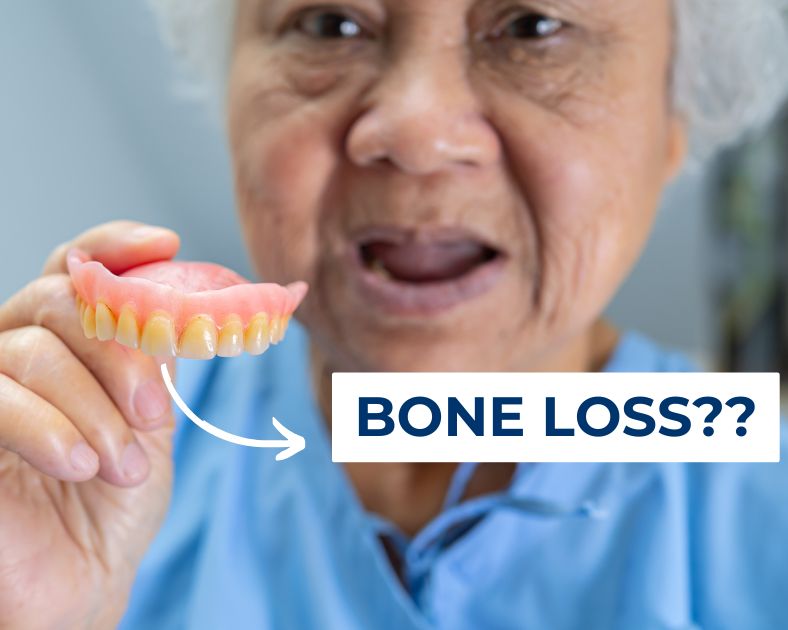
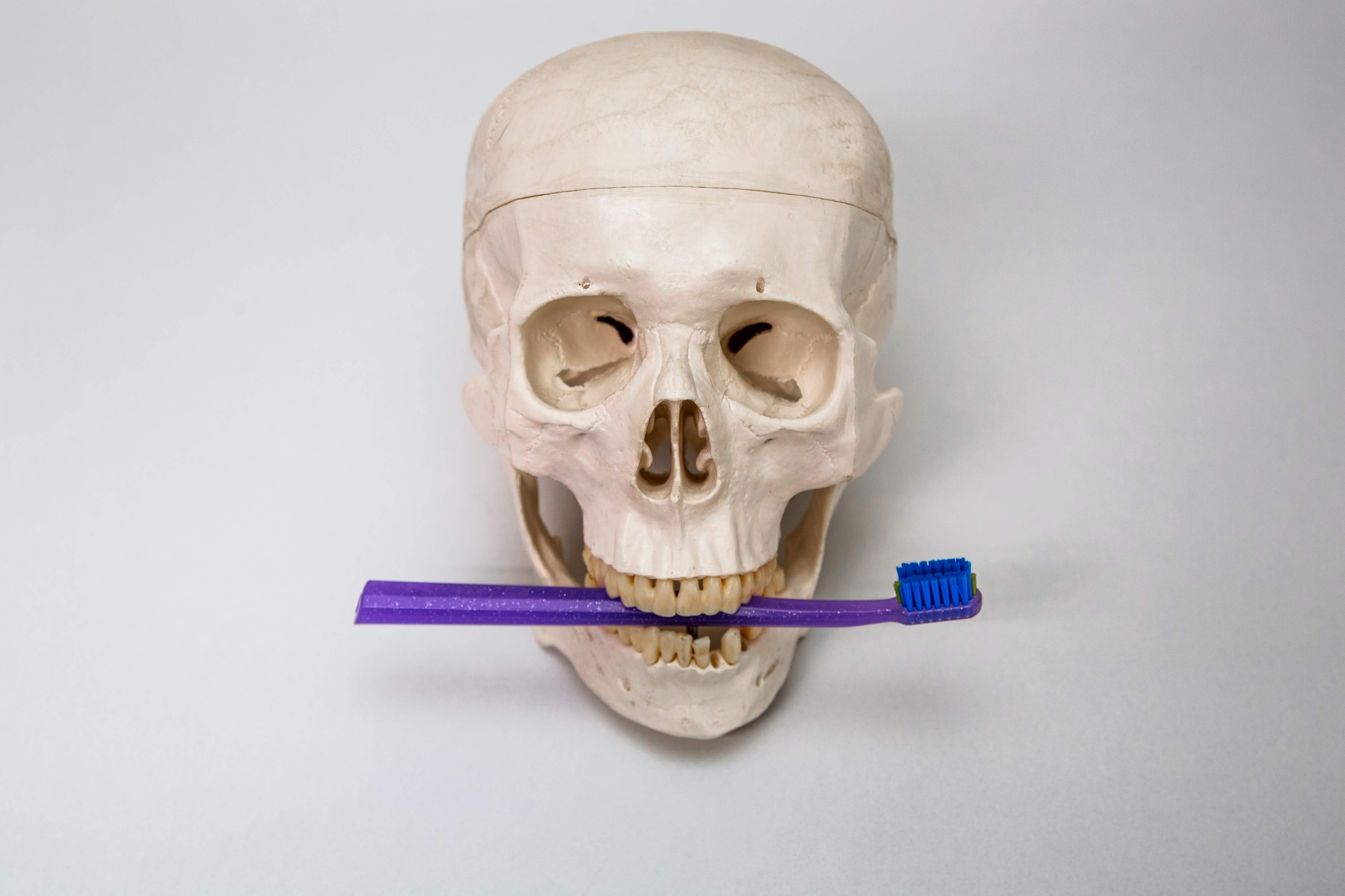
It’s not uncommon for patients to have some bone loss; especially if they’ve worn dentures for years. A lot of the time, patients can still get dental implants using the All-on-4® technique, which is designed to make the most of what bone patients do have. If you qualify for this option, you likely won’t even need any bone grafting.
For patients that have severe bone loss; there are still options. For the upper set of teeth, you can get zygomatic dental implants that anchor into the cheekbone instead. Alternatively, bone grafting procedures may also be an option prior to getting dental implants.
Based on your situation, your care team at Nuvia will recommend next steps. It’s worth noting that if you’ve been turned away by an implant dentist in the past because of bone loss; there may still be hope. Nuvia providers do these procedures day in and day out and can often take on more complex cases.
At your consultation, you’ll get a clear breakdown of the cost and available payment options. Most patients choose monthly plans, making treatment more manageable than expected.
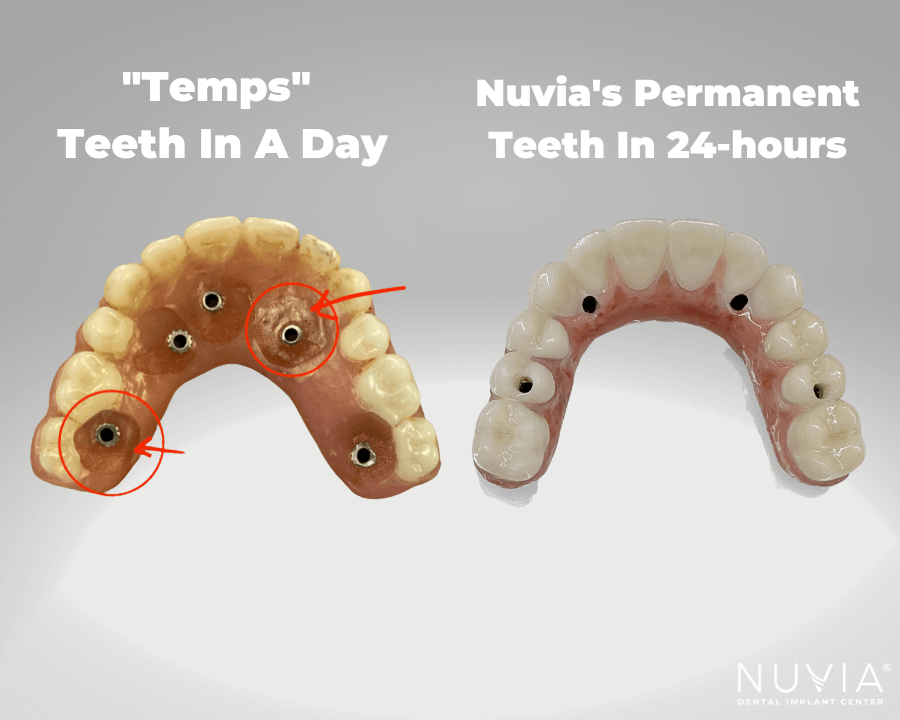
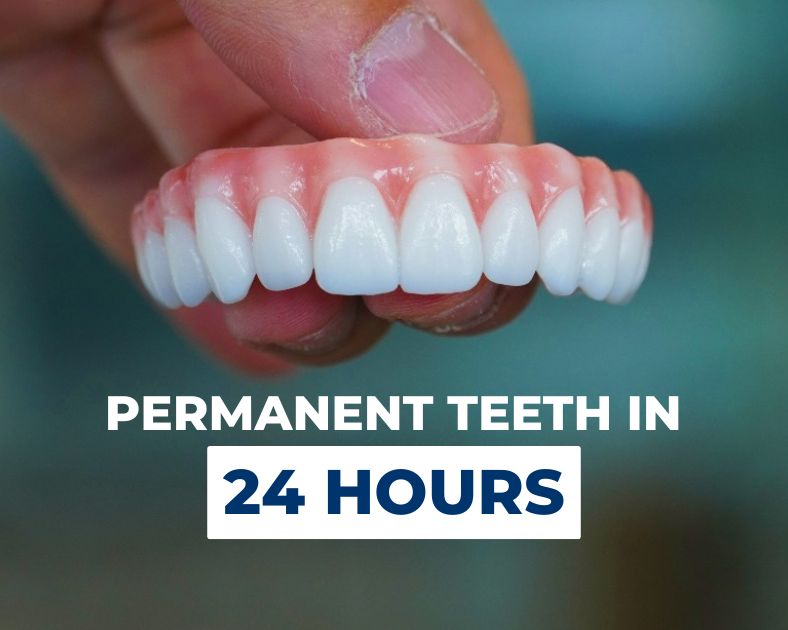
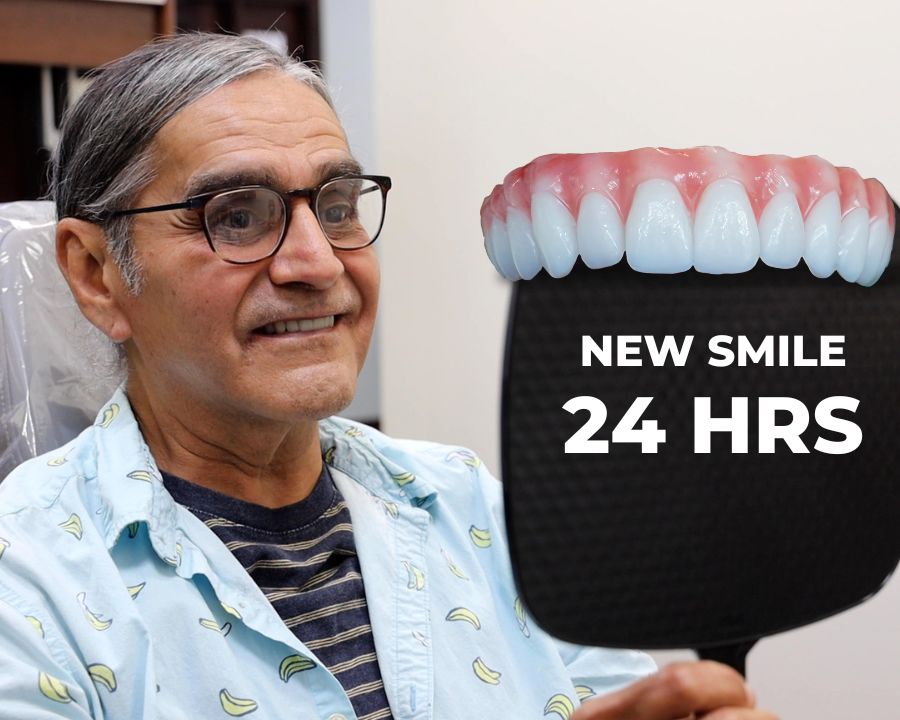
After your procedure, you’ll go home to rest. Then, around 24 hours later you’ll return to the Nuvia office near you and get your permanent teeth. Unlike traditional “teeth in a day®” methods that can take up to 10+ months for final teeth, your permanent teeth are crafted overnight at Nuvia and delivered the next day.
Whether bone loss has been a struggle for you in the past or not, with dental implants you’ll be able to eat what you’d like and enjoy a healthy, beautiful smile.
Get clear answers about bone loss, including grafting, alternative implant options, timelines, and what determines whether you may be a candidate or not.

.jpg)
.jpg)
.jpg)

Fill Out The 60-Second Quiz Below

This guide is designed to walk you step by step through the dental implant process and each dental implant type with their associated costs.


.jpg)
.jpg)