

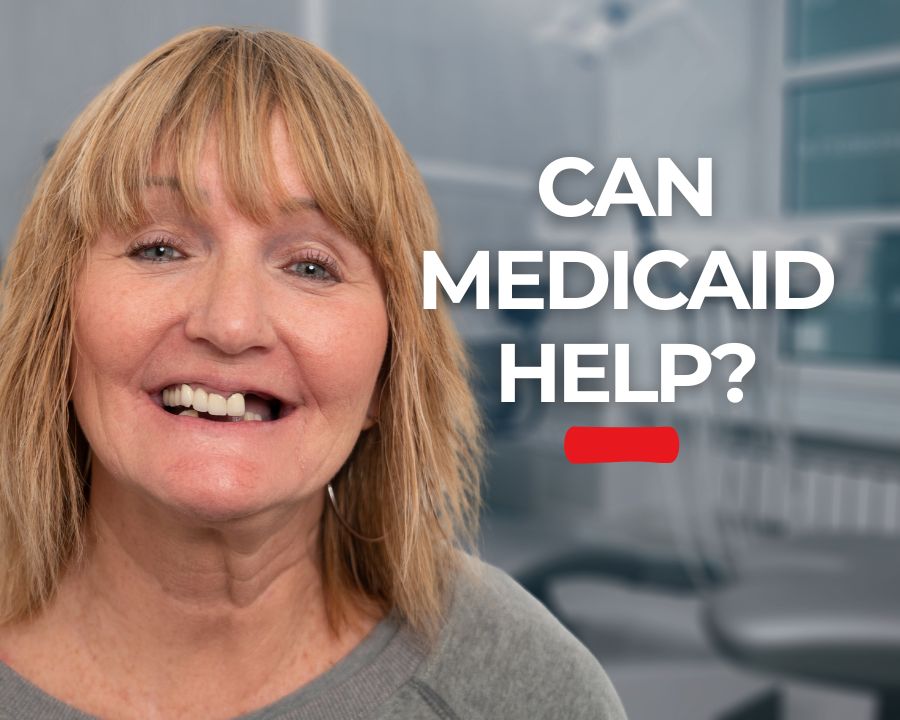
Does Medicaid pay for dental implants? Almost never. Most state Medicaid programs cover basic dental care at best — cleanings, extractions, maybe a filling. Full arch dental implants fall outside what Medicaid covers in virtually every state, and that's not a technicality that's likely to change anytime soon.
If that's where your research just landed, don’t lose hope. Because the answer to that question is not the end of this conversation.
The People Who Ask About Medicaid
You're probably not asking because you're curious. You're asking because you've been dealing with failing teeth for a long time, your options have felt limited, and you need to know whether there's any help out there before you assume this is just not something you can do.
If you've been patching things for years, it makes sense to wonder if medicaid pays for dental implants since that’s likely your next step in getting your smile back. A tooth pulled here, a partial that never quite fits right, a bridge that's starting to go.
You've done the best you could with what you had. And you've probably told yourself more than once that permanent implants are for people with better insurance or more money.
The truth is, full mouth dental implants are often the cost-saving option for restoring teeth in the long run. And it really isn’t just about getting a smile that looks nice - it can be an investment in your health.
This Is a Health Decision, Not a Cosmetic One
Dental implants often get filed under "cosmetic" — but what's happening in your mouth when teeth are failing or missing is anything but cosmetic. Your jawbone can break down when there's no tooth root keeping it healthy and strong.
When bone loss happens, it can change the structure of your face over time. It can affect how you chew, which affects what you eat, which affects your overall health. Gum disease connected to failing teeth has also been linked to cardiovascular problems, diabetes complications, and more.
The patients who come to Nuvia aren't doing this for vanity. They're doing it because they've reached a point where the situation is affecting how they eat, how they talk, whether they smile in photos, and whether they feel comfortable in a room full of people. For many patients, it’s stopped being a cosmetic decision and instead has become a quality of life decision.
What Nuvia Offers That Most Providers Don't
Figuring out how Medicaid covers dental implants is only one piece of the decision. The bigger question is who you're trusting to do the work — and what you're actually getting when you say yes.
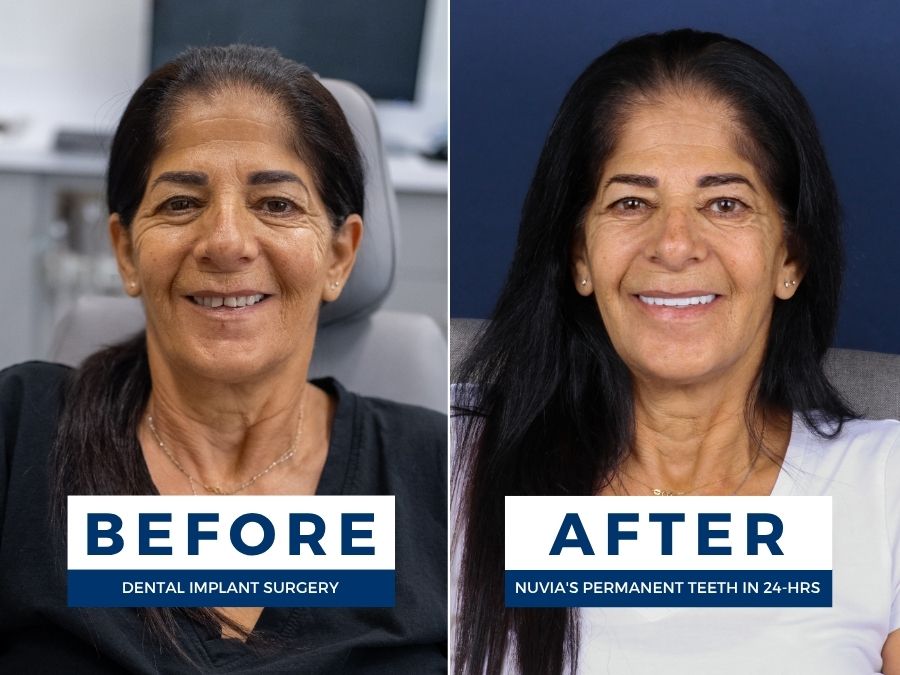
At Nuvia, patients don't go home in a temporary set of teeth while they wait months to heal like they would probably experience with a traditional provider. At Nuvia, the implants go in during surgery, the lab works through the night, and you come back the next morning and get your permanent, custom-made zirconia teeth. No temporary. No multiple procedures for extractions and implant placement. Just one procedure and permanent teeth in 24 hours.
The team behind that includes an oral surgeon, a restorative dentist, and a CRNA who keeps you asleep and comfortable throughout. That level of care isn't something that every dental office is able to offer.
For more information about your team and how that impacts your experience, read about it here.
How Nuvia Patients Actually Pay for This - Without Medicaid
Medicaid won't cover it — but that's not the only way to pay for dental implants when you don’t have a ton of savings or dispensable income. The vast majority of Nuvia patients (around 92%) use a monthly financing plan.
Payments typically fall between $250 and $900 a month depending on the case and what a patient qualifies for. Multiple lenders are available, and Nuvia works with each patient's individual situation.
If you’re not sure about qualifying for a loan, you should know that co-signers are an option.
If your credit history or income makes it hard to qualify on your own, a co-signer — a spouse, a sibling, an adult child, a close friend — can be the thing that makes this possible. Co-signing on a financing plan doesn't mean the other person is paying for it. It means their credit profile helps you qualify for a monthly payment you can manage.
Nuvia works with multiple lending partners specifically because not every patient's financial situation looks the same. The goal is to find a payment plan that works for you, not just offer the same thing someone else is doing.
To get started and find out what you might qualify for, the first step is to take the 60-second quiz to see if you may be eligible for treatment.
Take the quiz here
What Patients Say After
One year out, two years out, the thing patients talk about most isn't the procedure itself. It's what changed for them after finally having a healthy smile.
Many patients share with us that they’re finally eating foods they haven't touched in years. They're smiling in pictures instead of turning away. They're having conversations without keeping their lips tight and hiding their mouth. They go back to work, back to school, back to things they had stopped doing because their teeth got in the way.
Not only can everyday life drastically change, having a healthy mouth can support/contribute to overall health.
The First Step Costs Nothing
Medicaid won't pay for dental implants so your first step isn’t working with insurance to get you there. But a 60-second quiz is the first step to finding out if you may be eligible for dental implants in the first place.
The quiz takes only a minute, there's no appointment and no commitment attached, and it gives you a real starting point before you make any decisions. If you qualify, you'll know and then you can have the actual financing conversation with someone who can look at your specific situation.
The longer failing teeth sit, the more bone you lose underneath them, and bone volume matters for candidacy. If you've been sitting on this, now is the time to find out if permanent teeth in 24 hours is right for you.
Take the 60-Second Quiz to See if You May Be Eligible→




.jpg)

.jpg)