


.jpg)
If you’re on Medicare or Medicaid, you’ve probably wondered whether it covers dental implants. Most people already suspect coverage is limited, if there at all, and they're largely right. But the real question is: if dental implants aren’t covered, can a new smile still be in reach?
The good news is that a new, affordable smile is still possible. But first you have to understand what insurance actually covers — and what it doesn’t — to see why.
Does Medicare cover dental implants?
Original Medicare (Parts A and B) does not cover dental implants. It actually doesn’t cover basic dental care at all. No cleanings, no dentures, no simple tooth removal unless you’re in a hospital setting. Unfortunately, that’s just how Medicare was built.
There’s one small exception: Medicare may pay for dental work or dental implant costs if it’s tied to a covered medical procedure — like jaw surgery after a serious accident. But instances like regular tooth loss are typically not covered.
That’s the short answer for basic Medicare, but it’s not the whole picture.
What dental services are covered by Medicare?
The truth is that medicare dental coverage is pretty much unheard of when it comes to original medicare. If you have a separate medicare dental plan or are on a Medicare Advantage plan, you may have coverage for some dental services.
Does Medicare Advantage cover dental implants?
Medicare Advantage (Part C) plans are offered by private insurers approved by Medicare, and many include dental benefits that Original Medicare doesn't provide. Some Medicare Advantage plans do cover a portion of dental implant costs — but it depends on your specific plan and where you live.
Even though original medicare doesn’t help with dental implants, some Medicare Advantage plans with dental coverage do chip in a little, but it depends on your plan. There's no single answer that's true for everyone.
The best way to find out is to call your broker or insurance contact and just ask. Most people find out their Medicare doesn't cover implants at all. That's okay — at Nuvia, most patients don't use insurance to pay for their implants anyway. They use a monthly payment plan.
So the real question isn't what your plan covers. It's whether the monthly payment is something you can work with.
The good news is that financing plans have even made dental implants possible for patients on a fixed income.
Start with the 60-second quiz to see if you may be eligible for dental implants and potentially a payment plan.
Can you get dental implants with Medicare?
Yes. Being on Medicare doesn't mean implants are off the table. Medicare dental coverage doesn't pay for them — but that's not the same as saying you can't afford them.
92% of Nuvia patients use a monthly payment plan. That includes a lot of people on Medicare and fixed incomes. Payments usually run between $250 and $900 a month. For most people, that's much more affordable than years of dental bills from patching failing teeth.
You'll see your exact number at your consultation before you decide anything. 9 out of 10 Nuvia patients use financing. That includes people on Medicare, Medicaid, and fixed incomes.
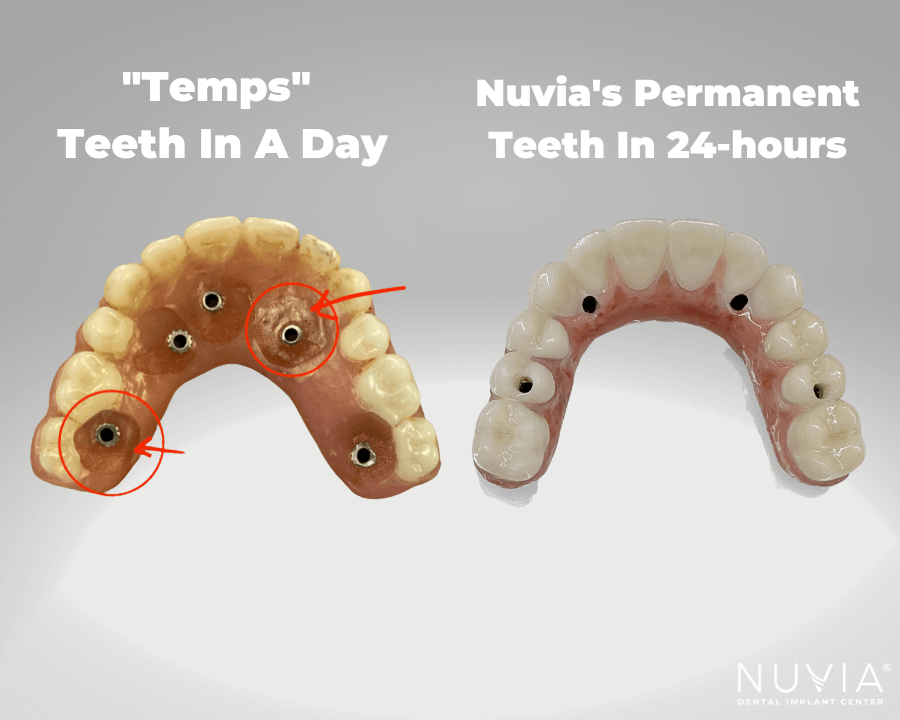
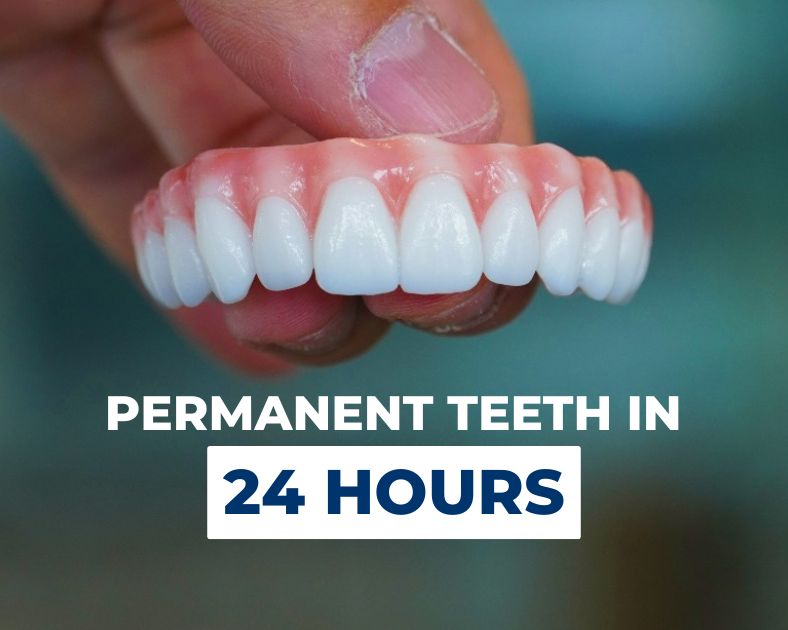
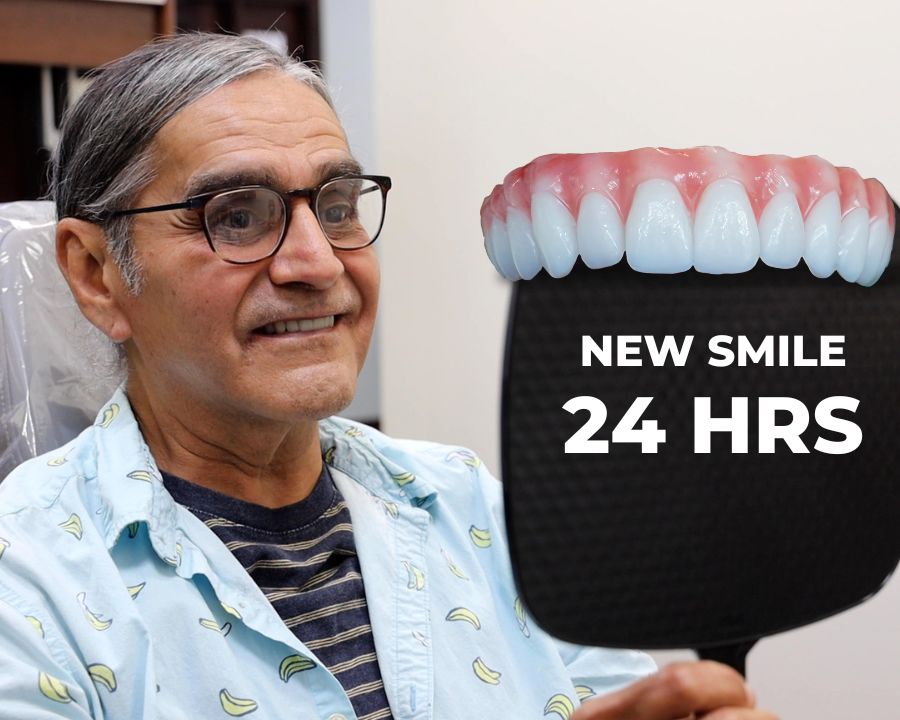
At Nuvia, you leave the day after surgery with Permanent Teeth in 24 Hours — real, fixed teeth, not a temporary set you'd wear for months.
Whether your plan chips in or doesn’t, that doesn’t decide whether you can afford implants. Insurance and affordability are two different things.
After you take the quiz and come in for a consultation, you’ll see what your financing options actually look like — if you qualify. Those are the numbers that matter. Not the total price upfront. Not what the government covers or doesn’t.
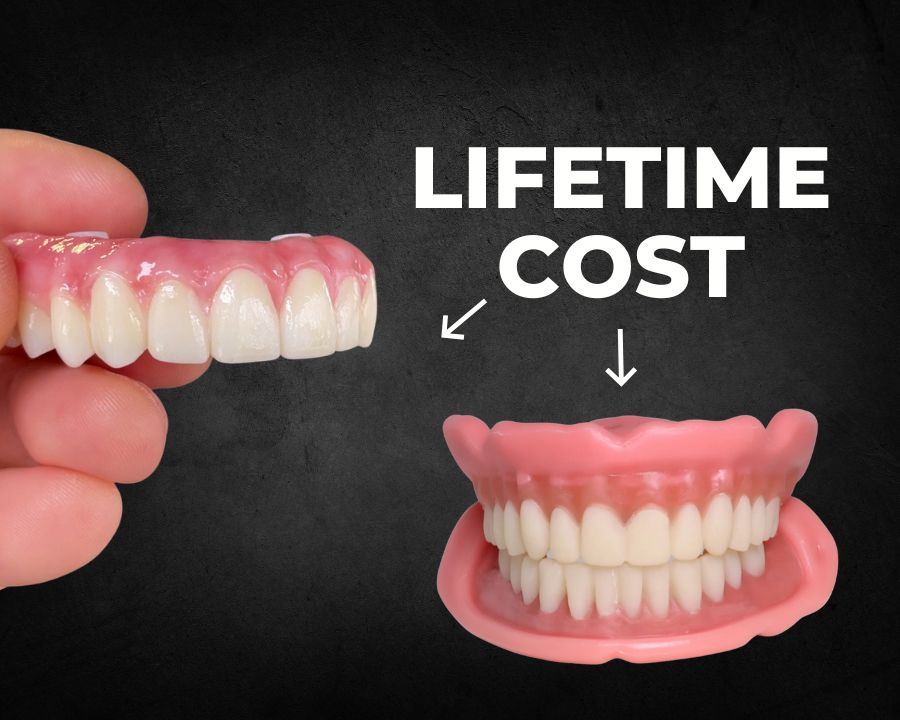
Here’s something a lot of people never add up: bad teeth are expensive. Crowns, root canals, extractions, partials, dentures, replacements — it never really ends. For a lot of patients, ongoing cycle of frustrating procedures isn’t just a headache, it can cost a fortune. Keep in mind, with original Medicare, you don’t have coverage for these procedures either.
Full mouth implants are a one-time fix. With proper care, they’re built to last your whole life.
Wondering if this could work for you? The 60-second quiz tells you if you might be a candidate — and you can get the dental implant cost guide for more details on what factors into pricing.
Does Medicaid cover dental implants?
Medicaid is run by each state, so what’s covered depends on where you live. For adults, the gap between states is huge. Some cover a lot of dental care. Others only cover pulling teeth in an emergency. Some offer nothing for adults at all.
For most adults on Medicaid, the answer is no — dental implants aren’t covered. Where states do offer adult dental benefits, it’s usually just the basics: fillings, extractions, sometimes dentures. Kids under 21 get dental coverage required by federal law.
A few states have started covering more dental care for adults, so it’s worth checking what your state currently offers. But for most people on Medicaid — dental implants are not covered.
What this doesn’t mean: it doesn’t mean implants are impossible. It means financing with a cosigner is probably how you’d make it happen — and that’s fine. Even people with regular private insurance usually pay through a monthly plan. Financing opens the door for a lot more people than most would expect, including people on fixed income.
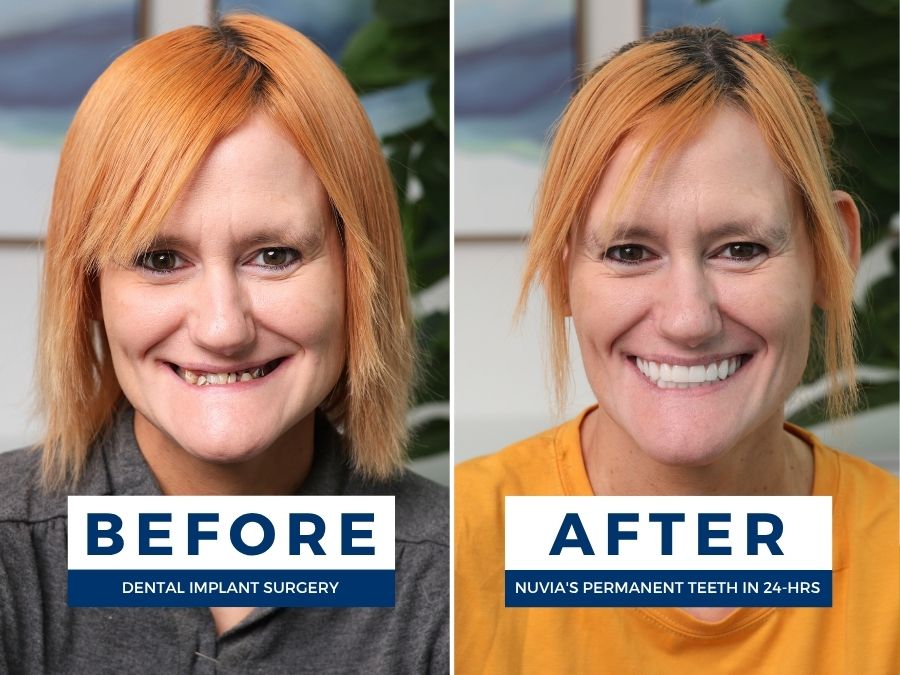
Permanent Teeth in 24 Hours: What That Means for Medicare and Medicaid Patients
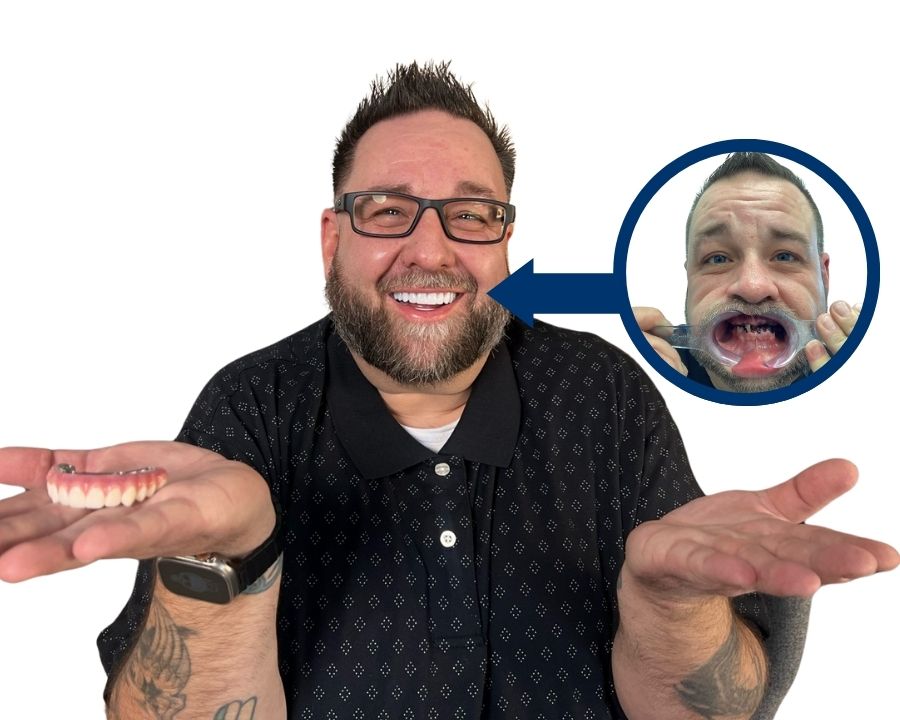
Most places that do full mouth implants send you home with temporary plastic teeth. You wear those for four to six months, then come back for the real ones. Nuvia does it differently. The lab works through the night. You come back the next morning and leave with your permanent teeth, not a temporary set. You're done after one surgery, one recovery, and one set of teeth — no matter what Medicare or Medicaid covers.
If you've been dealing with bad teeth, dentures, or years of dental work that never quite fixes the problem — this is what a real fix looks like. Take the quiz below to find out if you might be a good fit.
Here's what the process actually looks like:
- Consultation and scan — A restorative dentist evaluates your mouth and creates treatment plan specific to your needs.
- Surgery day — An oral surgeon places the implants while a CRNA (certified registered nurse anesthetist) keeps you comfortable and completely asleep throughout the procedure. Having all three experts on-site — restorative dentist, oral surgeon, and CRNA — isn't standard at every dental offices. At Nuvia, it's the standard for every patient seen.
- Overnight — While you rest at home, Nuvia's in-house lab works through the night building your permanent teeth.
- Next morning — You come back and leave with your final smile. Not a temporary or a placeholder.
Why insurance coverage isn't the only math that matters
A lot of people never even look into dental implants because they tell themselves: I’m on Medicare or Medicaid, so I can’t afford this. But that assumption is based on mixing up two things that aren’t the same.
That assumption treats insurance coverage and affordability as the same thing, which they aren’t. And there's a second piece of math that most people don't add up until after the fact: what years of repairing failing teeth actually costs.
Ten root canals and crowns spread over a decade can run $25,000 — with no guarantee the teeth will hold. One cracked tooth that turns into an emergency can cost around $9,000 by the time you go through a crown attempt, root canal, extraction, bone graft, and replacement. Add that up across a whole mouth and you start to see the real number.
There’s another cost that’s harder to see. When teeth are gone, your jawbone slowly starts to shrink and it doesn’t grow back on its own. The longer someone waits, the fewer options they usually have — and for some people, waiting too long could mean that implants are no longer possible at all.
When you make the comparison on what you’d spend patching teeth over ten years versus a monthly implant payment — the numbers usually aren’t what people expect — the math often shows just how affordable of an investment dental implants can be.
For many people, getting full-arch dental implants aren’t just them choosing the expensive option. It's the long-term solution and smart financial decision. Rather than trying to save teeth that are going to fail regardless, you could get the one and done solution to missing and failing teeth - in just 24 hours.
What the options look like in practice
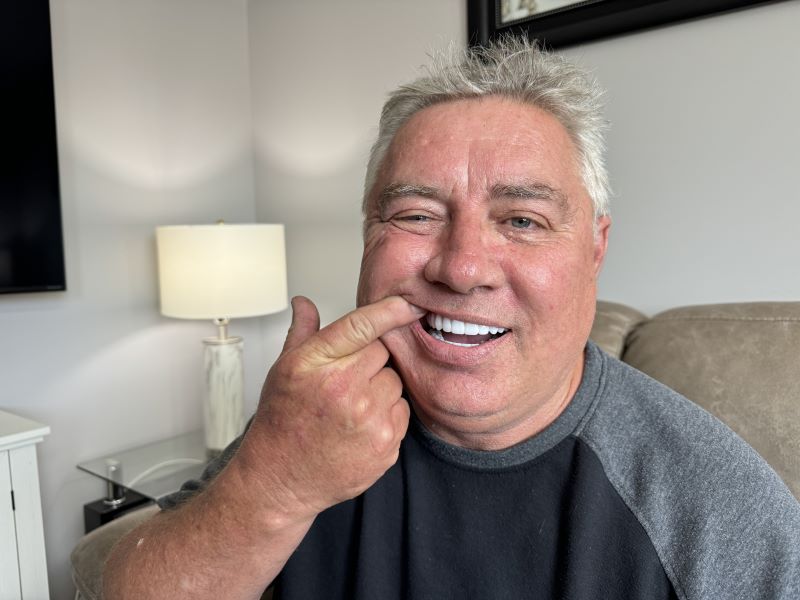
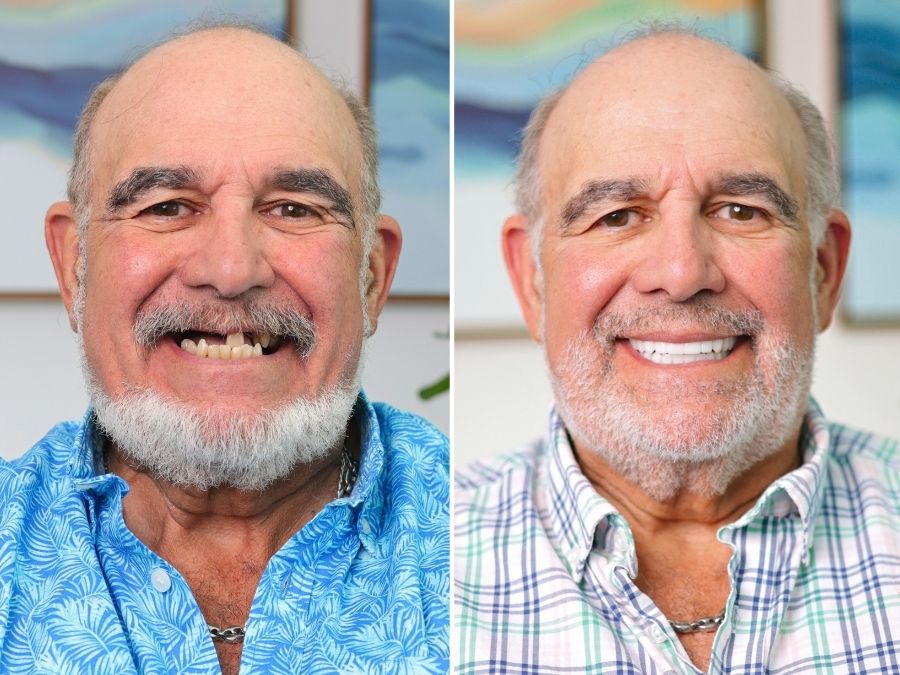
Randee is a disabled veteran on a fixed income. He wore VA-issued dentures for almost ten years — and they never worked right.
When he found out Nuvia's pricing was all-inclusive — no surprises after the consultation — and that a family member could take out the loan while he made the payments, he moved forward.
"I just adjusted my budget," Randee said. "It's no different than paying my utility bill."
Although his insurance didn’t cover anything and he may not have qualified for a loan on his own, he was able to cosign on it and make the monthly payments. He's lost 90 pounds since the surgery — not because he went on a diet, but because he can actually chew his food now.
If you’re on Medicare or Medicaid and wondering if permanent teeth could actually happen for you — take the quiz. It looks at whether you may be a candidate, not at what your insurance covers. Because at the end of the day, insurance isn’t how most Nuvia patients pay for their new smile anyways.
Don't wait too long. When teeth are missing or failing, your jawbone can slowly begin shrinking over time. The longer you wait, the harder it can be to get implants later on. Someone who qualifies today might not qualify in a few years — just from bone loss. If you've been putting this off, now is a good time to find out. The quiz takes about 60 seconds.
Take the 60-second quiz to see if you may be eligible →
Download the free cost guide →



.jpg)