

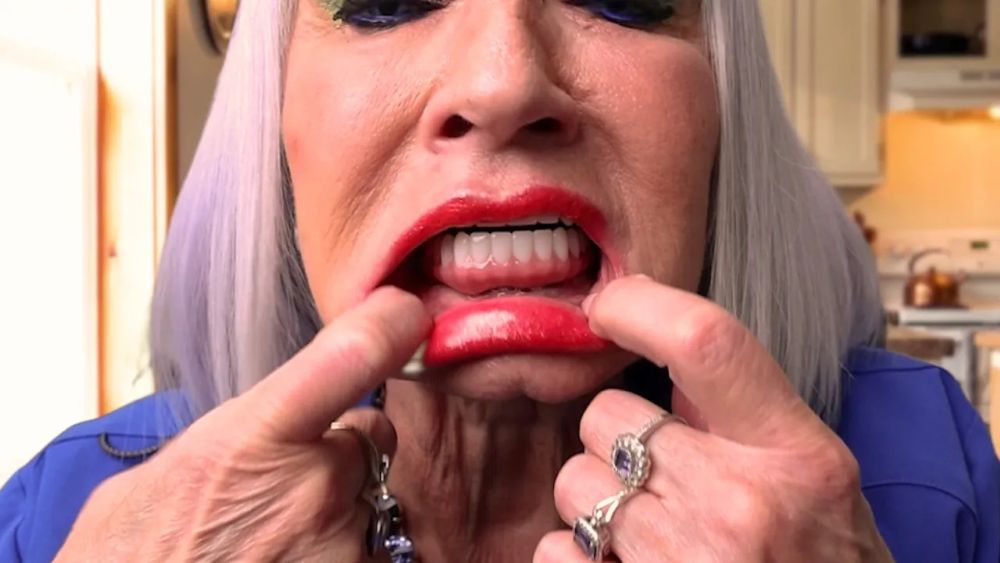
What are dental implants actually like after 1 year? Jeanie, an actual Nuvia patient, decided to share exactly that. One year after her procedure, she sat down and talked through three things she'd label challenges and three things she says changed her life for the better.
Her comments echo what hundreds of other patients have also experienced so if you’re wondering what dental implants are like after healing and getting used to having a healthy smile again, you don’t want to miss her comments.
**Actual NUVIA patient(s) who may have been compensated for sharing their story. Not all those who come in for a consultation are eligible for this treatment. Results may vary in individual cases.
Meet Jeanie, a Nuvia Patient From ____
Before coming to Nuvia, Jeanie had spent decades, and over $100,000, trying to hold her smile together. Bridges, implants, partials and braces. One dental appointment led to another, and each one seemed to end with a new recommendation and a new bill.
"I had just finished with braces on my top and lower. And when I went back to the dentist to see how things were, he said I needed another bridge, another implant. I just went crazy."
She came to Nuvia and got her permanent teeth in 24 hours. One year later, she wanted people sitting where she once sat (on the fence, unsure about moving forward, and doing the math) to hear what she actually experienced.
The Challenges: What Jeanie Would Call the "Bad" Parts of Dental Implants
In her video, Jeanie was clear that she wanted to be honest. So she talked about what was hard about dental implants after 1 year first.
1. Swelling and Bruising
Jeanie experienced bruising after surgery, which is very common and usually only lasts a few days, like in Jeanie’s case.
"I was very black and blue, but it was brief, very brief. And I had no pain. I suffered years with toothache pain. So this was a blessing — it's still a bad thing, but it really wasn't that bad."
For patients preparing for surgery, this is worth knowing: bruising and swelling are common and typically resolve within the first one to two weeks. The tradeoff Jeanie describes of brief discomfort versus years of chronic pain is one many other patients talk about as well.
2. The Waterpik
Cleaning around a full arch set of zirconia teeth is different from cleaning natural teeth. Food particles can work their way underneath, and a Waterpik becomes part of the daily routine.
"You have to use it often just to help get some of the food particles out of your mouth. But it's no big deal. You get used to it."
It's a minor habit adjustment, but it's an adjustment nonetheless. It’s worth knowing about going in so it isn’t a surprise.
3. The Upfront Cost
Jeanie named cost as a "bad thing", but her full explanation reframes it entirely.
"I probably spent a hundred thousand dollars through the years, and then I came here. I should have came years ago. I'm also saving money on denture cream to hold in my partials, soaking them all night. I can't imagine how much money I spent through the years just with that."
For patients who have spent years patching dental problems, the cost of a permanent solution can often be more affordable and even save money in the long run.
What Changed: Jeanie's Three "Good Things"
1. Confidence
"I have more confidence knowing that when I smile, you can't see any teeth missing. It's heaven."
After having dental implants for an entire year, this was still the first thing she mentioned. The emotional weight of hiding a smile — or avoiding situations where it might show — is something patients carry for years. Because of her dental implants, that weight was gone for Jeanie.
2. Fixed Teeth That Stay In
Dentures and partials come out, they can require adhesives, you usually have to soak them overnight, and they can shift at the worst times. Permanent implants don't do any of that.
"The teeth in your mouth stay there. You don't have to take them in and out every night and soak them. It's heaven."
After living with removable appliances, the permanence of implants wasn't just convenient, it made her teeth feel totally different, like they were actually hers.
3. Permanent Teeth in 24 Hours
"I got my teeth in twenty-four hours. Imagine that. Not all these dental implant companies do that."
Jeanie understood her timeline was different from what other providers offer. The traditional process usually sends patients home in temporary acrylic teeth for what could be up to 10+ months while their implants heal.
Nuvia’s lab works overnight and patients return the next morning for their permanent set of teeth. One year later, those are still the teeth Jeanie has and will continue to have. They are designed to last a lifetime with proper care.
What Jeanie Would Tell Someone Whose on the Fence
She ended her story with a question more than a statement.
"Can you afford not to get them? Because every time you go to the dentist, more money, more money."
That's not a sales pitch — it's the math of someone who spent a hundred thousand dollars before finding a permanent answer. Dental implants after 1 year aren't just another temporary dental fix for Jeanie. They're just her teeth now. And she's not going back.
Find Out If You May Be a Candidate
If you're at the point where Jeanie was — worn down, spending more than you want to, not sure if this is even an option for you — the 60-second quiz is an easy and fast way to get answers. It costs nothing, takes less than a minute, and you don’t have to commit to anything.
The longer you wait with failing and missing teeth, the less bone you’re likely to have to work with. If you've been thinking about this, there's no better time to find out than right now.
Take the 60-Second Quiz to See if You May Be Eligible→
Download the Free Cost Guide →




.jpg)