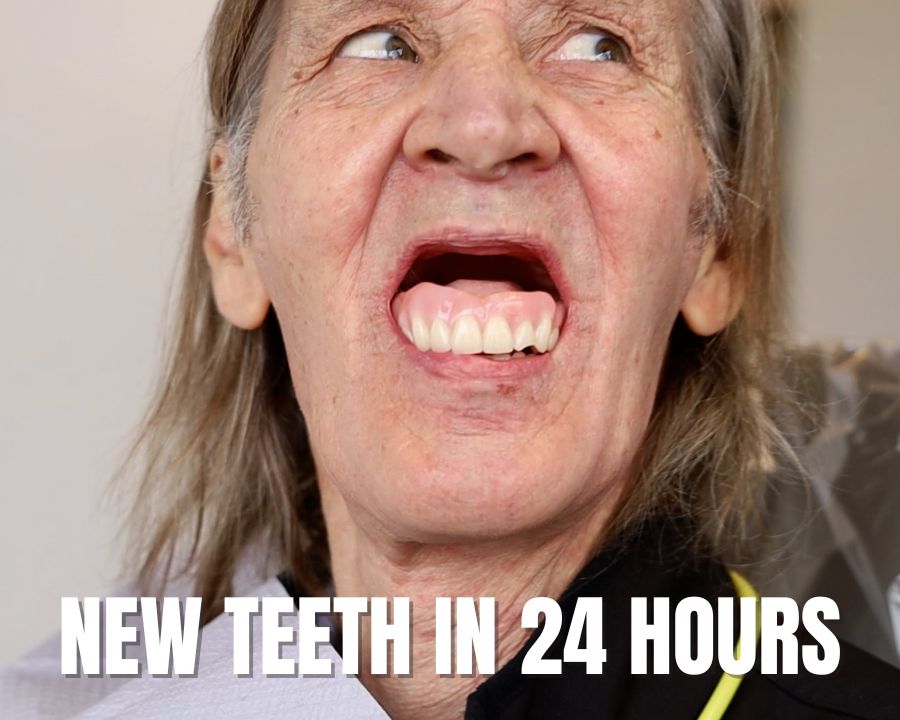


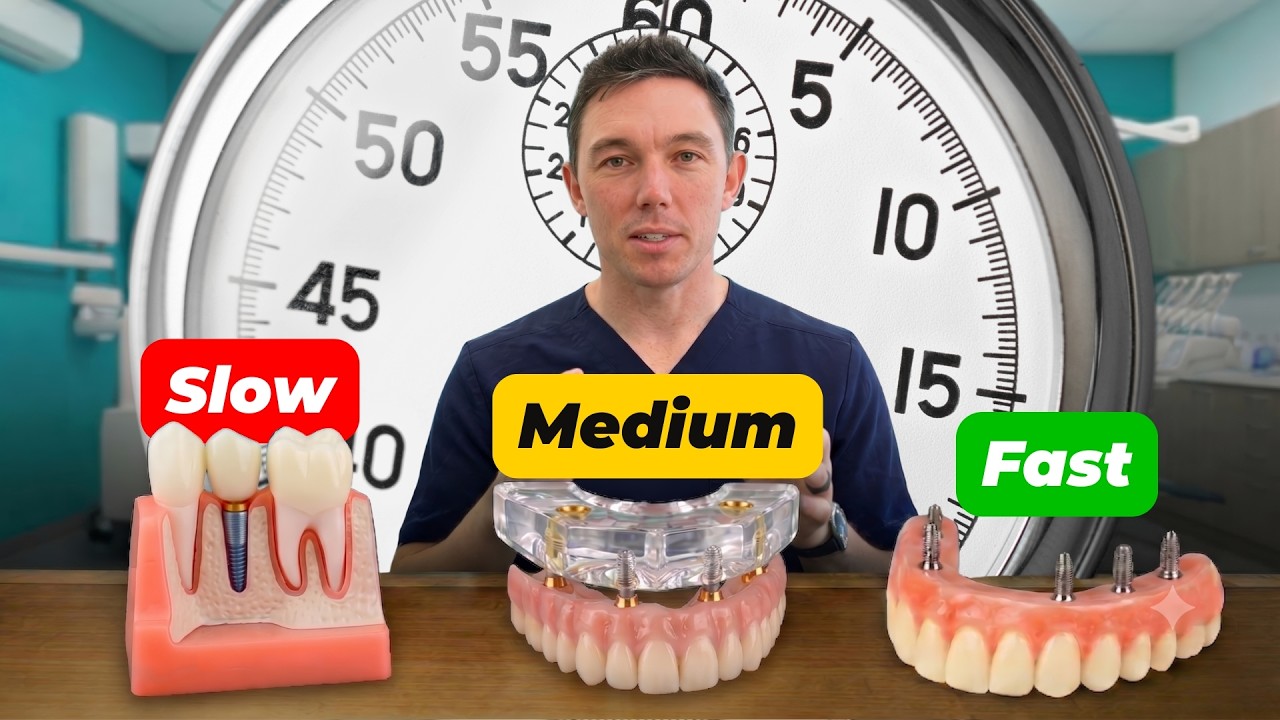
We go over the dental implant timeline at every consultation. This isn’t just because patients frequently want to know more, but also because Nuvia’s timeline is designed to get you permanent teeth in 24 hours instead of over the course of months.
The short answer to what the timeline is like and how long a new smile takes is that it depends on whether you’re replacing a single tooth, a full arch, or two full arches. I want to walk through each one so you know exactly what you're looking at before you make any decisions.
Single Tooth Implants Timeline
Nuvia Dental Implant Centers work with patients who need to replace a full arch (upper set of teeth, lower, or both), not individual teeth.
If you're missing one tooth, a single implant with Nuvia Advanced Center or a local dentist is likely your route.
Step 1: Consultation
Whether you’re replacing a full arch or getting a single if the bone is in good shape (and other health factors align), the implant can go in the same day as the extraction.
Step 2: Extractions and Potential Bone Grafting
If there's bone loss or other concerns, a graft may be needed first, which could add four to six months before placement is even possible.
Step 3: Placing the Implant and Getting the Final Crown
Either way, once the implant is in, the bone can take three to six months to fully fuse around the post before the final crown can go on. Start to finish, you're typically looking at months long process.
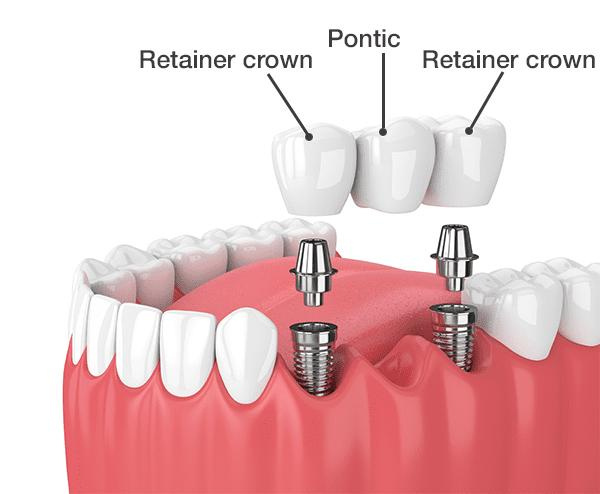
Implant Bridges
If you're missing several teeth in a row, an implant bridge follows the same general process — implants go in, the bone fuses around them over three to six months, then the bridge attaches on top.
The difference is that instead of prepping the natural teeth on either side like a traditional bridge requires, the replacement teeth are supported by the implants themselves. Better for the surrounding teeth, better for the bone.
Full Arch Implants: The Traditional Timeline
This is where I see a lot of confusion and frustration from patients who go into an appointment elsewhere expecting “teeth in a day”® but their expectations don't always match reality. Here's how the traditional process typically goes:
- Surgery day — implants are placed and you're sent home in a temporary set of teeth made from acrylic.
- Months of waiting — you wear that temporary for four to eighteen+ months while your implants heal. That range is wide because it depends on how many implants were placed, whether grafting was needed, how your body heals, and honestly, how the practice manages the process. I had patients in temporaries for eighteen months before I joined Nuvia.
- Final teeth — once everything has healed, the permanent teeth go on.
Here's what people don't fully understand about those acrylic temporaries. Acrylic has what's called microflexure — it moves slightly under pressure. That movement, over months of biting and chewing, can crack the material. And when the teeth are flexing or moving against healing implants, it's creating micro-movement at exactly the moment when stability is what allows the bone to fuse. In my opinion, it’s working against the process you're trying to complete.
The truth is that Acrylic arches break. I’ve watched it happen. And when a patient who just went through surgery and weeks of soft foods comes in because their temporary snapped — that's a bad day for everyone.
You've done everything right. You've healed, you've been careful, you've waited. And now you're sitting in the chair with broken teeth and more time left on the clock before the permanent ones can even go on.
That's the traditional dental implant timeline at its most honest. Luckily, you don’t have to experience this.
The Nuvia Dental Implant Timeline
Here's why I came to Nuvia.
We don't do temporaries.
The night of your surgery, Nuvia’s lab is building your permanent set of teeth. You come back the next morning and we attach your final teeth — zirconia, not acrylic. Zirconia is incredibly strong and durable. No microflexure or causing shifting for healing implants. And you're not waiting months in a placeholder to get to the thing you actually came for.
Step 1: Consultation and Records
Your team will take some digital scans, imaging, measurements, and do your smile design. This is where you find out if you’re a candidate and go over what your treatment plan will look like. By the time surgery day comes, we've already started designing your smile.
Step 2: Surgery Day
You’ll be comfortably asleep and cared for by a CRNA. Then while you’re sleeping, you’ll have extractions if needed and then your implants will be placed and the lab will begin creating your new teeth.
Step 3: The Next Morning
You come back and receive your permanent teeth. The lab worked through the night to build your custom prosthetic. You leave with a fixed, final smile — not a temporary.
Step 4: Two-Week Follow-Up
We check on healing and answer any questions.
Step 5: Four-Month Follow-Up
We remove the zirconia teeth and test each implant individually to confirm it has fully fused with your jawbone. If you have any concerns with fit, we also take care of that at this appointment.
After that, annual visits. That's the whole thing.
What happens in the background is the same as other dental implant methods— your bone is still fusing to the implants during those four months. But you're doing that healing in your permanent teeth, not in a temporary you're having to be careful with. That's the actual difference between what Nuvia does and what "teeth in a day"® typically means elsewhere.
What Can Affect Your Timeline
A few things can change how long this process takes, regardless of which route you go:
- Bone volume. If there isn't enough healthy bone, we have to address that first. Bone grafting adds months — sometimes four to six, sometimes more depending on how much is needed. The good news is, All on 4® dental implants are placed to make use of what bone you have, even if you’ve experienced some bone loss.
- Overall health. Conditions like uncontrolled diabetes slow healing and increase risk. You may need to work to get your A1C levels managed before surgery.
- Smoking. Significantly increases the chance of implant failure. You may need to quit before you can qualify for treatment.
None of these are dealbreakers by themselves — they just may shape how long it takes for you to get your teeth. That's why the consultation and imaging matter. We can't give you a complete timeline without knowing what we're actually looking at.
One More Thing to Keep in Mind
Dental implants have roughly a 97% success rate in healthy, non-smoking patients. Here at Nuvia, we're at {{success_rate}} success rate. That is genuinely high for a medical procedure.
But there's no such thing as a 100% success rate in medicine — anyone telling you that is not being straight with you. In the rare case where an implant doesn't fuse with the bone, we catch it at that four-month appointment. We handle it, and we do it at no additional cost.
If you want to find out where you fall on the candidacy side of this, the 60-second quiz is the fastest way to get an honest starting point.
Take the 60-Second Quiz to See if You May Be Eligible for Permanent Teeth in 24 Hours→




.jpg)