

Having osteoporosis doesn't mean dental implants are off the table. It does mean there are some important things to sort out before moving forward with treatment right away. Here's what patients with osteoporosis need to know.
Osteoporosis and Teeth: What It Means for Your Jaw and Tooth Loss
Osteoporosis is a condition that makes bones less dense and more fragile. Most people think of it as something that affects the hips and spine — but it affects every bone in the body, including the jaw.
That matters for teeth because your teeth are held in place by the jawbone. When the jawbone loses density, it can no longer hold on to teeth as firmly as it should. Over time, this can lead to loose teeth and tooth loss. People with osteoporosis tend to lose more teeth than those without it — and lose them faster.
It also means there's less bone to work with when it comes to placing implants – The gold standard treatment for replacing missing teeth.
.jpg)
Does Osteoporosis Rule You Out From Getting Full Mouth Dental Implants?
Not automatically — but it will likely change your treatment plan.
The All-on-4® method, which is what Nuvia uses, was specifically designed for patients who have less bone density or have had some bone loss. Four to six implants are placed at angles that take advantage of whatever bone is there. This is one of the reasons full-arch dental implants are often still possible for patients who have had bone loss and assume it’s ruled them out from being a candidate.
What matters is how much bone you actually have, where it is, and how it's structured. That's determined by a CT scan reviewed by a doctor.
Whether you're a candidate comes down to your specific anatomy, not a general rule about osteoporosis.
The first step is to take the 60-second quiz to see if you may be a candidate.
The Medication Question
Most people with osteoporosis take medication to slow bone loss. The most common kinds include drugs like Fosamax, Boniva, and Actonel, or injectable versions like Prolia and Reclast.
These medications can affect how bone heals after surgery. There's a rare condition called medication-related osteonecrosis of the jaw, where jawbone tissue doesn't heal properly after a dental procedure. The risk is higher for those using the injectable kind of bisphosphonates, and typically lower with oral versions.
If you take these types of medications, your dental team and your prescribing doctor need to be in contact. Depending on your medication, dosage, and how long you've been taking it, your doctor may recommend a temporary pause before surgery.
Nuvia's clinical team reviews medications as part of every candidacy evaluation.
What to Expect at Your Dental Implant Consultation
If you have osteoporosis and want to find out where you stand, here's what the process looks like.
A CT scan is taken at your consultation. This gives the clinical team an accurate picture of your bone structure — the real information needed to make a candidacy decision. Your health history and full medication list are reviewed by a doctor.
If questions come up that require input from your prescribing physician, that coordination happens before anything is scheduled.
If you're a candidate, you'll leave knowing exactly what the process looks like, what it costs, and what your options are.
More on what to expect at a Nuvia consultation here.
Osteoporosis and Tooth Loss Go Hand in Hand
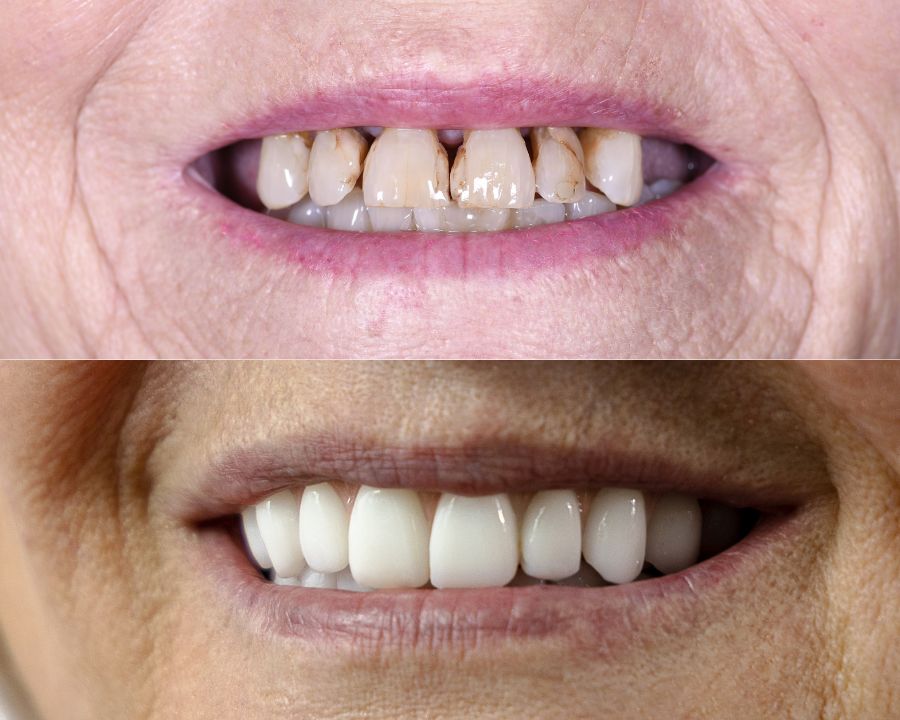
If you're dealing with both, patching things up one tooth at a time isn't always the most practical answer. For patients missing most of their teeth — or living with an arch of teeth that keep failing — full-arch restoration may be a better long-term path, even with osteoporosis in the picture.
The only way to know for sure is a real evaluation, not an assumption.
Take the 60-second eligibility quiz to get started→




.jpg)