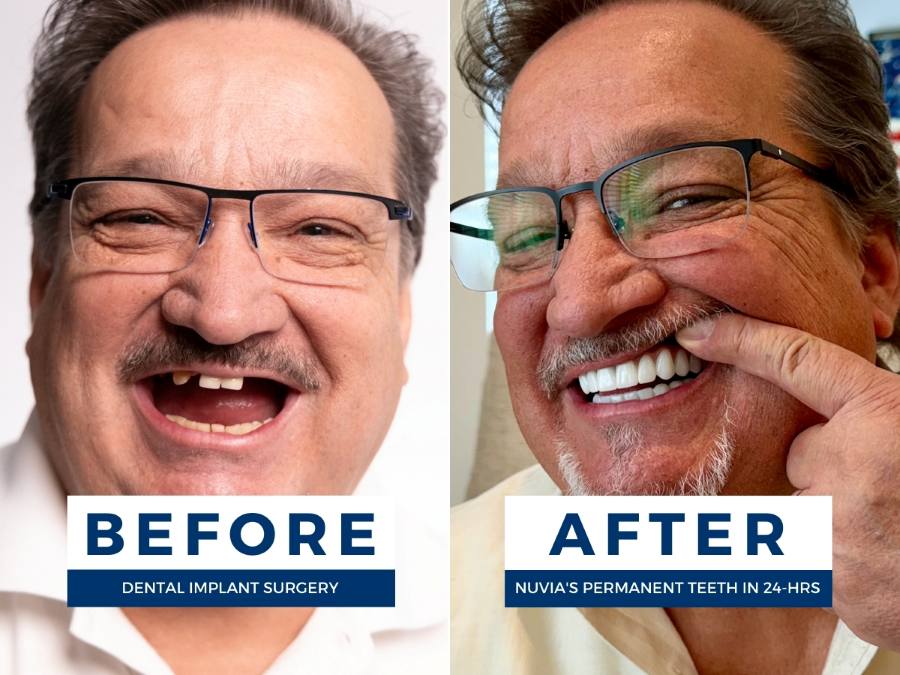
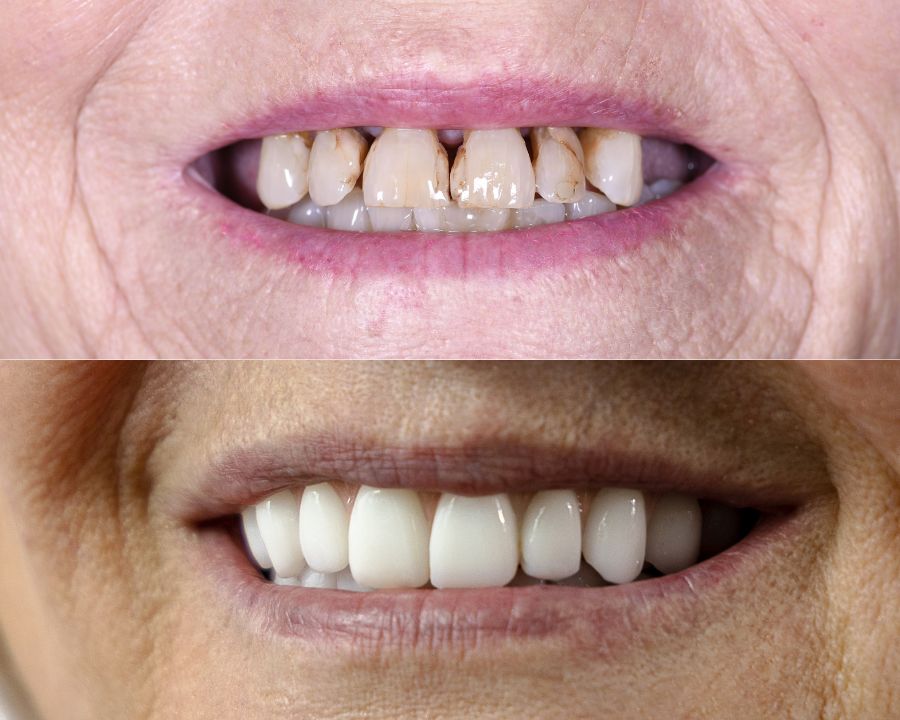
I went through three major cancer surgeries in four months. They came back saying, Trish, I'm sorry. We didn't get it all. We don't know if you're gonna live. Am I gonna live? I'm not. I say that Nubia saved my life. They saved my life. Today, I'm joined by someone whose dental struggles and battle with cancer led to this ultimate transformation. Tricia, can you explain how your journey with broken teeth and your cancer diagnosis ended up actually saving your life? Where did that all begin? So I was in a downward spiral, which was not fun. So I did a lot of research, and I came across Nubia. And I'm like, it said twenty four hours because I went to another dental place, and they said it was gonna be a year plus. So you have to do this. You have to have temporary. You're gonna be Eight months here, then you're gonna do ten months there. And I'm like, I need something more. I don't wanna keep being put to the side. I did not want puzzle pieces. I wanted a finished product. I wanted it sooner than later because of all the issues I've had for all these years, and I just wanted to be happy. So when I came across Nubia and I was told no for so many years and doors shut on my face and what have you, this sounds bad. I didn't know if I was going to, a, get the consultation because I was tired of being told no. I'm so happy that I did the consultation, but I was afraid of the answer in the long run. Because even though I walked in, what was that ultimate answer gonna Trisha, you mentioned you had a fear of, you know, not being a candidate. And I think that there are a lot of people out there who might feel the same way. So there's actually a sixty second quiz you can take to find out if you may be eligible for permanent teeth in twenty four hours, and you can take that in the description below. So when I was told that I could do it, and then, unfortunately, there's some other medical things that happened, then I was told ten minutes later, I couldn't do it. My BMI was too high. Right. And I did not wanna do surgery not knowing. Right? And with my medical background and my history of all my issues, I'm like, how am I supposed to lose fifty pounds? There's no way on this greener that I can lose fifty pounds. I could drink water every single day. The weight does not come up. I could starve myself. I could swim every day. I could do everything. But, unfortunately, I have so many issues. The weight does not does not come off. And then that transitioned to me finding out that I had cancer. So I had a lot of things that were fighting against me. It it was it was hard because I was going through cancer, and my husband was not even here. I did tell my husband I had cancer. Oh my goodness. Because he went he left, and he went to Montana to take care of his mom who had cancer. Yeah. So he left April of twenty twenty two. He left a week before our anniversary. I went to the consultation on my anniversary, on my twenty second anniversary. And I went into the office. They're like, well, who's here with you? Who knows who's here with who knows that you came in? I'm like, nobody does. And I think I shocked everybody at the office. They're like, you didn't tell anybody that you're here? I'm like, no. And I told them the story and what have you. And they're like, you're not gonna tell your husband? No. He came back a month later for our daughter's high school graduation. He left two days after she graduated. Two weeks after that, I I was diagnosed with cancer. Oh my goodness. Not tell him because I knew he would wanna come home, but he needed to be in Montana to take care of his mom. So I went through my first surgery in June. They came back saying, Trish, I'm sorry. We didn't get it all. We don't know if you're gonna live. So there's a gut punch right there. So it's like, okay. Gotta get my life together. Am I gonna live? I'm not. Then I went for my last two surgeries, and they discovered that I had tumors on top of this. Oh my goodness. And they sent everything out, and it was one of those things that every time the doctor called, I didn't wanna answer the phone because the times that they called before was bad news. So I answered the phone, and they said, can you come in? Well, the last time you guys did that to me was when you told me I was diagnosed with cancer. Did I really wanna call and talk to you guys? No. Did I wanna go in? No. But I went in about, after those two surgeries, and they said we still have to wait. We still have to wait. So I held my breath for a good week, ten days, before they could get back to me saying that it came back benign. But because of the cancer I had, where it was located, the tumors, hid the tumors, I go in every three months for the next five years Oh, yeah. To see my cancer doctor because they're afraid that it could come back. And when I came to the conclusion after going through all my cancer surgeries and what have you, I called the Phoenix office and said, can I come visit? And they're like, what's going on? They nobody knew in the Phoenix office that I had gone through cancer. I didn't tell anybody. What now? I went through made I went through three major cancer surgeries in four months. And then me my last surgery was in September of twenty twenty two. I went to go see the newbie office October of twenty twenty two, and all the doctors are all like, what do you mean you had cancer? You don't look like you've got cancer. You look great. Well, I had lost all this weight because that was one of the things that that was their concern. I changed the way I was eating just because I was fighting for my life Mhmm. Because of the cancer. Right. With me doing that, I lost weight. It's the weirdest thing. I changed how I was eating. I was was changing the times I was eating. I was doing intermittent fasting. All this stuff that I was researching on my own, I ended up losing this weight, but I was fighting for my life. That's how I lost the weight. And so after my three surgeries, I said, I I wonder if I can get this done because I've lost the weight. The BMI has gone down. Will they let me do it? And they're all like, are you going through chemo? No. I'm not going through chemo. And doctor Slobin's all like, are you sure you're okay? I'm like, yes. The office said, okay. We have to have all these notes from the doctor and from your cancer surgeon and from everybody saying that you're good to go, that we can do surgery on you. And I did it, and I ended up having my dental surgery exactly almost one month to my last two surgeries. So I had my last two cancer surgeries and my dental surgery within thirty days of each other. My parents thought I was wack. I got my permanent smile on Friday, and I was back to work on Tuesday. On Tuesday Girl. I'm stubborn. You are a wackadoodle. Yes. That's gonna be my new day one thing. In the best positive way ever. Yeah. And my parents have always been there for all my surgeries. That's just how my parents are. If somebody's having surgery, somebody's in the hospital, my parents are always there. I told them that they cannot sit in the office. My mom's like, what do you mean I can't sit in the office? Mom, just go home. Just drop me off and come back in x amount of time. They will call you thirty minutes before I'm ready. I came out and my dad's all like, oh my goodness. Is that my daughter? And I went home. I I was writing on a little whiteboard because obviously we can't really talk with no teeth and I was all gauzed up and what have you. And I said, yes. In twenty four hours, I wanna have a new smile. And my parents are all like, I just don't believe it because you keep telling us this. We keep looking at the videos. We keep looking at the website. We're looking at these testimonies. It just doesn't seem right. It doesn't seem like it's gonna be real. So when I came back on Friday afternoon or Friday evening, after I got my new smile and I smiled at them, both of them started crying. Oh my god. That was the first time that they had seen me smile in years. My parents are under seventy. And my parents were sitting there bawling. I'm like, what I do. They're all like, no. You're smiling. Oh. Your eyes are glistening. There's that spark back in you. And I didn't think that was gonna affect my parents, but it did. Yeah. I feel like after like you said, all these things, you know, stacked against you, stacked against you, but you kept fighting. Like, you've kept fighting regardless of that. And, like, I mean, I can't imagine being someone in your life to to watch you go through something and how, you know, how strong you are. Like, that that's huge. You know? And what's so weird is that when I shared my story this past year, it was just I did not know about the SmileMaker page until after I was done with my surgery. I did not find it until, what, March? February, March of this year? I'd already done the surgery. I'd already did my four months. I was eating whatever I wanted, and I just stumbled upon it. Nobody told me about it. And so my one year from my consultation to one year to in October or should we have April twenty twenty three, all I wanna do is share my story saying because there's so many people stressing out. There were so many people saying, I don't know if I can do this. I have this issue, this issue. I'm gonna put it on the back burner. And I just wanna tell people, just because you have a stumbling block, don't give up. Because if I would have given up, I would still be in pain. I would still would be broken teeth. I would still have all these issues. Yes. It took me longer to get my permanent smile, but maybe Nubia telling me no in April, they saved my life. Because what would have happened if I would have had that surgery right then and there, and I was healing, and then I would have cancer. Oh my goodness. Nobody knows. Nobody knows what would have happened. So I always say it's like, you never know what's on the other side. It's a blessing disguise, whatever you guys wanna call it. But I say that Nubia saved my life because they pushed back my surgery by a few months. Who would have known? So that's why I just wanted to let people know on the page, please don't give up because we're not gonna give up on you. Don't give up on yourself. You're absolutely right. Sorry. No. Don't be sorry. I need to assist you now, though. It's a blessing, Tricia. And what what this says too not only talks about your courage to to work through the most difficult of times, Nubia is a company that could very easily have just taken your money and gone, oh, gosh. Too bad. Sorry. See you later, Notion. And they said no because they wanted what was best for you. Yeah. And that's one of the thing that your story tells folks like me, and and it only deepens my affection and commitment to Nuvia, hoping other people will step forward and find out if this is something that will work for them. You're you're a you're a blessing in ways that, I doubt you'll ever know, but it sure is wonderful for a person like me to hear your story because, quite frankly, mine was simple by comparison. And I hear yours, And it's just a blessing to my soul to meet and know a person that is so strong and willing to do whatever it takes. That's what you give people that take the time to listen to your story. So thank you. Thank you, guys. You said that very perfectly. Mhmm. Because if I did not have even my family around, who was I gonna lean on? Since I had so many teeth that were missing in the back, and they had been gone for so long, I thought about that. I'm like, it had been years and years since there was a tooth there. And you start reading that bone loss. The older you get, you could have bone loss here, bone loss there. I was afraid that there wasn't gonna be enough for an implant to be put in. So when they said that I still had enough bone, I was very happy to hear that. But I do know that there's some people that you never know and have to have different procedures to get enough to be able to have that particular implant, but I was fortunate that I did not have the loss that I I personally thought I was gonna have after all these years. So can you talk about how now, you know, you got your dental implants, you got your teeth in twenty four hours. How has your life changed confidence wise? How can you just kind of talk about it, walk me through maybe how long that even took to to get to that point, or you're still getting to that point? But what what do you feel like now? I'm still getting used to it. I'm at fifteen months. And you and I talked about this earlier today. I'm not one that I was always behind the camera. I was the one taking the pictures. I was the one that taken the videos. And now getting in front of the camera, taking selfies, and what have you, that's not been normal for me. I'm still getting used to it. So when I do that and I send pictures, I'm like, oh my goodness. I'm actually smiling. Oh my goodness. I can that confidence is coming back. It's baby steps for me. Some people may flip a switch, get it, and they go from zero to a hundred immediately, but the confidence has slowly come back for me. I don't have to worry about wearing a mask because the last three years with COVID, I absolutely loved it because I could hide behind a mask. I didn't I could smile all I wanted behind the mask. Nobody could say anything to me. It was awesome. But now that we have our smile and we're post COVID, I'm out there. I'm doing things that I haven't done in years. We had a rainstorm last Sunday. I road tripped. What the heck? I got out there and just started road trip and then drive it. So things like that, it it's coming. I've I used to be I used to do tons of craft shows, and I would be scared to talk to people when people when I was doing these craft shows. Now I'm like, heck. Let's go for it. Going out to the restaurants, Do doing stuff with the family. It's stuff that I've missed. It's stuff that I need to tell my my office team what I had done because we've been at home. I didn't tell them until about probably six weeks ago. And Septon came up and, yeah, I did not tell my team nothing. And it was one of those things that came up, and we were doing the two truths and a lie. And I put out all these weird things to them, and I sent a picture. I sent my before picture, and they're all like, Trish, that's not you because I had the darkening of the teeth. I had missing teeth and what have you. And they're like, Kirsch, that is not you. That is not what you look like. I go, fine. This is what I look like. And I sent them my after picture. And they're all like, what happened? I freaked my team out. I freaked them out. They're like, what what happened? What did you do? I've had multiple of them reach out to me via text message, calling, what have you, and they're just like, Trish, you are a completely different person. We've never seen you this happy, and we recently had a holiday party. So we had probably five hundred to a thousand people at a holiday party, and it was all outdoors. Wow. I wish I woulda had a camera when they saw me at first, and they're like smile. She's like, what did you do? She goes, I know you've lost weight. I know about the cancer. Smile. I smiled, and she is all like, did you whiten your teeth? No? What did you do? And I told her, and I thought her jaw was gonna drop because she's never seen me with a full mouth of teeth. She had never seen me smile as much as I can, but the confidence is coming slowly in different ways. So how much do dental implants cost? There's actually a dental implant cost guide you can download in the description below to find out if the payments are right for you.



%20(2).jpg)


.jpg)
.jpg)
.jpg)
.jpg)
.jpg)




.jpg)