For most people, a titanium allergy is not something they need to worry about. About 10 to 15% of people have a metal allergy of some kind. But only 0.6% show any signs of sensitivity or allergy toward titanium specifically. Those are the numbers.
If you've been holding off on a consultation because you're afraid a metal allergy disqualifies you, this is worth reading.
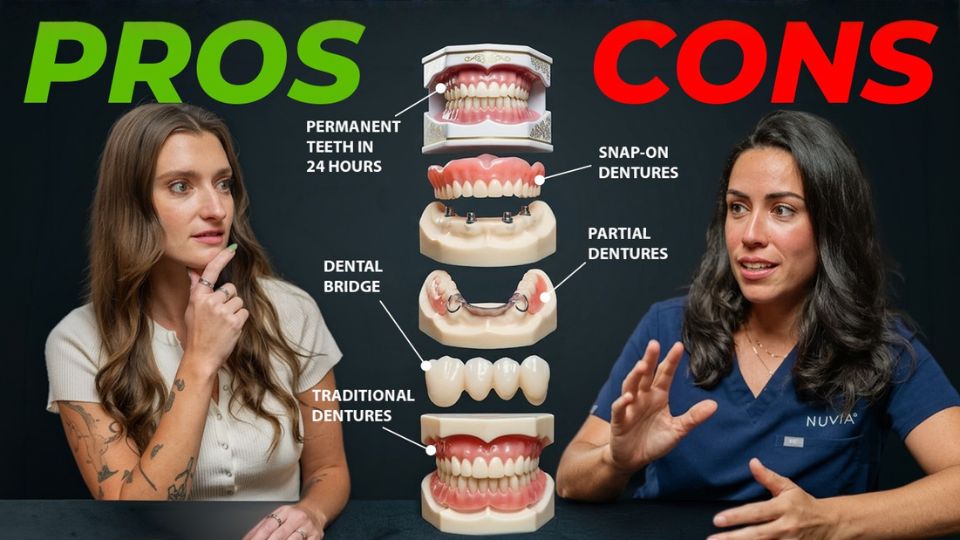
Are dental implants really the perfect solution, or are they a ticking time bombing your mouth? In this video, we're diving into the fears, myths, and shocking truths about dental implants that no one else will tell you. Before you make a decision that could change your smile and your life, you need to hear about this. If you haven't seen me before, I'm doctor Paola Anoni, restorative doctor here at Nubia Tampa, and I have treated hundreds of dental implant patients. Let's discuss the top six myths and misconceptions about dental implants. And we know cost is a big deal and we'll also cover that later. In the meantime, you can check out the cost guide anytime in the description. Number six, the metal and dental implants is toxic or prone to produce allergic reactions. The truth is that medical grade titanium has been used since the nineteen sixties in all kinds of medical procedures all over the body, including joint replacements, cardiovascular devices like stents, and of course, dental implants. Studies have shown that although ten to fifteen percent of the population have a metal allergy, only point six percent of the population exhibit any signs of sensitivity or allergy towards titanium itself. It is notable that it's important to make sure the implants that are being used by your office have pure grade four medical titanium. The best way to do this is to make sure that the office uses a reputable brand for their dental implants as not all implants are created equal. Number five, implants don't last that long or fail quite often. The truth is that dental implants, when placed correctly, have the highest success rate out of almost any medical procedure. Although the success rate of dental implants is ninety eight percent, it's it's important to note that many factors can affect that success rate, including experience of the provider, proper treatment planning, bone quality, and also medical history of the patient. This brings me to number four. Dental implants are a one size fits all solution for everyone. The reality of it is people say dental implants and everything gets lumped together as one. Dental implants have a lot of different treatment modalities within them. You can do single dental implants where you just replace one tooth. You can do implant bridges where you're replacing more than one tooth at a time. You can do overdentures where you have a traditional denture that snaps on to implants or you can do all on four, all on six, all on x treatment where you have permanent teeth screwed into dental implants. Taking all of these into consideration, still not every single person is a candidate for dental implants. As I mentioned before, medical history plays a pretty big role in candidacy as well as bone quality. Each of these has to be evaluated by your provider to make sure that you are a good fit for one another. Number three is that implants are too expensive. While other dental procedures may have a smaller price tag initially, they're oftentimes temporary solutions with unpredictable longevity. With dental implants, it's a one time cost, one time fix. And if you'd like to see how you can save thousands on this make sure to download our free cost guide. Number two is that dental implants are a cosmetic luxury and not necessary. Boy oh boy do I disagree with this one. Dental implants help to replace teeth and restore function. Everything you put into your body comes in through your mouth, and so you need your teeth to be able to chew your food properly. I've seen patients who, you know, can't chew properly and end up having acid reflux or GERD. I've also seen patients who really just don't get food that has high nutritional value because they can't process it. With dental implants, it gives you an opportunity to be able to restore your overall health as well as your form and function of your mouth, your jaws, your face. Dental implants can help to restore form to your face as well. Something that a lot of people don't think about is, you know, when you see people who are very sunken in, they don't have that underlying structure to support their cheeks, their lips, the lower third of their face. Having that kind of form restored can affect not only your face, but also your posture, your ability to swallow, your ability to speak to others. In my opinion, although the cosmetics are a nice side effect of dental implants, it's certainly not the main reason that people get them. And number one, the last misconception that I will mention is people say it all the time. I don't have time for dental implants. The traditional method of placing dental implants when you're talking about a full arch takes anywhere from eight months to a year before you have your final teeth. This includes frequent visits in and out of the office, adjustments, and multiple sets of temporary teeth. With Nubia, you can actually get your permanent teeth in just twenty four hours. Oftentimes, patients will tell me that they don't have time because they're taking care of other family members or tending to other things in their life. But end of the day, in order to be able to give the best of yourself to those around you, you have to be at your best. One of the best ways to do that is to start with a smile. There's a lot of information floating around about dental implants nowadays. Couple of things I'll leave you with. First, make sure to educate yourself. Watch videos, read online, talk to people who have had them. Make sure that you know what it is that you're getting into and that it's a a journey you want to take. And lastly, make sure that you like your provider. This is a journey to take. It is a surgical procedure, and you wanna make sure that the provider that you have chosen and the provider team make you feel comfortable and excited about this procedure moving forward. Obviously, it can be nerve wracking, but it would be more so if you didn't have all of the knowledge gathered and you didn't have all of your questions answered. So have those candid discussions and I wish you the best of luck.
What a Titanium Allergy Actually Looks Like
A true titanium allergy is rare. It's different from a reaction to nickel, cobalt, or other metals found in jewelry or some older dental materials. Titanium is classified as a biocompatible metal. That means your body can maintain its normal processes around it without launching an inflammatory response.
Dr. Patel, oral surgeon at Nuvia Tampa, puts it plainly: "Biocompatibility just means, can your body maintain homeostasis or maintain its normal processes without some sort of inflammation, inflammatory process getting started."
Titanium doesn't leak into the bloodstream. It fuses with bone — a process called osseointegration — rather than sitting next to it as a foreign body. That's part of why it has been used across medicine for decades in hip replacements, shoulder replacements, cardiovascular devices, and jaw reconstruction.
through a process called osseointegration simplified, this is where the human bone integrates with the titanium implant.
Why Titanium Is Still the Standard for Full Arch Implants
Some patients ask about ceramic implants as an alternative. Ceramic works for a single front tooth — the color match is easy and the implant is mostly hidden in bone anyway. But for full arch restoration like All-on-4®, ceramic isn't practical.
As Dr. Patel puts it: "For an all-on-four® prosthetic like Nuvia provides, ceramic implants are useless. Titanium is going to be superior in almost every case — because of size availability and the ability of your body to actually integrate the implant."
The 98%+ success rate for dental implants reflects decades of titanium use across millions of cases. (Nuvia’s own success rate is above national averages at {{success_rate}})
What to Ask About If You Have a Metal Allergy
If you have a documented metal allergy, you're not automatically disqualified. But there's one thing worth asking your provider about directly.
"It's important to make sure the implants being used by your office have pure grade four medical titanium," Dr. Annoni notes. "The best way to do this is to make sure that the office uses a reputable brand for their dental implants — as not all implants are created equal."
Not all titanium is the same. Grade 4 medical titanium is the standard used in quality implant systems. Lower-grade or improperly stored implants carry higher risk of complications. This isn't specific to patients with metal allergies — it matters for everyone — but it's a particularly relevant question if you have known sensitivities.
At Nuvia, implant brand selection is taken seriously. It's part of the reason the process produces outcomes that hold up over time.
Does Metal Allergy Mean You’re Allergic to Dental Implants?
Being allergic to dental implants in the sense of a true titanium reaction is genuinely rare. If you've been told you have a nickel allergy or react to metal jewelry, that doesn't mean you'll react to titanium. They're different materials.
The first step is to take the 60-second quiz to see if you may be eligible for dental implants, then bring it up at your consultation. Your provider can review your medical history, confirm the type of allergy involved, and advise whether additional screening makes sense. A conversation with a provider and imaging of your jaw is what can give you a real answer.




.jpg)




.jpg)
.jpg)