This website uses cookies to ensure the best experience on our website.
We may share your information with our advertising and analytics partners as outlined in our
Privacy Policy.
Controlled diabetes does not disqualify you from full-arch dental implants
A1C must be in a safe range before surgery — Nuvia requires it, and it's the reason patients like Tammy healed well
Infected teeth make blood sugar harder to control — for many diabetic patients, fixing their teeth is part of managing their health
Yes — but the question worth asking isn't just can you. It's how, and with whom.
Diabetes is one of the most common health conditions people cite when they worry they won't qualify for dental implants.
Most of the time, that worry is bigger than the reality. With controlled diabetes, full-arch implants are performed every day, including at Nuvia. What changes isn't whether you can get them — it's how the process is managed to make sure you heal well and stay safe.
What diabetes actually does to implant healing
Elevated blood sugar can make it more difficult for your body to heal. That's the biggest worry with diabetes. After any surgery — dental or otherwise — your body needs to repair tissue and fight off bacteria. High blood sugar can slow both of those processes and it potentially raises your risk of infection.
For implants specifically, the concern is the bone fusing with the dental implant. That process takes weeks, and it typically goes best when blood sugar is managed.
This is why A1C matters. A1C is a measure of your average blood sugar over three months. When it's elevated, the risks around surgery go up. When it's controlled, most diabetic patients are cleared for the procedure without issue.
Why managed diabetes rarely disqualifies you
Here's what most people don't realize: the fact that you're diabetic doesn't close the door on a new smile. What matters is whether your diabetes is managed.
There's also something else worth knowing. Failing teeth and uncontrolled blood sugar are often a two-way problem. Infected teeth release bacteria into the bloodstream constantly — and that chronic infection makes blood sugar harder to control. Fixing your teeth isn't separate from managing your diabetes. For a lot of patients, it's part of it.
Tammy's story
Tammy had every reason to be hesitant about coming in for a consultation.
Not only is she diabetic, she'd had a previous dental experience elsewhere that went very poorly. Extractions done at a different provider ended with her hospitalized for sepsis. By the time she found Nuvia, she'd done months of research. So had her husband.
"I am a diabetic, and so I was a little worried about, you know, are they going to be able to work with me because of my health situation?"
The answer was yes — but not without a step first.
"I did have a little bit of a delay. I had to get my A1C down in order to have my procedure done. But looking back at that, I'm so thankful — because Nuvia's first concern was making sure that I had my full medical clearance, that everything was good so I didn't go through the past experience I had already been through."
That requirement — waiting until her A1C was where it needed to be — felt like an obstacle at the time. In hindsight, she sees it differently. It's the reason her surgery went smoothly.
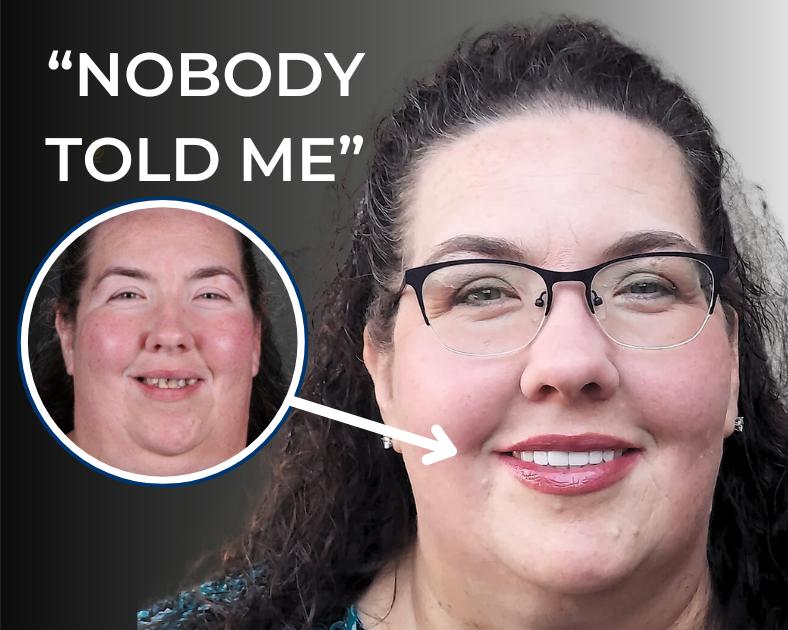
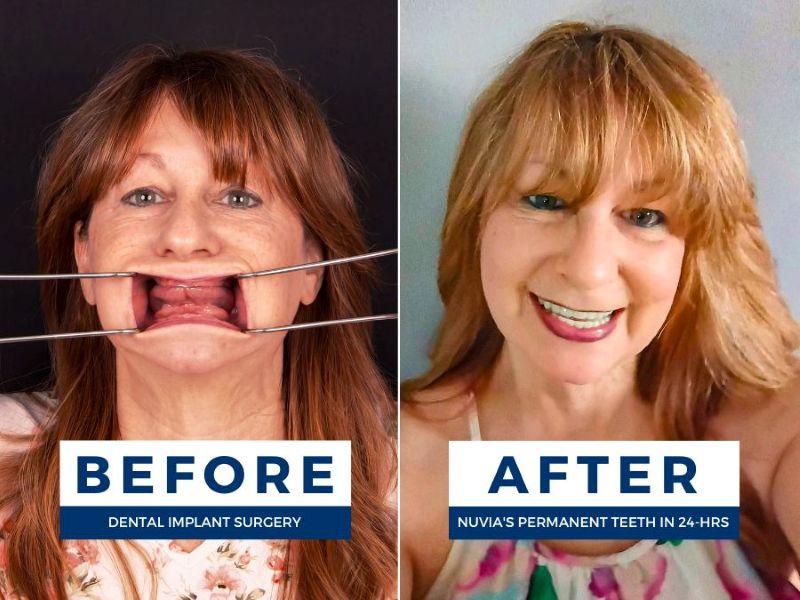
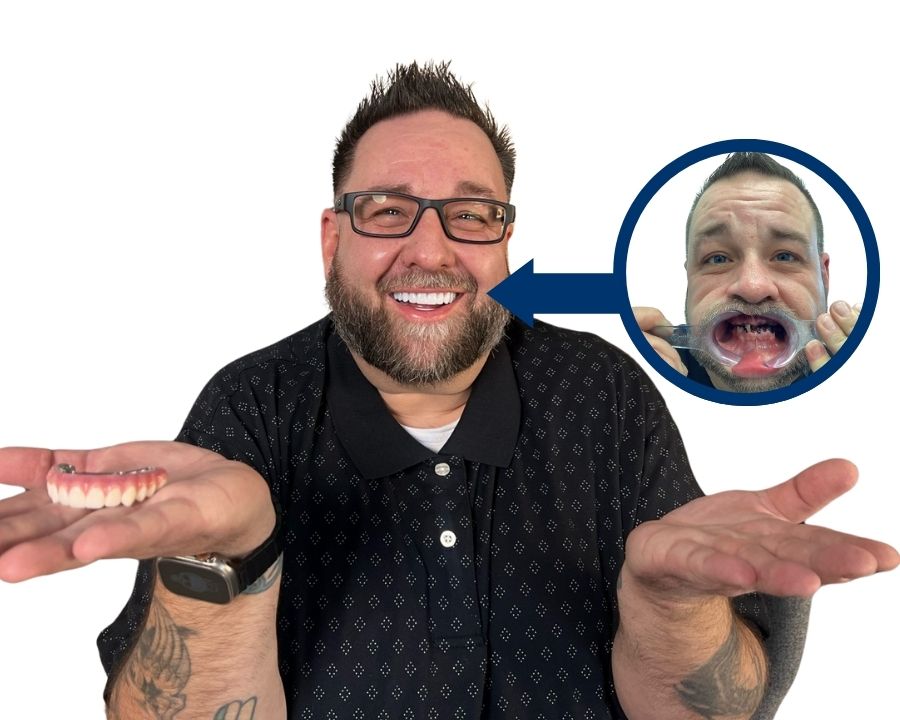
Two weeks out from her procedure, Tammy describes minimal pain, no significant bruising, and something she hadn't had in a long time: confidence.
Before coming to Nuvia, she'd been in full dentures. She stopped wanting to go out to eat. Stopped wanting to be seen.
"My confidence honestly went down the toilet bowl — my mental health, my emotional health, intimacy was a huge concern. I didn't wanna go out to eat. I didn't wanna be seen."
"Now I can go out to eat, and I don't have to hide in the corner anymore. It's just unbelievable. And this is only two weeks."
Hi, I'm Tammy Johnson. I've had my implants for two weeks, so this is all brand new for me. And just wanted to share with you three good things that I've experienced and three bad things that I've experienced. The very first thing that I noticed would be the cost. It was a concern for me, but we'll get to that a little bit later on in the video. But in the meantime, there's a POS guide that you can just click on the link below. And, again, we'll get to that a little further in the video. My number three bad was my concerns about pain. I had a previous really bad experience, and I was just really worried about how I would heal. I personally am a diabetic, and so my pain and healing was absolutely a concern. Even though I was so concerned about the pain, I went in with a positive attitude, and I was looking forward to actually not having to go through more long term pain. So it was a temporary thing. Actually, two after my surgery, felt fantastic. Day three, I did experience a little bit more pain. I would say days three through nine, I did have some more pain. But, again, it was a surgery, and I'm only two weeks out, and I feel fantastic. I did not have my extractions done by Neuvia. They were done elsewhere, and I had a super for fun experience. I ended up actually in the hospital with sepsis. And the reason why I came to Navy is because after the bad experience I had, I wanted to do my research, and I researched things to death. And my husband did as well because he was concerned with all the things that had happened. I had past health issues as well. I am a diabetic, and so I was a little worried about, you know, are they going to work be able to work with me because of my health situation? I did have a little bit of a delay. I had to get my a one c down in order to have my, you know, procedure done. But looking back at that, I'm so thankful because Nubia's first concern was making sure that I had my full medical clearance, that everything was good so I didn't go through the past experience that I had already been through. My number three good is I was put out. Had great sleep, even though the process and procedure doesn't take long at all. I felt like I have just a really good nap. When I came to, I felt good. I wasn't all groggy. In fact, after I had my procedure, I went out and grabbed something to eat. So it really wasn't that big of a deal. My number two bad was I talk for a living. And I was super concerned about my speech. I was concerned that I wouldn't be able to talk naturally. But as I mentioned before, I'm only two weeks out. And even though I have a little bit of a lisp, it's very nominal, and I feel confident than when I am on the phone with my clients and customers that I can speak naturally and feel good about my about the way I talk. My kid number two, and this is a a super important one for me, is confidence. When I had made the choice to have my keys removed, and I had been in a full set of dentures prior to coming to Nuvia, my confidence honestly went down the toilet bowl Just as far as my mental health, my emotional health, intimacy was a huge concern. I didn't wanna go out to eat. I didn't wanna be seen. And now Navea has given me a smile within twenty four hours. I didn't have to wait forever, and now I can go out to eat, and I don't have to hide in the corner anymore. It's just unbelievable. And just being able to go out in public is huge. Just made a world of difference for me. My number one bad was the cost. That was a huge worry for me as far as cost. I'm not used to, you know, putting money into myself. But as I mentioned before, my self confidence was just not in a good place. And I needed to get my confidence back. I wanted to get me back. But, yeah, cost was absolutely a worry. And, yeah, I discussed it with my husband and told him I needed to do this for me. And the great thing is that, you know, Nuvia does have a lot of different options as far as financing. Thankfully, we had an HSA, which was an option for us as well. And one of my biggest frustrations in the past was I had checked out other places, and I didn't get upfront pricing. I didn't know what it was going to cost. It was gonna take forever, you know, months and months of appointments, but they wouldn't actually give me a cost. When I came in for my first appointment, I got upfront pricing. And so I knew exactly what it was gonna cost, and we looked at different options. And if, you know, you are curious as far as what the cost is going to be, just look at the link below. There's upfront pricing. There's no hidden cost, so you'll know upfront what you're looking at. So my number one good is the fact that I was able to get permanent teeth in twenty four hours. I had talked to other dental clinics. And, you know, like I mentioned before, I it was gonna take months and months of appointments, and I didn't wanna continue on that track of, you know, not being able to go out to eat and wanting to sit in the corner, not even wanting to to the grocery store because I was ashamed and embarrassed of how I looked. With Nivea, I literally went in one day, had my surgery, and following day, I already had my teeth. And I I said, I went out to eat right after I had my teeth put in, which was amazing. So, yeah, it's it's just been fantastic that they were able to do that. And I said again, I'm two weeks out, guys. This is this is two weeks, and I didn't have to experience breathing, very minimal pain, and here I am and, just smiling again. I had so many concerns and issues, before I did this. For those who are worried about the cost as I was, take care of you first. Life is too short. And for me, just being able to have the confidence back, intimacy with my husband again, which I know may sound silly, but I was in a depressive funk before when I didn't have my teeth in. It just had affected me in so many negative ways. Now I can proudly go out to eat. I can go anywhere, and I'm smiling all the time. I feel so much more confident with everything in my life. And I said, this is only two weeks. So I I've got a lifetime of a smile to go, and, I'm so thankful that I made the decision and all of the things that I was worried about. The pain, yes, it was there, but it was minimal. I didn't have a whole lot of bruising. Some people have a lot of problems with that. I was fortunate, but I did my icing and did all the things that they tell you that you should do. And, like I said, I'm just looking forward to having that, like, come smiles again.
**Actual NUVIA patient(s) who may have been compensated for sharing their story. Not all those who come in for a consultation are eligible for this treatment. Results may vary in individual cases.
What to expect as a diabetic patient at Nuvia
The process for diabetic patients isn't fundamentally different — but there are things to know going in.
A1C will be evaluated. If your A1C is elevated, Nuvia will typically ask you to bring it down before proceeding. This isn't a rejection — it's the provider doing their job to protect you.
Medical clearance is required. Nuvia coordinates with your care team to make sure you're cleared for surgery. That step exists because of patients like Tammy — people with real medical histories who deserve a provider that takes those histories seriously.
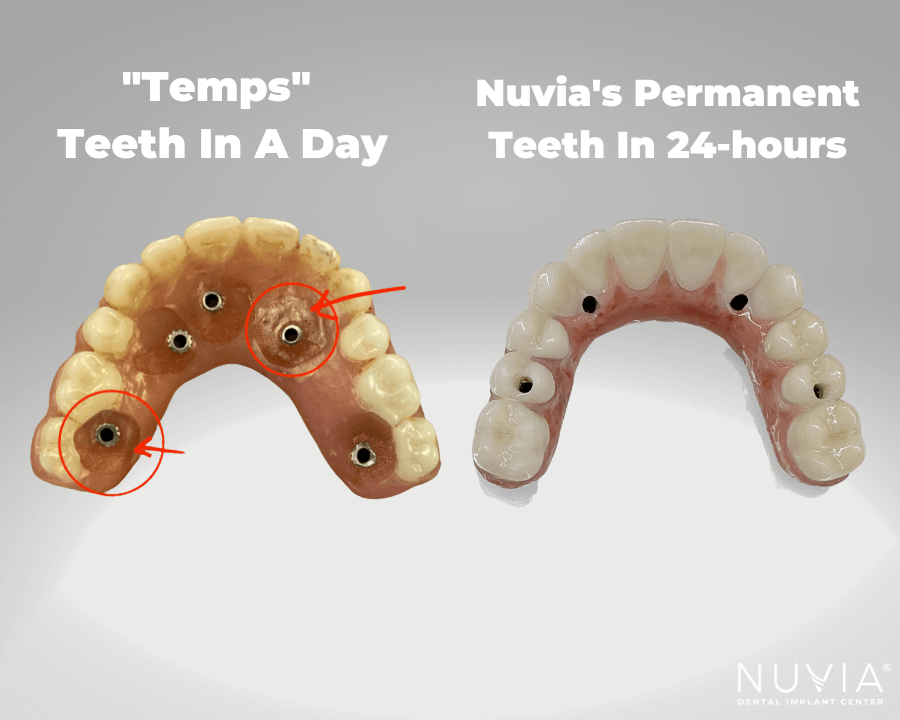
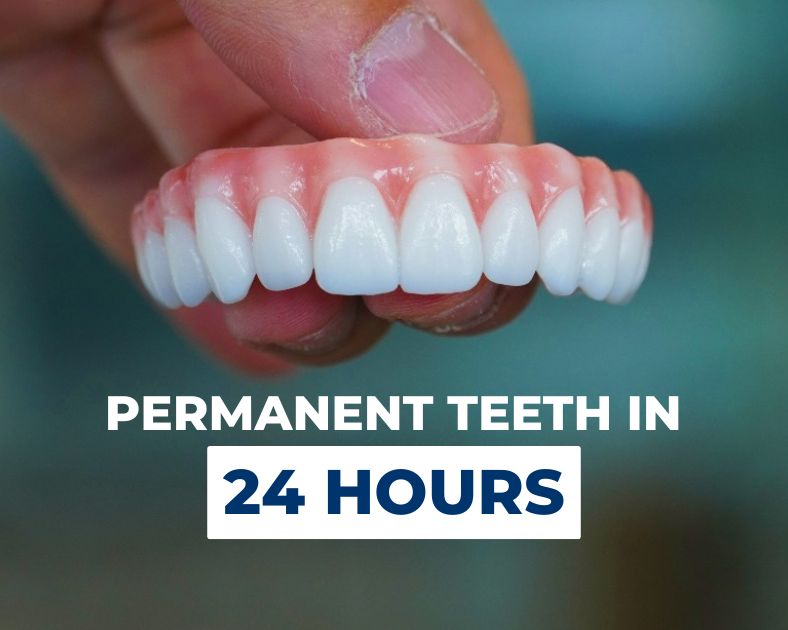
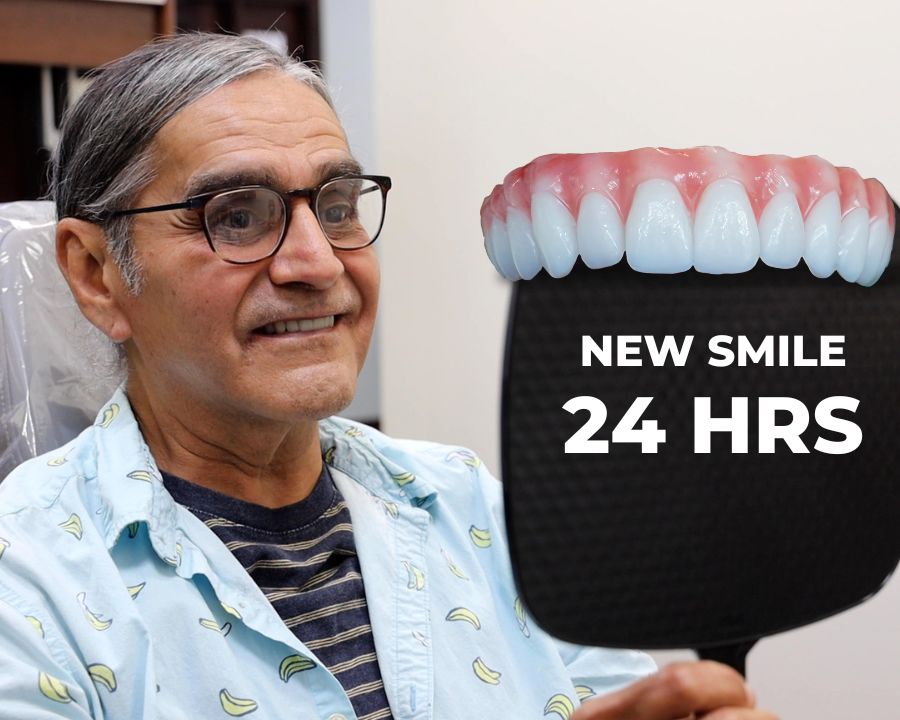
Surgery is the same day-after experience. Diabetic patients go through the same procedure: comfortably sedated, with a dedicated CRNA. Permanent zirconia teeth are placed within 24 hours of surgery, just as with any other patient.
Healing may be monitored more closely. Follow-up care for diabetic patients pays attention to how the implants are integrating, with check-ins designed to catch anything early.
When diabetes is actually a concern
Controlled diabetes: manageable.
Uncontrolled diabetes — very high A1C, blood sugar that hasn't been addressed — is a different situation. The surgical and healing risks are real, and reputable providers will not proceed until the numbers are in a safer range. That's not a closed door. It's a "come back when you're ready, and here's what that looks like."
Are dental implants safe for diabetics? For patients with managed diabetes, yes — and the outcomes speak for themselves. The first step is finding out where your A1C stands and whether you're a candidate.
Find Out If You May Be Eligible For Permanent Teeth in 24 Hrs.
Fill Out The 60-Second Quiz Below
By proceeding you agree to our Terms and Conditions and confirm you have read and understand our Privacy Policy, and you consent to receive emails, texts and calls from Nuvia regarding your inquiry (even if you are on a Do Not Call Registry). Message and data rates may apply. You may opt out at any time by replying STOP.
Lucy Steckler manages the website at Nuvia Dental Implant Center. Having spent over a year being involved in dental content creation, she finds purpose in helping individuals find answers to their dental implant questions and learn more about the benefits of permanent teeth in 24 hours.


.jpg)


.jpg)
.jpg)