



Full mouth dental implants cost without insurance is the typical experience patients have when paying for dental implants. Insurance is rarely part of how anyone pays for full mouth dental implants.
Before you close this tab, here's what most people miss: a new smile can still be affordable. First, the vast majority of patients never pay the full amount all at once. They pay a monthly payment, just like a car. And a lot of them are paying less per month than they spent trying to keep failing teeth alive.
This article breaks down what determines cost, why insurance typically won't touch it, and how people who don't have tens of thousands sitting around still get this done every single day.
Why Is the Range So Wide?
You'll see prices all over the internet — anywhere from $17,000 to $100,000 for a full mouth. Seeing a range that wide can be confusing. Here’s why it varies so much:
Not every quote includes the same things.
Some providers give you a price for the surgery only. Then a separate charge for the implant posts. Then another bill for the permanent teeth. You may even get third party bills for anesthesia or lab fees. By the time you're done adding everything up, it’s possible to blow way past the number you’re quoted on day one.
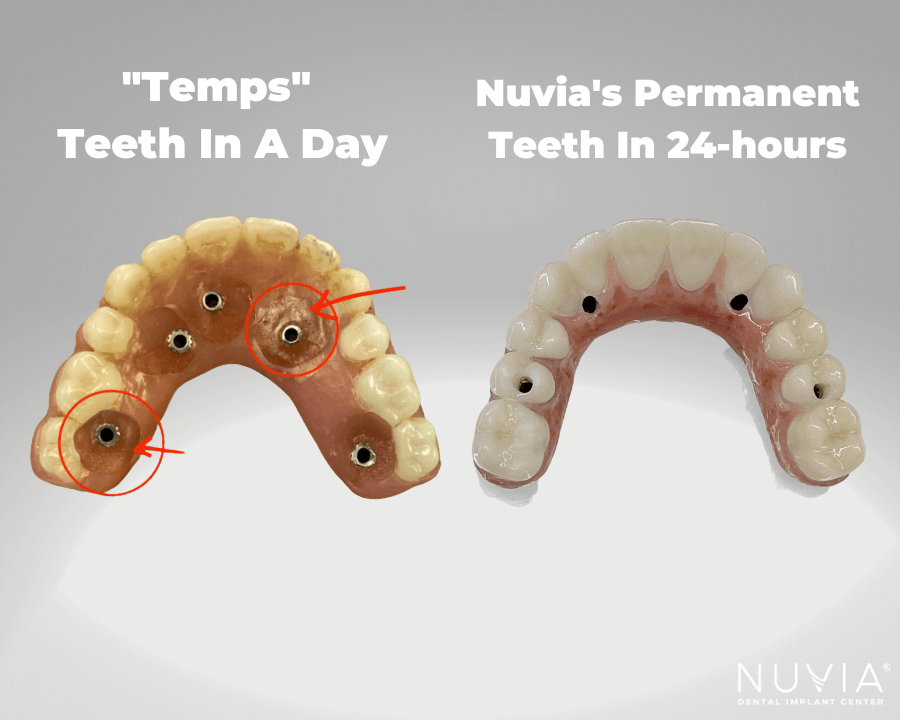
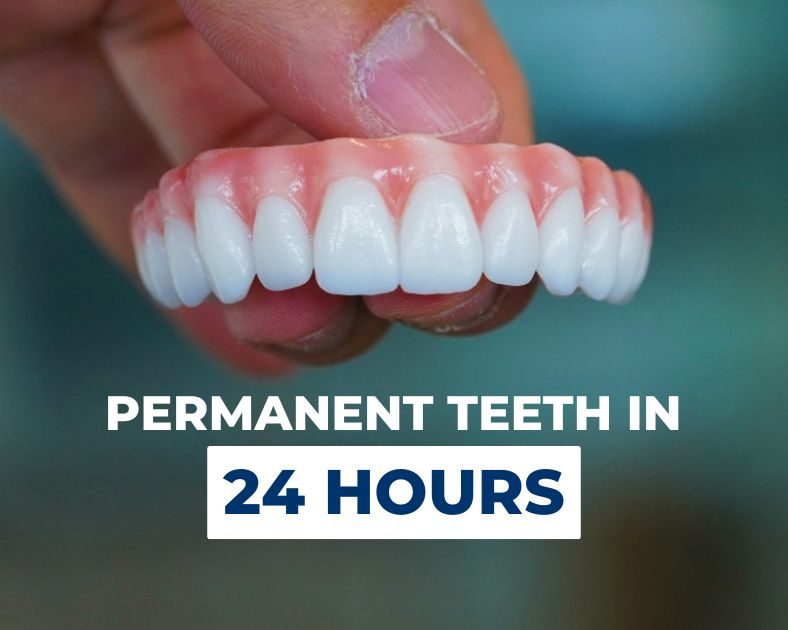
At Nuvia, the price you get at your consultation covers everything — the oral surgery, the implants, and the permanent zirconia teeth, the anesthesia, and the routine follow ups — in one number. No add-ons. No surprises.
Other things that can affect the final cost anywhere you go:
- How many teeth need to come out during surgery
- Whether bone grafting is required (Nuvia uses the All-on-4® method, which is specifically designed to work with the bone you already have — this eliminates the need for grafting in many cases)
- Whether you're getting one arch or both
- The material used for the final teeth (Nuvia uses zirconia — the strongest, most natural-looking ceramic available)
The biggest variable is usually whether you need one arch or two, and how complicated your case is medically speaking.
Why Won't Insurance Cover This?
Most dental insurance plans label full mouth implants "cosmetic" or "elective", even though the procedure can have a dramatic impact on your overall health. That means no coverage — or they pay out a tiny fraction that barely makes a dent.
And here's the other problem: even plans that cover dental work usually cap benefits at $1,000 to $2,000 per year. When you're looking at a transformative full mouth procedure, a $2,000 cap is almost meaningless.
This is frustrating. It's also incredibly common. You are not in a unique situation. Almost everyone researching a new smile wonders ends up navigating full mouth dental implants cost without insurance.
It’s important to remember that you're not out of options. Insurance just wasn't designed for this type of treatment, and that's a problem with the insurance system.
How Do Most Patients Actually Pay?
Around 92% of Nuvia patients use monthly financing. That's the honest answer to how thousands of people all across the country are paying for dental implant costs without insurance.
Nuvia works with multiple lending partners — not just one — because one lender doesn't work for everyone. Most patients end up with a monthly payment somewhere between $250 and $900, depending on the scope of their case and what they qualify for.
If your credit history makes approval harder, you can bring a co-signer. A spouse, adult child, or close family member can co-sign without being the one making the payments. This often opens the door for a lot of patients who thought they were stuck.
A few other things worth knowing:
- HSA and FSA accounts. Full mouth dental implants almost always qualify as a medical expense. If you have funds set aside, you can use them.
- Possible tax deductions. Depending on your income and total medical expenses, some or all of the cost may be deductible. Talk to your tax professional about what applies to your situation.
- The consultation at Nuvia is where you get your final investment. It includes a 3D CT scan and a real cost breakdown for your specific case — no commitment required to get that information. You don’t sign up for anything without knowing exactly what it will cost, with no hidden fees.
What Happens If You Wait?
When teeth are missing, the bone underneath in your jaw often starts to shrink.
The longer you wait, the more bone you can lose. Less bone means a more complicated surgery — and sometimes a more expensive one due to what advanced methods may be required. What's treatable today at one price might require more prep work a year from now.
There's also the health side. Missing teeth and gum disease don't stay in your mouth. Research links advanced tooth loss to higher rates of heart disease, diabetes complications, and cognitive decline. Every month you put off treatment is another month that infection could continue affecting your whole body — not just your smile.
Waiting doesn't typically make full mouth dental implants more affordable, it’s usually the opposite.
The Real Question Isn't "Can I Afford This?"
It's usually something along the lines of "Can I afford to keep waiting?"
Most people who come through Nuvia's doors thought this was out of reach. A lot of them waited years before they made the call. And almost all of them say the same thing on the other side: they wish they had done it sooner.
You don't have to figure out financing today. You don't have to commit to anything. You just have to take one step.
Find out in 60 seconds if you may be a candidate with the free 60-second quiz here. It costs nothing and only takes a minute. It’s a fast way to stop wondering and start knowing where you actually stand.