


If you're missing teeth — or about to lose them — dentures come up fast. It’s honestly probably because they’ve just been around a long time and somewhat work to replace missing teeth. But even with the benefits of dentures, they may not be the ideal option for you, and they certainly aren’t designed to be a permanent one.
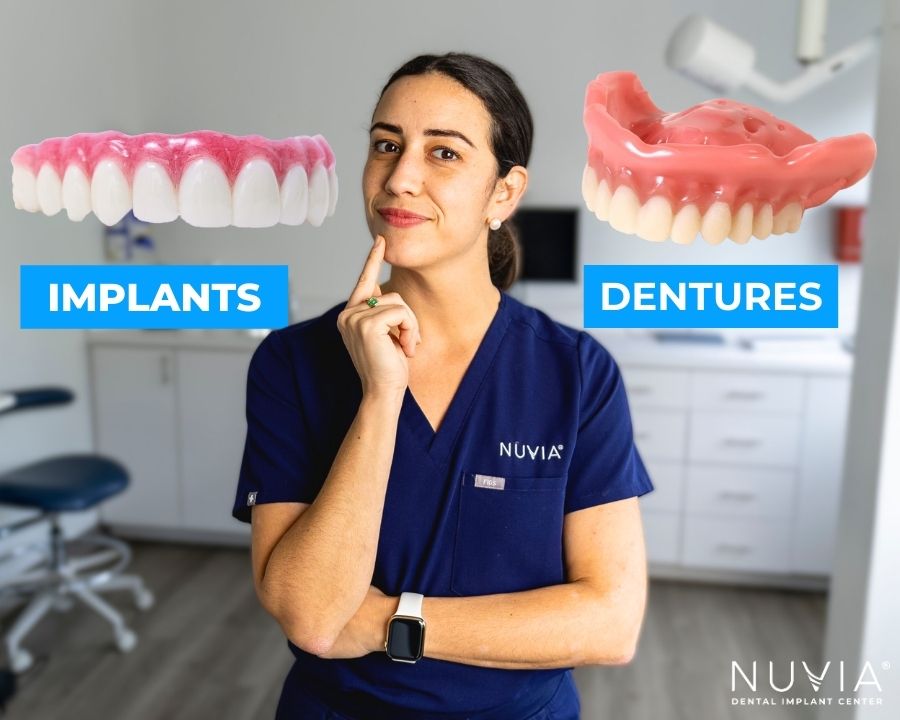
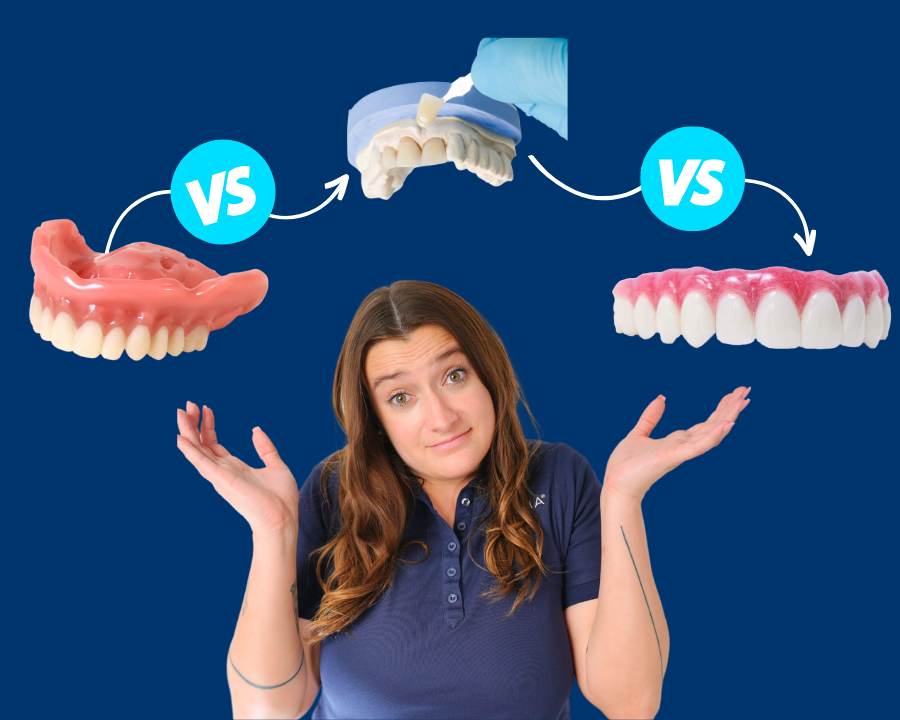
If you've also been hearing about dental implants, you're probably wondering what the actual difference between full mouth dental implants and dentures is.
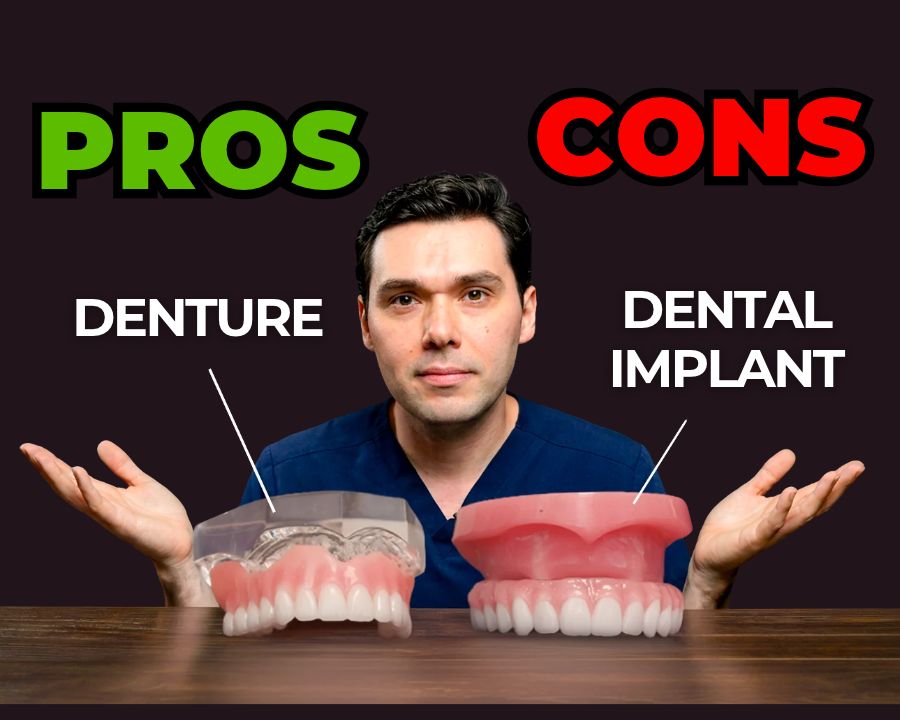
I sat down with Dr. Abrego, one of Nuvia's restorative dentists, and asked him to walk me through both options with no fluff, just the real breakdown.
The Benefits of Dentures
Let's start here, because dentures do have real benefits.
- They're a tooth replacement option that a lot of people qualify for.
- They don't require implant surgery.
- And for someone who can't afford implants or doesn't qualify for them, a denture can be a solution that at least gives you something to chew and smile with.
- They're also typically less expensive upfront than dental implants.
So yes — the benefits of dentures are real. But there's more to the story.
What Getting a Denture Actually Looks Like
Here's where it gets more complicated. Where there are pros of dentures, there are cons too.
According to Dr. Abrego, getting a denture isn't a one-appointment process. You're potentially looking at four to six appointments, each about one to two weeks apart. That can be a lot of trips to the office before you walk out with teeth.
And here's something lots of patients don’t often think about: dentures are made before surgery, then fitted to your mouth after your teeth are removed with a process called a “reline”. The problem is that your gums shrink as they heal so a denture that fits okay on day one may start to move around as the days and weeks go by.
That can mean more and more relines. Sometimes even a whole new denture made from scratch — which is another four to six appointments.
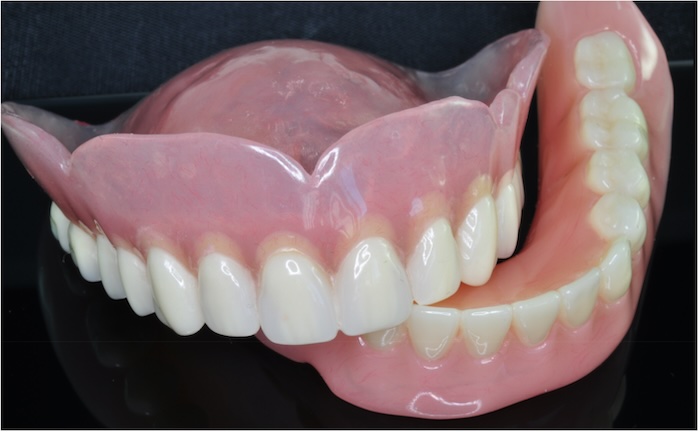
As for how long a denture lasts? Dr. Abrego put it simply: think of it like high-end plastic. Because that's what it is. Most dentures last four to eight years. The plastic absorbs water, so it can stain over time, and can hold odors.
And because a denture sits on your gums rather than anchored into your bone, it can move every time you bite down. For people with stronger jaw muscles, that movement can wear a denture down fast — sometimes within a year or two.
Every reline, replacement and new round of appointments can mean that costs add up quick. All the sudden some of the biggest benefits of dentures may not even be what you experience. Even though the upfront price may not seem very expensive it can quickly get to be. Compared to dental implants, which are designed as a long-term investment, dentures may not even be the more affordable option over time.
What Full Mouth Dental Implants at Nuvia Look Like
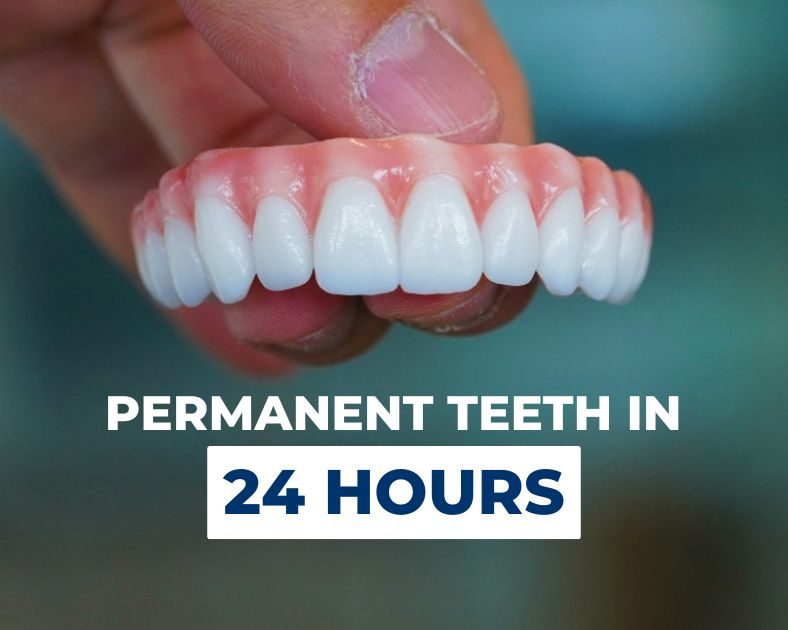
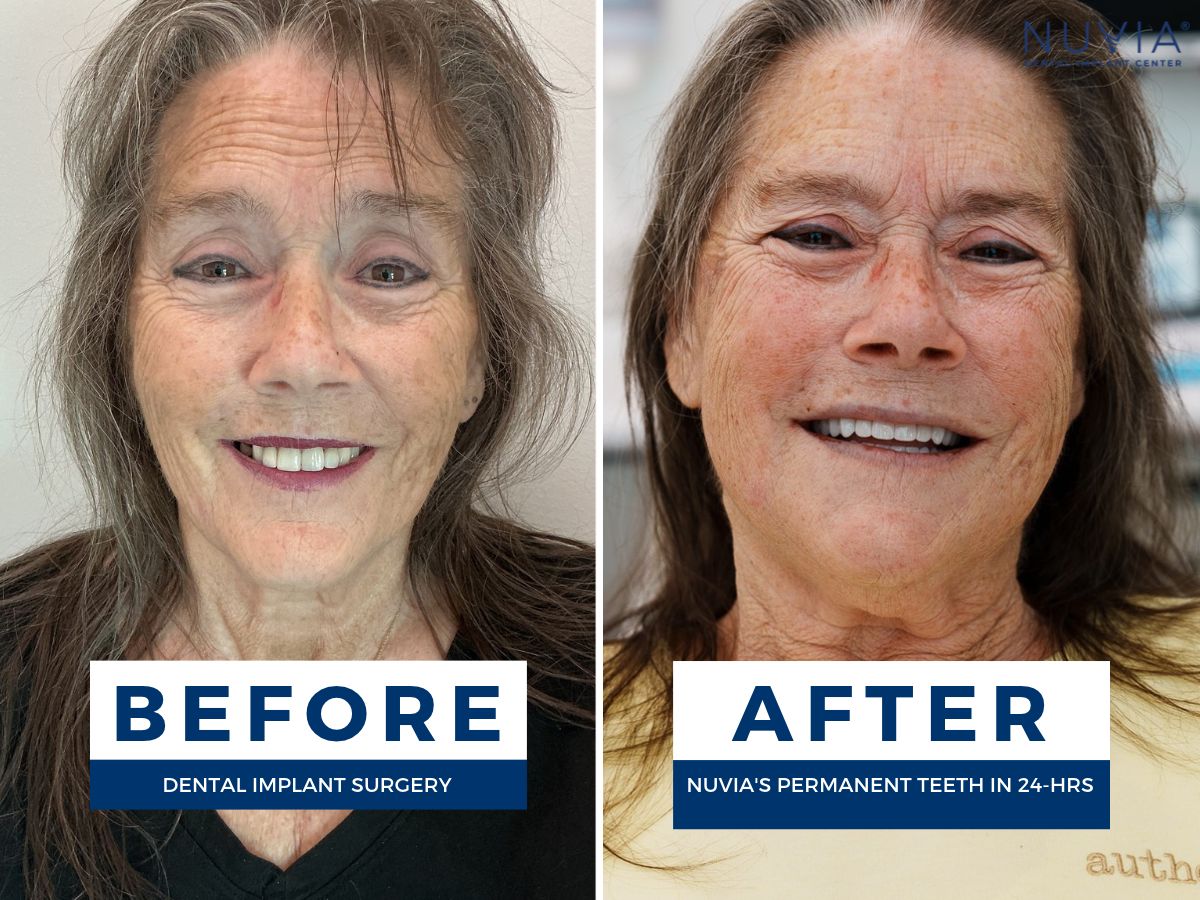
The process at Nuvia looks pretty different. And that’s because the permanent teeth in 24 hour process is designed with patients in mind.
It actually starts before surgery day. Your Nuvia team digitally plans your specific case ahead of time, so your new teeth are almost entirely ready before you ever go into the operating room. But they can’t be fully designed until after surgery, when the actual implants are placed.
So after you have your procedure and have the implants in your mouth, you go home to rest while Nuvia finishes your teeth design and the in-house lab gets started on creating them.
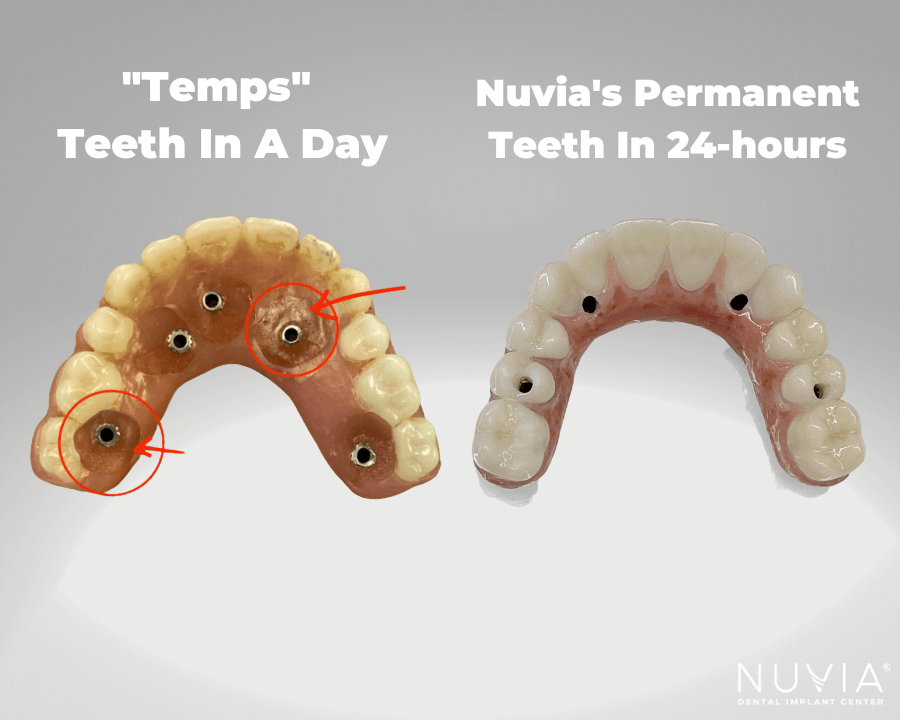
The next day, you come back and your permanent zirconia teeth are ready. Twenty-four hours after your surgery, you leave with your permanent teeth. Not a temporary set — the actual final set of teeth. Unfortunately, the benefits of dentures don’t include a 24 hour turn around like Nuvia dental implants does.
Nuvia teeth are made of zirconia. It's a ceramic material, so it doesn't stain, doesn't hold odor, and doesn't wear down the way plastic does. It's designed as a fixed, long-term solution, unlike dentures, which are removable and typically need replacing every several years. And because the implants are fixed directly into your bone, your teeth don't move. You can bite, chew, and smile without thinking about it.
Dr. Abrego said it best: "From day one, patients can start chewing, smiling, living life."
Aren’t Full Mouth Dental Implants Going to Cost a Lot More?
This is the question I had to ask, especially because one of the benefits of dentures that patients often talk about is how they’re more affordable than dental implants.
Dr. Abrego's answer surprised me a little. He said he wouldn't call implants dramatically more expensive than dentures — "because again, costs can add up." And then he said something I keep thinking about: if you divide the price per day over the years you're using implants, you get a lot of value and quality of life for that investment.
A denture that lasts five years and needs two or three relines along the way isn't as affordable as it looks on day one.
Implants are one of the most durable, long-lasting options in dentistry. Like natural teeth, they still need regular checkups, cleanings, and good home care, but with that maintenance, they're built to serve you for many years.
Does that mean you never have to think about your dental implants again? Not quite. Dr. Abrego is clear that no restoration in healthcare lasts forever without care. Implant teeth still need routine maintenance visits, professional cleanings, and occasional adjustments, just like natural teeth need dental visits. The difference is that with zirconia and implants anchored in bone, you're starting with one of the strongest, most stable, and longest-lasting options available.
Not to mention, many denture patients report less bite force, uncomfortable mouth sores, gag reflex being triggered, and many awkward moments. Those things don’t happen with teeth that are held firmly in place.
So Which One Is Right for You?
That depends on your specific situation — your bone health, your medical history, and what you're actually looking for. Namely, if you want something that will be as close to natural teeth as possible and is designed to last long-term, or a more short-term solution like a denture.
The easiest way to get a real answer is to start with a consultation where a provider can look at your actual imaging and give you a real picture of where you stand. To get one set up, first take the 60-second quiz to see if you may be a candidate for full mouth dental implants.
If you want to get a sense of cost first, download the free Nuvia cost guide — it walks through what goes into the final number and how to compare your options.