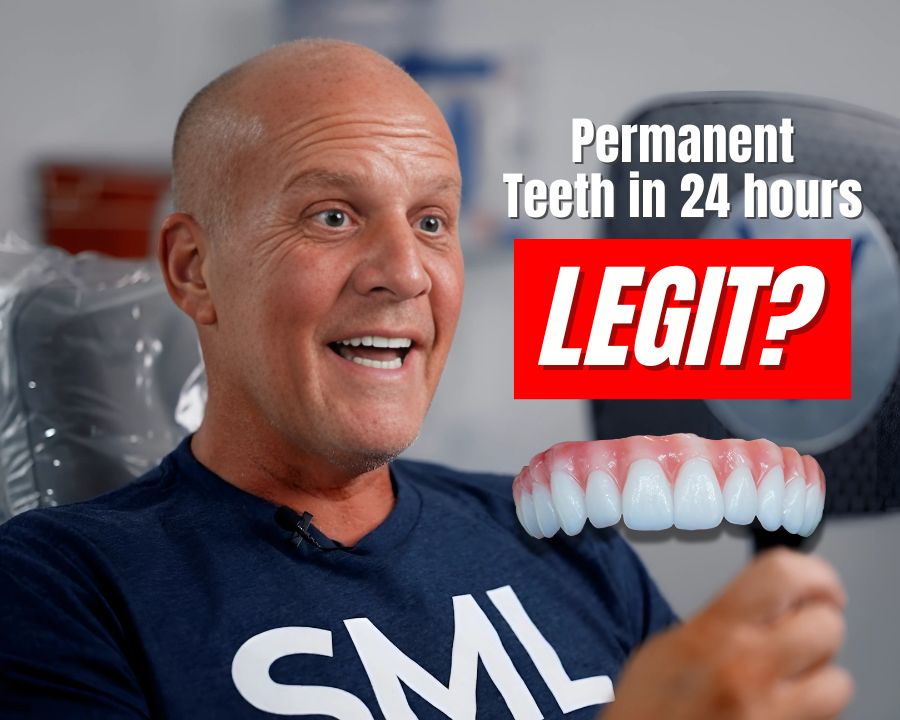
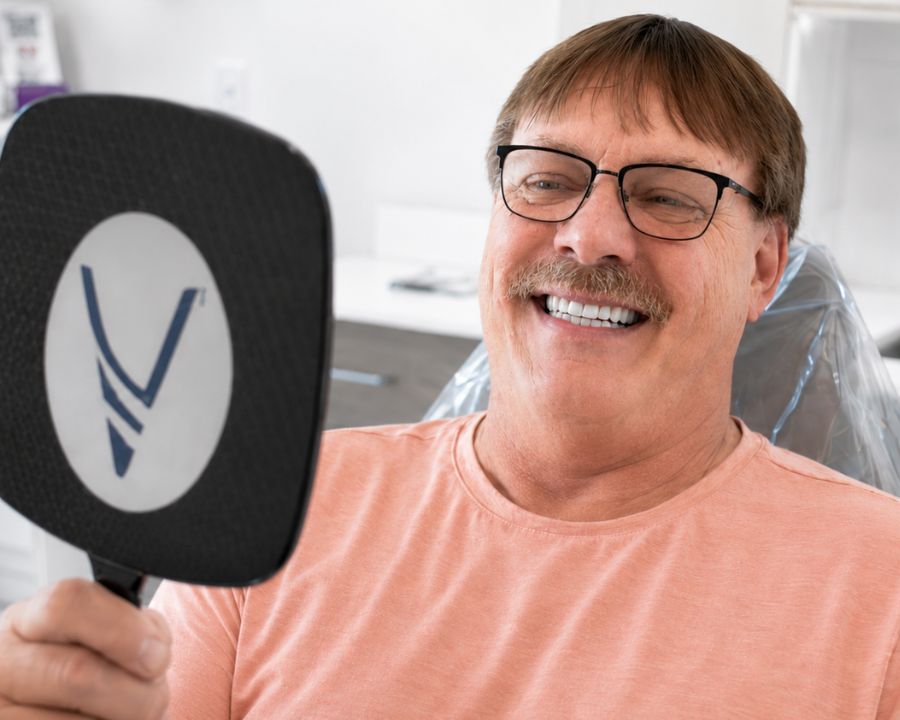
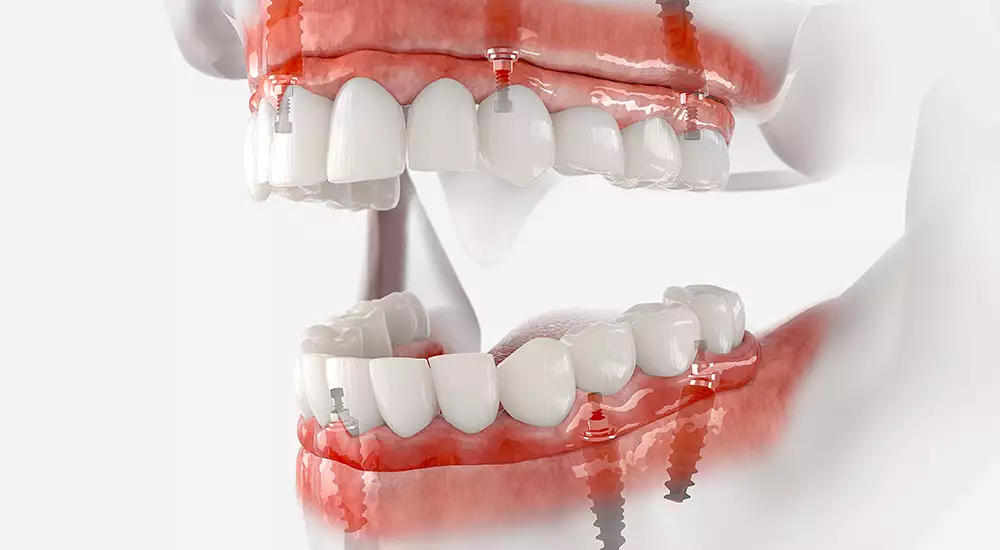
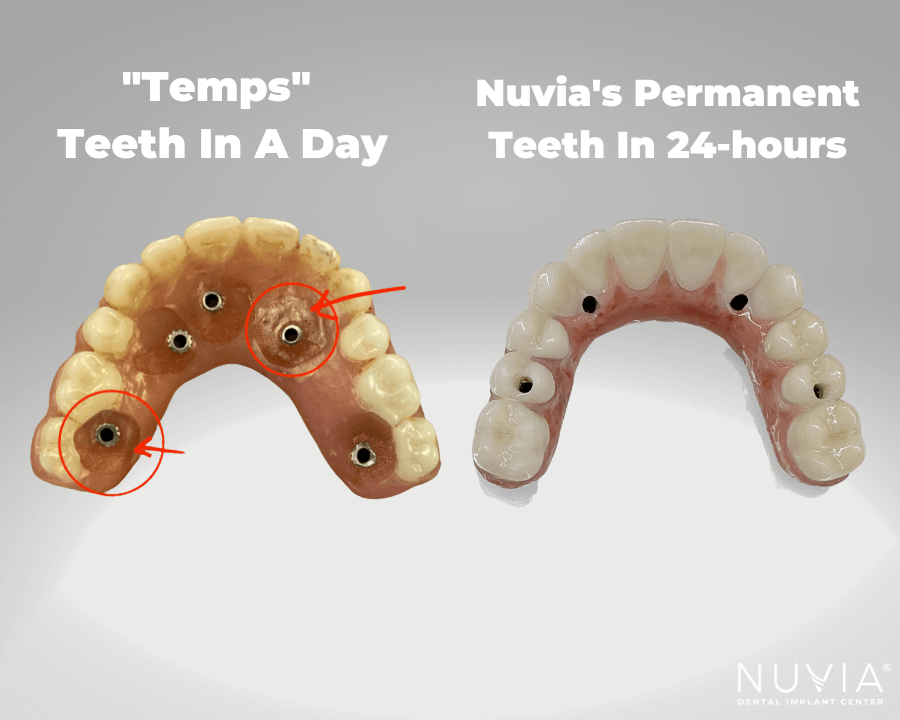
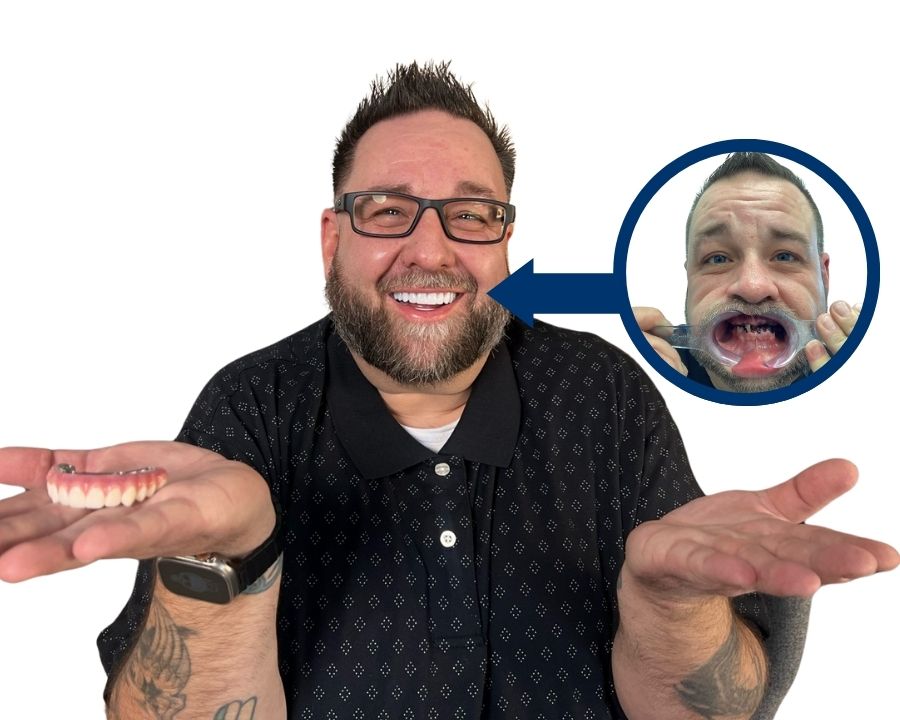
When you did start, you know, looking into the dental implants route, did you ever think, is this something that I can realistically afford? I live on a specific income a month, and that doesn't change. So I was real concerned about that. So how did you actually afford this? What I didn't anticipate was that there were gonna be options. I was not letting this opportunity get past me. Randy thought paying for full mouth dental implants on a fixed income would be impossible. But somehow, he made it work. And now, two years later, he's back to share how he pulled it off and whether he has any regrets. And this is the first time I've ever told this. I'm a pretty private person, but I want people to know that there are options. Alright, Randy. Before we get into actually how you made it work financially, I have to ask, why even get something like dental implants when there are cheaper options out there? I know you had mentioned to me that you had dentures before this, and you were actually getting them for free. Right? Yes. Absolutely. I had been in dentures for nearly ten years. And I had all my dentures, all of my appointments, and all of my care related was absolutely free, being a disabled veteran. It was all provided to me at no cost. So it just didn't work. I'm curious though, like, why like, what was, like, maybe the biggest reason of, like, hey, even though I'm getting this for free, why would you seemingly get something that's, you know, not cheap, like dental implants? What was your motivation there? Why were you willing to, like, go make that decision? Well, it was actually pretty easy for me because I I could not get the dentures to work for me properly. I was in them, as I said, almost ten years, and I had new sets made, you know, I tried all of the glues, all of the products, you name it, and they just would not stay in. And when I put them in, they would pinch and hurt and cause my mouth to bleed in certain points. And that would be whether it was a new set or not. Free doesn't always mean the best. Free can be helpful. Free can work, but it didn't work for me. And there's a lot of folks that it doesn't work for. If if it does, then, you know, good for you. It just doesn't, in reality for many of us. And I just made that decision at my age, and I was just barely over fifty, you know, still young. And I'm hoping, you know, got another forty to fifty years in me, and I'm like, this is this is ridiculous. I want the best for my health because my health was bad, my, you know, mental health was bad, all of those things. Sometimes you have to go for the best, and the best isn't always free. And I was actually okay with that because it was my life and my health. When you did start, you know, looking into the dental implants route, did you ever think, is this something that I can realistically afford being on a fixed income? Or what concerns did you initially have about the cost of dental implants? I had actually gone to several consultations with some local places. You know, I live here in Vegas, so we've got lots of options, some national places. And the cost was there, it was high. I wasn't sure I was gonna do it. There were a lot of things going on in my personal life, you know, financially, personally, all of those things that were going on. So I was in kind of the worst spot I could have been in to decide to call Nuvia that day. And I just knew that it had to be something permanent. I don't know how I'm going to, but let's do it. Let's figure out. What stood out to you about Nuvia's process? Like, how was it different compared to these other places that you had gone to or researched? Was it like, was their timeline different? Or what did that look like? Well, the teeth in twenty four hours was absolutely by far the biggest catch because I'm like, how is this possible? Which is what caused me to then dig further. And the whole twenty four hour thing was, I had never heard of such because my best plan of action when I was looking at the dental implant route, it was gonna take me nearly a year and a half due to gum loss, bone loss, dentures so long before I would be in my permanent teeth. And there were gonna be appointments throughout that I had was gonna have to sign a paper saying, yes, I know these may be there. Yes, I will pay for these if they do come up, but I won't don't know until I'm told. And none of that even remotely would fit within my budget. When I'm trying to plan something, you know, you can't plan if there's a lot of unknown because I can't change my income. And the second that I was told that, you know, I was a good candidate and everything, I I was not about to miss this opportunity because I was I felt as if I was, you know, playing on borrowed time with options running out pretty quickly, and they were. Right. But I was pretty lucky and I'm blessed that Nuvia actually didn't have to do any anything extra. No bone grafts, no anything. And I had been told I needed all of this craziness. And here I am almost two and a half years later, and I'm like, I just had a almond pecan and peanut bar for breakfast. Incredible. I think I'm okay. I think I'm good. I think I'm good. Oh my goodness. Well, okay. So you made the decision to go with Nuvia. You're like, alright. I'm gonna try to make this work. But I'm on a fixed income. So Yes. Here's the big question. You know, how did you actually pay for it? Right? So when you got in there, what did the payment process how did it work? You know, what did it look like? Did you need to pay everything up front? Or what options did Nuvia, like, say that were available? So for me, that was obviously it was kind of tied in first as the big question because even if I was going to be able to qualify, could I even afford them? And I was also in a very, again, very personal situation. It's in the middle of a divorce. So your entire world's flipped upside down financially, legally, all of that. And my hands were very tied at what options I had. So it was very scary, but I just felt like that I saw that that ad that day. And again, I lived my life when things happened for a reason. And I kind of just put it out there, you know, into the universe. I manifested like, this is it. I saw this today because this is what I need in my life, to to become whole and happy and healthy. So going in, you know, once I got through the consultation, right away they told me that I was a good candidate, and I was so ecstatic, And then it was like, okay, you know. I had that immediate flush of, now what am I gonna do? I, you know, I I know where my situation is right now. What do I do? What are my options? And what I loved was right then, right there in the office, everything was laid out to me, what options were. You know, sure you can pay cash. Sure you can do this, you can do all these things. But I'm not in that situation, that's not my life. Being a medically retired, which equals disabled army veteran, I live on a specific income a month, and that doesn't change. And so I was real concerned about that, obviously. So once they told me everything, told me what my price was gonna be, it's actually lower than some of the places a couple years earlier, so I was not mad at all. It was kind of what I had anticipated. But what I didn't anticipate was that there were gonna be options, because I knew that I was gonna struggle getting a loan, being in my specific situation. And we went through the process, know, takes like two seconds. It's really really easy. And pretty much, they're like, not right now. It's not gonna work for you. And then I'm like, okay. You know, and before I even had a chance for, you know, upset and things like that to come over, he continued on with the sentence, but you have the option because we have the capability if someone else wants to take on this loan and take out this loan for you, it's possible and we can do that. And I'm like, wait a minute. What? What's going on? Say that again? And and mind you, this is about six six thirty PM in the evening in Las Vegas. So, and this is the first time I've ever told this, so a pretty private person, but I want people to know that there are options. So I literally text my oldest son, my son, you know, who wants to go there, Who's in Ohio, three hours ahead. So it's like ten PM his time. And I text him and I said, you're probably getting in bed or already in bed or whatever, but please call me like, right this second, it's very important. I'm safe, but call me right away. And he calls me instantly because I don't normally do that, and he's like, is everything alright? And I said, I just need you to listen. I'm like, son, I'm sitting here right now in this office, they just approved me and I qualified as the candidate, you and I both know this is this is it. This is, it's now or never, and I'm not gonna put this on you, but you know, I can't do this on my own. And I wasn't even completely finished, and this is my, We call him the nerd of the family because he has to think everything through so many times. He didn't even stop to take a breath. He said, what I need to do, dad, you need this. I want you around. Sorry? Don't be sorry. So I basically just took his info as I'm sitting there in the office at Nuvia, and he he rattled it off to me on speakerphone and so I could write it down. And then the smile consultant popped everything in, again, takes about a minute, it was pretty quick. And he's like, he's good to go. And I'm like, Brad, all is good. You know, like, is this something you're sure you're okay with? I don't wanna throw this on you. And I'm like, I don't even know how I feel, but I'm just here, and I'm in this moment. And he's like, there's no question, just do it. And I obviously knew I was gonna have to pay for this loan. I just needed to get my life. And that's all what I needed, he knew that. And to this day, besides right now, no one knows this happened besides he and I. Not even my youngest son. No no siblings, no anyone. And they shot everything over to him from the finance company. Immediately, he signed it all digitally just as if I would have done had I been approved. Everything was approved and done, and my surgery was scheduled for the next week. I mean, it was it was a whirlwind that I was writing, and it was an amazing whirlwind. It was scary, it was confusing, but it was all going in my favor, and I felt so thankful and blessed that I was not letting this opportunity get past me. Wow. Randy, thank you so much for sharing this today because, like you said, no one has heard us before? No. It's tough. It's very tough. I'm a I'm a man. I'm a dad. I'm a, you know, I've taken care of, you know, you know, my children. I raised them well. They're educated. They're good men, know, have two my two sons. All of those things. And here, I am at fifty fifty years old calling my son, you know, who's thirty, you know, because I'm not all that much older than him. And saying, I I need your help. I I don't like to ask you for anything, and I don't ask you for anything. I'm the dad here, I'm the parent. And he was just like, dad, it's okay. This is this is not one of those situations. I need you, and we all need you. And you need to be here for us. I think that's the biggest thing, is like, you wouldn't ask for that help unless you truly knew that there needed to be something, something done, and something done No. And I knew, I knew in my heart at that moment that I had one call to make, and that was my only option. And he knew when he heard what I was calling for, that he knew that I was his only option, or he was my only option, and he knew that he was my only option as well. And, you know, to put that on, that on my son was a lot. And I actually carried a lot of guilt with that for a while. You know, we're past that that Right. That maneuvering time of the process. And, you know, the the loan's there, it's in his name, it's, you know, it's on his credit, it's not even on mine, but it's connected with me. You know, I pay it every month, it comes directly out of my bank account, so he has no responsibility of it. And, you know, which is obviously hugely important because I had to make sure that I even knew how to pay for this in that moment of having to decide within seconds. And I I didn't have to. There was no pressure from Nuvia. I just knew that it was my moment, and I had to make that decision right then, right there, because the stars had aligned. Right. So Wow. Yeah. It it was a lot. It's a it's been a lot. And it's been hard to be prepared to know that I was going to answer these kinds of questions today, and know that I was going to tell you something that no one has ever heard, and that I've never spoken aloud at all. Again, my other son doesn't even know. Oh my goodness. No one knows this, because it was such a was such a tough and embarrassing, in a way, thing for me to do. I'm a very private, personal person, you know, I spent all those years in the army, you know. I can handle things, and I had to stop and remind myself that that was still me handling things. I just had to use different resources, and it's okay. Right. Absolutely. And, man, I'm so glad that I didn't let my ego get in my way in that split second. Randy, I think you did the best thing you knew to do for yourself in the moment, and same with your son, like, he had no second thought about it. Y'all both know what you needed, and I, again, I thank you so much for your vulnerability today, because I think a lot of people out there feel, maybe feel in a similar place that you were before you got this done, where, well, maybe some hopelessness, and maybe like, there's no way I can afford this process, right? But like, there's an option, and you decided to take that option and change your life. Right? So Yes. I think that's super powerful. Yes. I went in, and I was I was believing in what I was being sold, even though no one was selling it to me, by doing my research and reading. And I knew that Nuvia was where I was supposed to have been and that's why it had been such a long treacherous journey of of disappointments along the way and trying to do this and get my life back and become healthy. You know, I just knew that I had to be. And when I went in there and the second they said yes, it was just like, bam, bam, bam. This has to happen right now. I know it. I feel it. And folks don't know that. I didn't know that going in. I went in kind of anticipating, I'm not gonna be able to afford this. Let me find out, and then let's see what my options are. And Nufia solved that because they let me know right then and there, like, wait, here's another option if this works for you. It wasn't forced on me, it wasn't whatever, it was just, here's another option. I'm like, oh my gosh, that's actually the option I'm gonna try to go home and work on. So let's just do this now. I was ready to see, you know, what what Nuvia could do, and, you know, they clearly, they knocked it out of the park. I live I I'm not even that same guy that walked in there in any way. You know, I have happiness, I have my health is back, you know, I I started this journey at the heaviest I'd ever been, two hundred and thirty eight pounds. One forty eight sitting here at night right now. Randy, that is incredible. One forty eight sitting here right now, ninety pounds. Because I can chew my food. I I am not spending ten years swallowing food that was then not processing correctly. It was messing my stomach up. I was I spent a few years, I I mean, I really didn't even leave my house at all because of fear, because of anxiety. If I ate anything, couldn't eat, you know, I couldn't keep my dentures in. There was embarrassment. And then when I did eat things even at home, my stomach was such a mess that I would get sick. And I I spent almost every day, like, literally throwing up. You don't wanna hear that gross, but that's the truth. And I knew that I was really on borrowed time, that my health was not in good good in good shape. And just all of that's gone. So you had this loan that was taken out, but you were still making these payments. So these were monthly payments, right? And was it the same payment each month, or was this something where, you know, you you'd spoken earlier on how you never knew if there was gonna be something added on to the price. Right? So Right. How did it go with with this whole payment plan process? Well, so the amazing thing, was that the, you know, my price that, you know, was for me and my situation, that was that was an all inclusive price. There was never gonna be anything else, you know. I knew what my appointments would be and, you know, Nuvia with this technology and all this, you know, craziness of twenty twenty five, you you don't have all those that many appointments. You've got your surgery, twenty four hours later, you get your permanent smile. Two weeks later, you have a follow-up. Four months later, you're generally generally released. So everything was all inclusive. So I was able to then know what my budget is and what I had kind of anticipated. So they were still rough numbers but they were rough enough that I had prepared and knew, this is in my ballpark. I can do this and be able to live. Because that was obviously very important. And this was very important as well. So finding that fine line, I had to figure that out. So once things were approved, I knew exactly what my payment plan was gonna be each month. You know, it's been nearly two and a half years, it doesn't change, it just automatically comes out of my account, and it's just part of my budget now. You did mention that there are these payments that you were making each month, and people might be wondering, hey, how much is that? So where would you suggest they go to like find more information on that? Well, if you look down below, there's gonna be a cost guide, and it's gonna give you general information, so that you kinda have an idea of what payment amounts could potentially be based on your situation. You mentioned your son took out the loan, but you still had to figure out how to afford it month to month on a fixed income. So how did you actually pay for them? Did you have to make any changes in your life, or how did that go? I don't drink fancy coffees every day, all day. I don't, you know, splurge just to splurge. I don't buy everyone's meals when we're sitting at dinner or, you know, just all these little things that me as a person I like to do and did. I just, I start cutting all that out. And it wasn't like I was missing anything. I just looked at my budget and said, okay, I know I really don't need this. And I'd much rather have teeth than a coffee that I can, you know, I can make coffee at home and I'm perfectly fine with it. Right. Or, you know, I don't need to eat dinner at this particular restaurant, you know, multiple times. You know, it was simple when you really think about it. I know a lot of times, and for me, being on a fixed income, you're always considering that because there there's a top level. You can't do anything beyond that. So it's very important, you know, to know all of those things, and it's a scary situation, which is why I had to kind of gauge beforehand what I knew for sure I'd be okay with, and, you know, what I knew for sure I could not do Right. By any means. And everything fell well within that number, so then I had to get home and put that into action. You know, all looked good on paper, it all sounded good in my mind, but I had to put that in action. And it was so much easier than I thought. It really was. It was just like, I Maybe I do order, you know, from Amazon a little more than I thought I did. It's okay. I can drive down the street because guess what? I can leave my house again. I don't have to order groceries to be delivered. I don't have to pay for DoorDash if I want takeout or don't feel like cooking because guess what? I can get in my car and I have the confidence and this anxiety is leaving me, And I can go do those things. So I can still do those things and it cost half the amount of money because I'm living again. So those are things I think people don't stop and look at. I didn't really until after because I was so set on this is how it has to be. So I got home, really looked at it, and it ended up being a much easier than I even anticipated walking in. Did I have to change things? Yes. You know, I'm not gonna sit here and say, oh, I just lived, you know, life. Right. Put loose and fancy free, as we say back where I'm from. But, but I'm, you know, I I had to have an idea, of course. And then going in, I knew that it fell within that and then it was up to me to implement that and stay disciplined. And it was so incredibly easy compared to what I had anticipated because I just really wasn't thinking that through and adding those things up. So I just had to take a good hard look at my budget and say, okay, well, alright, so you're not gonna upgrade your light bulbs to, you know, fancy light bulbs or you're gonna hold off on a new bed because you do have a place to sleep. You know, as I mentioned, I was furnishing and starting all over. Well, I I bought a, you know, a lesser expensive, you know, dishes. I bought lesser expensive this because I chose myself and this and my health and happiness and my life over those things. Well, you know, and as life is, you learn how to figure things out and you turn things around. And I've since replaced almost all of those very basic bottom of the line things with the ones that I wanted. I just did it over time and took my time and I did it with a smile on and enjoyed going to look at things and pick them out. Not looking on Amazon or online somewhere else going, well, I'll get this one because I'm not gonna get in my car and open my garage door because I'm gonna have an absolute anxiety attack. So there were so many things involved that, you know, I didn't know till after the fact or realize. It really is easier than we think. I can only say that for myself, it was so much easier than I thought it was. And, you know, even talking to my son after the fact, who now knew I, and was in this journey with me, obviously, the very next day, dad, can you do this Because I'm responsible. And as he should, and as I would want him to, you know, we're disgusting, I'm like, yes, I would not put you in this position, trust me. I would not. Is it necessary? Yes. But I would not. And I'll, you know, we'll make sure. And it's it hasn't been an issue. It really hasn't. I just adjusted my budget. It's no different than paying my utility bill. So This is my electricity bill. Exactly. Exactly. Well, I have to ask too, have you ever been worried like, oh, this maybe was a mistake, or have you ever, like, been concerned about that? Or do you feel like these sacrifices, you know, small or big, or have they been worth it? Like, what would you say looking back now, and it's been over two years or Yes. Over two years. Over two years. Yeah. I wouldn't change my mind at all. It's just that simple, like, right to the point I would not change my decision, I would not change the way it worked out. I don't want for anything, I don't miss anything. I just went, you know, then traveled internationally for for for two weeks and never wanted for anything, you know, did everything I wanted and all of that, and I did it with a smile and trust me, everybody was looking. As they should be. Randy, this is so incredible though, like, from you sharing your past today and what point you were at in your life and to today is wow, right? It's like I don't know who that person is that walked in that office that day. I shouldn't say I don't know. I I can't imagine Right. Being in that person again, because, you know, I remember that person, but I didn't know that person, if that makes any sense. Like, I walked in defeated, beat up, deflated, and physically, and and and mentally health, physical health, all of the above, and probably probably the absolute worst condition I could have went in. But I went in knowing that Nuvia was going to save my life. Truly, health, physical, it's gonna allow me to get out, it's gonna allow me to eat, all of these things. So, no, I would I would do it over and over and over again. If I had to go through this same process once a year, I would do it, to just feel like I feel today. And I mean that absolutely with every fiber of my being. I sing all the time. I you know, art was my life. Performing was my life. And not only could I not sing because I couldn't pronounce words or form things, I'm not gonna get on a stage in front of thousands of people, you know? Now I'm in the front row dead center, like, put the cameras on me. My goodness. What a change. What a change. Yes. Yeah. If somebody, you know, for someone who's watching or listening and feels like this is something that might be out of reach, what advice would you give to them, and where where would you suggest, like, they start? Based on how I went through the process and how it worked for me, if you just go and get into your consultation, everything else gets answered, and you know what you're up against. You know if you're a candidate. You know what your price is gonna be. You know if you're gonna qualify for a loan. You know what your payments are going to be. So you're making an informed decision right there. So go in and see what options are, and then make a decision. You can't make a decision if you don't know. The great thing about Nuvia is there's this cost guide that you can download for free, and I'm sure there's probably a link below somewhere. And it's great because it gives a range. And you can't go and be like, oh, I wonder if this would be ninety nine cents a month. If only. If only. I wish. Right. Oh my goodness. Well, thank you so much for sharing your story today. You've kinda proven to us, hey, you don't need to be rich to be able to make this happen for yourself. You just kinda gotta be determined and ready to make it work, and there's options out there for you. Right? So Absolutely. Thank you so much for sharing your story, and until next time, keep smiling. Keep smiling.




.jpg)